
Life and death weigh on Ukraine air defence teams / Photo: © Ukrainian Air Forces, press service of Air Command “Center”/AFP/File

 Nepali rescuers buoyed by miracle finds but tough conditions persist

 At last: Straight sets win over Tabilo puts Zverev in US Open last 16

 Jovic 'loses sanity five times over' to oust friend Eala in US Open epic
 China's memories of Mao fade to nostalgia 50 years after his death

 US envoys discuss with Putin 'substantive' plans for steps to end Ukraine war

 Zheng stuns Keys as US Open upsets dim American hopes

 Jovic 'loses sanity five times over' to oust Eala and book Gauff clash

 'Like a jewel': Japan's luxury ice revered by bars worldwide

 'The flood is coming': How a Nepal principal saved 900 students
 Kiss's winning run ends as Argentina hold Australia to draw

 Alcaraz excited to face 'dangerous' Paul for US Open quarter-final berth

 Prince William to represent King Charles III at Norway late King Harald's funeral

 Inter and Roma roar back to win thrillers and share top spot

 Don't stop them now: fans party for Freddie Mercury's 80th birthday

 AFP photographer wins top prize for Madagascar protest coverage

 Keys: 'I felt like I couldn't play tennis'

 Simmonds stars as Pau upset Montpellier
 Inter roar back in five-goal thriller with Napoli

 Haaland keeps Man City perfect in Premier League, blunt Spurs held

 Hamilton worried by Ferrari pace while Antonelli prepares for a fight

 Vuelta stage 15 shortened due to extreme heat, Mas consolidates lead

 Putin meets US envoys for Ukraine war talks

 Modric available for Croatia in Nations League
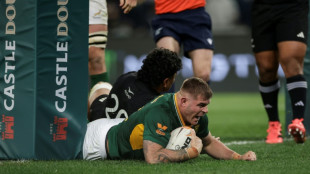
 Potapova upsets 2025 US Open runner-up Anisimova

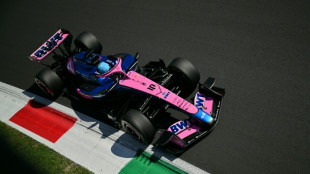 Gasly a 'class act' says Alpine boss after Monza pole

The commander of a Kyiv-area air defence team knows what's at stake every time a missile or drone appears on his team's radar: if they miss, people may die.
A potent example came when the team downed a Russian cruise missile and the wreckage revealed it carried an unexploded, nearly half-tonne warhead.
"A lot depends on me and my crew -– to make sure people will sleep peacefully at night," the commander, who uses the call-sign Atlas, told AFP in English.
Air raid sirens and thundering explosions have echoed repeatedly in Kyiv's pre-dawn skies in May, as Russia has stepped up the aerial attacks that have marked its invasion.
But Ukraine's forces, bolstered by Western-provided air defence systems, have recently reported shooting down most of the deadly projectiles.
Atlas, who spoke on condition he be identified only by his call-sign, said the situation is starkly different from a year ago.
He joined the service shortly after Russia's invasion, and said he felt helpless watching on the older machines the military had at that time as missiles and drones streaked toward Ukraine.
"I see just dots on the screen. But later, when they disappeared somewhere, I knew that something (bad) just happened, and most likely, I will read about it in the news," he said.
Things began to change after extremely accelerated training -- one month, instead of four -- on the Crotale air defence system provided by France.
His team shot down its first target, a Shahed explosive drone, in the early hours of January 2, setting off a cheer among them.
"But like immediately we composed ourselves and understood that we need to still be very focused. We can celebrate later," the 37-year-old noted.
- 'Start hunting again' -
He said they have destroyed more than 10 targets since their first shoot-down, but they don't get them all.
"These are very painful moments," he said of misses.
"We saw this target but it went through because something didn't work well."
The barrages keep coming though.
Just on Thursday, Ukraine reported shooting down an entire attack of 36 Shahed drones.
But a day later, a Russian missile struck a medical facility in the central Ukrainian city of Dnipro, killing one person and injuring 23.
"I don't think this is something that normal people should get used to. But this is reality, we live and these people live with that for more than one year already," said Atlas.
Ukraine has also claimed to have downed several Kinzhal (Dagger) missiles –- one of the weapons touted as "invincible" by Russian President Vladimir Putin, as their speed allows them to defy most air defence systems.
Ukraine said it shot down one of the Russian missiles for the first time in early May, using a powerful US Patriot anti-aircraft system delivered to Kyiv in April.
But even downing the missiles does not extinguish their deadly risk –- the debris and warheads can still cause serious destruction when they plummet to the ground.
Atlas said his team tries to predict where the wreckage will fall when they prepare to fire upon a target.
"Sometimes we let it get closer to us, so that we will be sure that debris will not fall on villages or something like that. That may happen and it's very dangerous," he added.
They also face an enemy that adapts to what the Ukrainian forces are doing.
If, for example, Atlas's team shoots down an incoming missile, what he called a "period of quiet" sometimes follows.
"We understand that they know we are there and we have to change position in order to start hunting them again," he said.
J.Horn--BTB