US urges keeping Russia nuclear arms limits, eyes China / Photo: © AFP/File

 'Nothing has changed': FIFA confirms Infantino to run for re-election

 UN's Nepal chief makes emotional plea for flood-ravaged country
 Italian GP red-flagged after massive Leclerc crash

 US envoys hold talks with Zelensky on first Kyiv visit
 'Truly scared': Blazes outpace firefighters in Indonesian Borneo

 German director Wenders clarifies views on film and politics
 Nepali rescuers buoyed by miracle finds but tough conditions persist

 At last: Straight sets win over Tabilo puts Zverev in US Open last 16
 Jovic 'loses sanity five times over' to oust friend Eala in US Open epic

 China's memories of Mao fade to nostalgia 50 years after his death

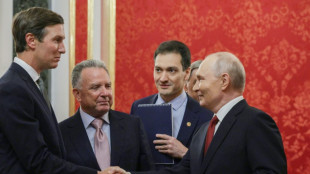 US envoys discuss with Putin 'substantive' plans for steps to end Ukraine war

 Zheng stuns Keys as US Open upsets dim American hopes

 Jovic 'loses sanity five times over' to oust Eala and book Gauff clash
 'Like a jewel': Japan's luxury ice revered by bars worldwide

 'The flood is coming': How a Nepal principal saved 900 students
 Kiss's winning run ends as Argentina hold Australia to draw

 Alcaraz excited to face 'dangerous' Paul for US Open quarter-final berth

 Prince William to represent King Charles III at Norway late King Harald's funeral

 Inter and Roma roar back to win thrillers and share top spot

 Don't stop them now: fans party for Freddie Mercury's 80th birthday

 AFP photographer wins top prize for Madagascar protest coverage

 Keys: 'I felt like I couldn't play tennis'

 Simmonds stars as Pau upset Montpellier

 Inter roar back in five-goal thriller with Napoli

 Haaland keeps Man City perfect in Premier League, blunt Spurs held

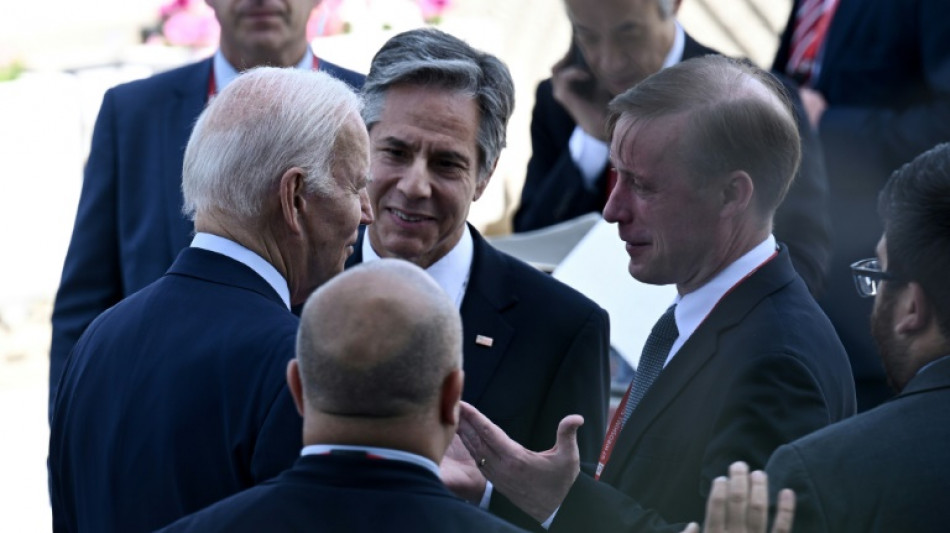
A top White House official on Friday offered to maintain current nuclear warhead limits with Russia, while making the case for putting rising power China at the center of future arms control efforts.
National Security Advisor Jake Sullivan made the comments in a speech at the annual National Arms Control Association meeting in Washington, as he outlined the attempt by Joe Biden administration to confront what he called "substantial" and "deep" cracks in the post-Cold War nuclear landscape.
With the last US-Russia arms control treaty -- New START -- largely moribund and due to expire in 2026, Sullivan said the United States is keen to forge a new treaty.
In the meantime, however, Washington wants the world's two leading nuclear powers to preserve the core of that treaty -- a limit for each of 1,550 warheads.
"We're prepared to stick to the central limits as long as Russia does," Sullivan said.
He also called on Moscow to start new talks for a post-2026 framework, saying "rather than waiting to resolve all of our bilateral differences, the United States is ready to engage Russia now to manage nuclear risks."
Unlike during the Cold War, when there were only two global nuclear powers, the future of arms control will revolve around China's rapidly expanding arsenal and global presence, Sullivan said.
"By 2035, (China) is on track to have as many as 1,500 nuclear warheads -- one of the largest peacetime nuclear buildups in history," Sullivan said, meaning that "the United States will need to deter two near-peer nuclear powers for the first time in its history."
"We're also ready to engage China without preconditions," he said.
A senior US official told reporters that the China factor not only involves the need for Washington to manage the threat directly but to consider the ripple effects created for US nuclear allies Britain and France, whose own smaller arsenals are largely directed at countering Russia.
Agreements with China "of course will affect our ability to come to some sort of accord with the Russians," the official said.
- Difficult path -
With relations at rock bottom with President Vladimir Putin's Russia and currently at a near standstill with Beijing, a difficult path lies ahead.
China "has thus far opted not to come to the table for substantive dialogue on arms control. It has declined to share the size and scope of its nuclear forces or to provide launch notifications. And it has not shown much interest in discussions regarding the changes to its nuclear forces," Sullivan said.
In February this year, Putin announced that Russia was suspending participation in New START, a Cold War-era treaty which limits warheads and allows verification by both sides.
The State Department said Thursday that it has made reciprocal "countermeasures" by suspending various aspects of the treaty, including on-site inspections and exchange of data.
While offering to rebuild arms control treaties, Sullivan stressed that the United States will simultaneously improve its nuclear forces.
"Responsibly enhancing our deterrent capabilities allows us to negotiate arms control from a position of strength," he said.
C.Kovalenko--BTB