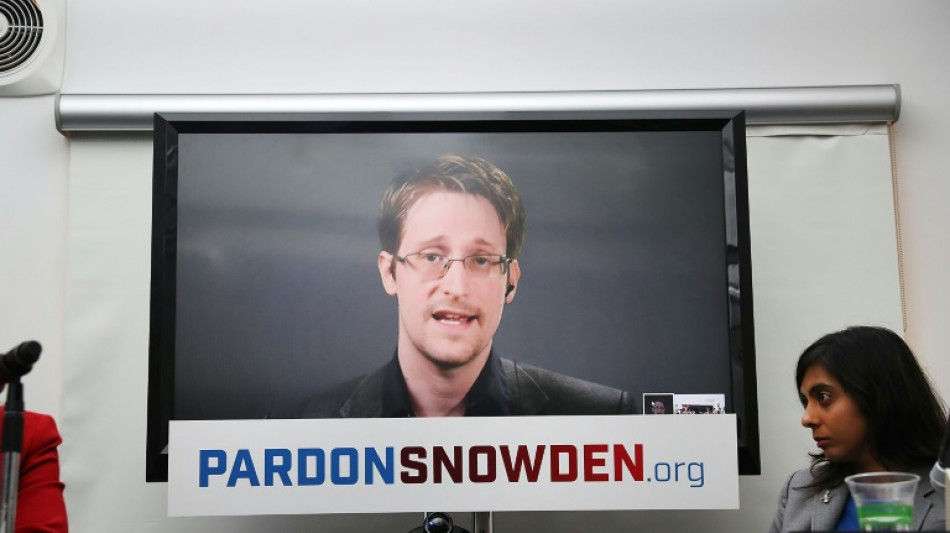
Snowden leaks at 10 years: more data more controls / Photo: © GETTY IMAGES NORTH AMERICA/AFP

 Strasbourg hit Troyes for six as Amo-Ameyaw sparkles

 German far-right AfD landslide winner in eastern state vote

 Carrick defends Man Utd start despite defensive concerns

 More than 140 killed in latest Yemen clashes: military sources

 Van Aert claims shortened Vuelta stage 15 win in high heat
 Everton shrug off transfer window woes to hold Man Utd

 'Nothing has changed': FIFA confirms Infantino to run for re-election

 UN's Nepal chief makes emotional plea for flood-ravaged country
 Italian GP red-flagged after massive Leclerc crash

 US envoys hold talks with Zelensky on first Kyiv visit
 'Truly scared': Blazes outpace firefighters in Indonesian Borneo
 German director Wenders clarifies views on film and politics
 Nepali rescuers buoyed by miracle finds but tough conditions persist
 At last: Straight sets win over Tabilo puts Zverev in US Open last 16

 Jovic 'loses sanity five times over' to oust friend Eala in US Open epic
 China's memories of Mao fade to nostalgia 50 years after his death

 US envoys discuss with Putin 'substantive' plans for steps to end Ukraine war

 Zheng stuns Keys as US Open upsets dim American hopes

 Jovic 'loses sanity five times over' to oust Eala and book Gauff clash

 'Like a jewel': Japan's luxury ice revered by bars worldwide

 'The flood is coming': How a Nepal principal saved 900 students

 Kiss's winning run ends as Argentina hold Australia to draw
 Alcaraz excited to face 'dangerous' Paul for US Open quarter-final berth

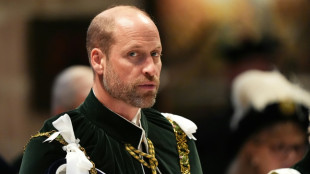 Prince William to represent King Charles III at Norway late King Harald's funeral

 Inter and Roma roar back to win thrillers and share top spot

In 2013 US intelligence contractor Edward Snowden stunned the world with revelations that the massive US spy apparatus was secretly sucking up communications and private data on people around the world, from the lowest social media poster to the phone calls of German chancellor Angela Merkel.
Snowden showed no one was safe from electronic prying by the National Security Agency, least of all Americans, whose private communications were supposedly constitutionally protected.
Ten years later, Snowden sits in exile in Moscow and US intelligence still collects huge amounts of private electronically stored and transmitted information.
But his revelations had lasting impact, advancing privacy protections in Europe and America and accelerating use of encryption.
After Snowden's leaks, "in almost every Western democracy, there was a historic debate about the relationship of citizens and the state mass surveillance programs, whether oversight of those programs was adequate," said Ben Wizner of the American Civil Liberties Union and an attorney for Snowden.
- Global digital dragnet
A boyish 29-year-old NSA systems administrator, Snowden downloaded thousands of NSA and CIA documents showing the extent of the global data collection dragnet that took off after the September 11, 2001 attacks.
Documents that Snowden gave to journalists in secret Hong Kong meetings showed how US intelligence worked with Britain's GCHQ and other agencies to build files on billions of people without any grounds for suspicion.
They showed the US was able to tap into the phones of allied leaders and that the NSA had a program called Prism that collected user data from internet giants like Google and Facebook -- with and without their agreement.
The NSA collected call data from leading cell provider Verizon and routinely trawled data from public companies, hospitals and universities.
He also revealed that GCHQ with NSA help sucked up all traffic moving through major global undersea communications cables.
GCHQ also surreptitiously snapped millions of pictures from the computer cameras of people while they were on Yahoo webcam chats.
The problem, Snowden said, was not the justification of fighting terrorism, but that these were secret programs with virtually no limits.
"The public needs to decide whether these kinds of programs and policies are right or wrong," he said.
- Outrage on all sides -
The revelations outraged the public but also US intelligence, who accused Snowden of devastating counter-terrorism programs and helping America's enemies.
US spy agencies however declined to enumerate the damage, only noting that their surveillance had prevented dozens of attacks.
In 2016, national intelligence director James Clapper pointed to the central damage: Snowden made the NSA's work harder by pushing internet and mobile communications firms, app makers and others to encrypt their services.
- Tighter rules -
For Wizner, the leaks strengthened civil liberties, even if more internet companies than ever are collecting users' data.
Snowden effectively forced the White House, Congress and courts to reverse course on spying activities they had approved in secret, revising authorities for the NSA and forcing some programs to be cancelled.
"Congress, for the first time since the 1970s, legislated to reduce rather than expand the surveillance authorities," Wizner said.
In 2018 the European Union implemented the General Data Protection Regulation (GDPR) aiming at the power of US companies like Google and Facebook to collect and make liberal use of user data.
"Snowden's global surveillance revelations tangibly affected the Internet privacy debate in Europe," wrote Gus Rossi, director for Responsible Technology and the Omidyar Group.
Under the GDPR, last month Facebook owner Meta was fined 1.2 billion euros ($1.3 billion) by Ireland for violating EU data protections because data it collects on European users and transfers to the US was not safe from the NSA and CIA.
- Exile in Moscow-
Now 39, Snowden still advocates for more privacy protections. Living in Moscow with his American wife and two sons, both born in Russia, he earns a living with paid speeches and consultations.
He cannot leave Russia for lack of another safe haven, and is wanted by the US on felony charges under the Espionage Act.
"He would prefer to be elsewhere. And we both wished that there were an option other than a maximum security prison cell and living in Russia," said Wizner.
- Still at risk -
Marcy Wheeler, an independent journalist focused on the nexus of intelligence and the law, is more skeptical about the gains of Snowden's revelations.
The ever-adaptive NSA just accomplishes what it needs "via other means," she said.
"The most important surveillance targeting Americans... is done by the FBI and, with even less oversight, by states and localities," she said.
C.Meier--BTB