Near Black Sea, civilians flee southern Ukrainian city / Photo: ©

 'American Doctor' shows brutality of conflict in Gaza

 New Zealand blocks lawsuits against firms over climate harm
 Aussie Rules club suspends five players amid police probe
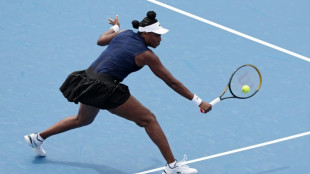
 No.1 Sabalenka slams Wang to power ahead in Cincinnati
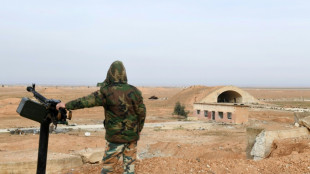 Israel blames Turkey after strike on Syria air base
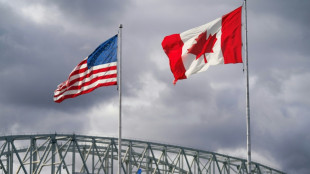
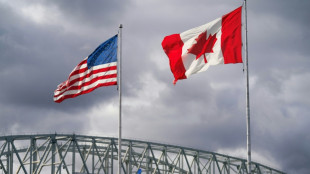 Trump, Carney talk as Canada seeks to hold off new US tariffs
 NASA images reveal crater left by SpaceX rocket's Moon crash
 UN atomic watchdog says found tons of nuclear material at Syria site
 Ecuadoran diplomat enters race to be next UN chief

 US sanctions ICC chief Tomoko Akane of Japan
 US moves to open vast tracts of pristine forests to logging
 US sanctions International Criminal Court chief Tomoko Akane of Japan
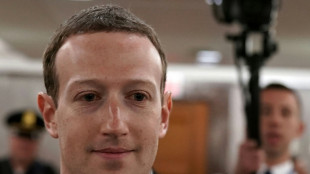 Meta hooked children and misled public: prosecutors

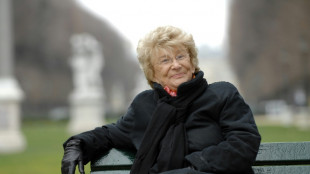 France's first women's rights minister Yvette Roudy dies, aged 97

 French producer Nicolas Altmayer, Dior PR chief Favier die in car crash
 Bezos consortium bought nearly 40 percent of Liverpool: report
 Trump says no Iran talks planned, claims Hormuz 'new US territory'
 Canada seeks to avert new US tariffs as deadline looms
 US primaries test Democrat comeback hopes in Trump stronghold
 Scientists discover how narwhals grow nature's only straight tusk
 DR Congo Ebola outbreak 'far from being under control': WHO chief

 Firefighters in 'decisive' push to encircle Belgian wildfire
 Tribal Partners with ServiceNow to Empower Enterprise Teams to Build and Deploy Apps & Agents

 Fusion Markets Extends Negative Balance Protection to Clients Globally
 India close on victory in first Test against Sri Lanka
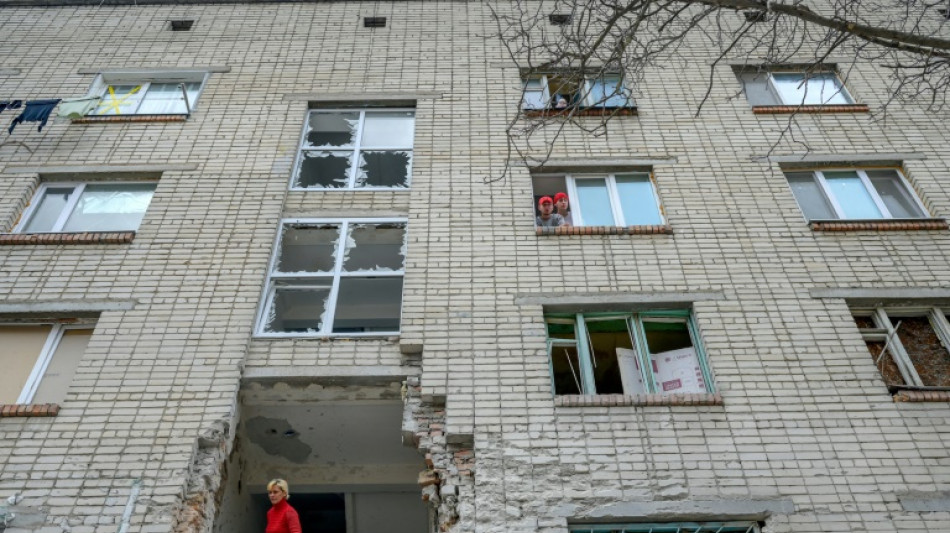
In Ukraine's southern city of Mykolaiv under Russian fire, Vitaliy Sobolev's apartment block stands punctured on one side, a metal door blown off and windows gaping empty.
The man in his 70s says he was sleeping when the bombardment hit early Monday morning in his city near the Black Sea.
"The windowpanes started to shake. I plastered myself against a wall," said Sobolev, whose kitchen, near the impact point on the second floor was ravaged, though there were no casualties.
His fourth-floor neighbour, Liliana Sidorska, swore at the Russian forces who invaded Ukraine almost two weeks ago, and have since pounded her home city.
They are targeting not military targets but "people who have nothing and who no one is helping", she said.
"Why are the Russians coming here to bomb us? They're bastards, bastards."
Mykolaiv and the surrounding region have been the scene of intense clashes and bombardment in recent days.
The city of 500,000 stands between the Russians and the major port city of Odessa, just 130 kilometres (80 miles) to the west along the Black Sea coastline.
- 'We can't stay' -
Many tried to flee the city on Tuesday morning during a relative lull in the bombardment, despite sporadic shelling resounding across the streets.
A long line of cars several kilometres (miles) long snaked up to the bridge over the river running through the city, as desperate families drove west to safety.
Further along the road, cars waited bumper to bumper to be waved through a Ukrainian checkpoint, many with a sign in their window marked "children".
In front of the city's main hospital, Sabrina waited, surrounded by bags, for her mother to finish her kidney treatment inside.
"After that, we're leaving, as fast as possible, by bus," said the 19-year-old, holding a small dog on the end of leash and clutching a cat to her breast under her jacket.
"We can't stay any more, it's too dangerous," added the young woman, who had had no news from her husband on the frontline.
Inside, doctors have already started treating war casualties.
Oleksandr, a soldier in his 20s, had been rushed in with a broken leg and riddled with shrapnel, after Russians hit his barracks on Monday.
He said eight of his comrades had been killed, another eight had disappeared, and 18 more had been wounded. AFP could not independently verify these figures.
The hospital's leading surgeon, Dmytro Sikorsky, said he had lost count of how many people had been brought in for treatment since Russia invaded the country on February 24.
In the first days of the conflict, the hospital treated 160 soldiers, he said. These days however, patients were mostly civilians.
Asked if he had seen any wounded Russian soldiers, he said: "There were a few, but we cannot approach them. The military looks after them."
- 'Head really hurts' -
Among the civilians was Vira Pysmenna, a blue-eyed woman in her sixties, whose face was covered in dried blood. A large dressing clung to her forehead.
She had come from the village of Snigurivka, some 60 kilometres (40 miles) outside the city, where she said her nephew and two children were still hiding in a shelter.
"May our planes bomb the Russians for what they have done," she said, white hair framing her injured face.
In another room, Maksym Sokol waited for his head to be bandaged.
He said he was lobbing a Molotov cocktail at a Russian tank when he was hit by gunfire.
"It was two, three or four days ago, I can't remember. My head really hurts," said the young man. His torso and arms were covered in tattoos of a Kalashnikov, a dog, a dragon and a wolf.
He was not able to join the army due to health issues, his mother explained, so he had signed up to fight the Russians with the civilian volunteers instead.
In a weak voice, he teased his nurse, and asked her if she had been on a safari before.
"We'll go after the war," she promised, and he asked when.
"I don't know," she said.
N.Fournier--BTB