McDonald's, Coca-Cola join US firms halting Russia operations / Photo: ©

 'American Doctor' shows brutality of conflict in Gaza
 New Zealand blocks lawsuits against firms over climate harm
 Aussie Rules club suspends five players amid police probe

 No.1 Sabalenka slams Wang to power ahead in Cincinnati
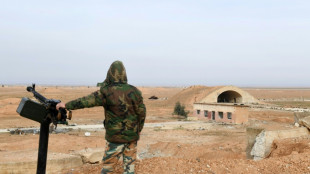
 Israel blames Turkey after strike on Syria air base
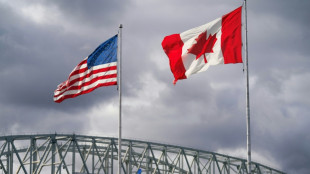 Trump, Carney talk as Canada seeks to hold off new US tariffs

 NASA images reveal crater left by SpaceX rocket's Moon crash
 UN atomic watchdog says found tons of nuclear material at Syria site
 Ecuadoran diplomat enters race to be next UN chief

 US sanctions ICC chief Tomoko Akane of Japan
 US moves to open vast tracts of pristine forests to logging

 US sanctions International Criminal Court chief Tomoko Akane of Japan

 Meta hooked children and misled public: prosecutors

 France's first women's rights minister Yvette Roudy dies, aged 97
 French producer Nicolas Altmayer, Dior PR chief Favier die in car crash
 Bezos consortium bought nearly 40 percent of Liverpool: report

 Trump says no Iran talks planned, claims Hormuz 'new US territory'
 Canada seeks to avert new US tariffs as deadline looms
 US primaries test Democrat comeback hopes in Trump stronghold
 Scientists discover how narwhals grow nature's only straight tusk
 DR Congo Ebola outbreak 'far from being under control': WHO chief

 Firefighters in 'decisive' push to encircle Belgian wildfire
 Tribal Partners with ServiceNow to Empower Enterprise Teams to Build and Deploy Apps & Agents
 Fusion Markets Extends Negative Balance Protection to Clients Globally
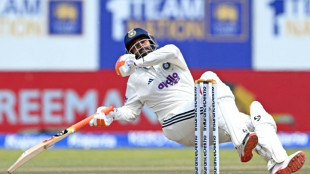 India close on victory in first Test against Sri Lanka
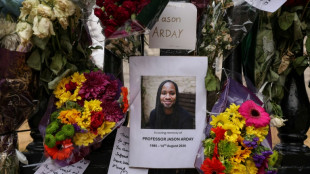
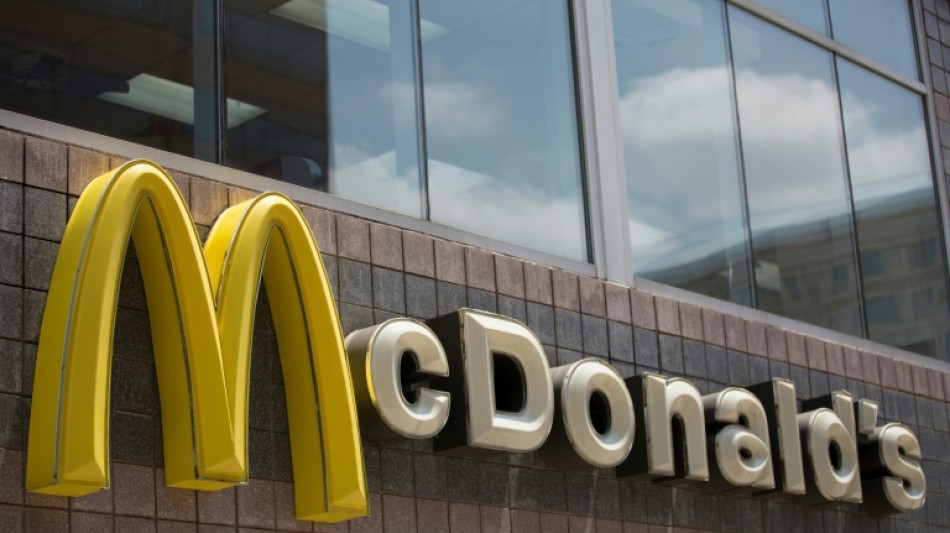
McDonald's, Coca-Cola and Starbucks on Tuesday bowed to public pressure and suspended their operations in Russia over Moscow's internationally condemned invasion of Ukraine.
Several of these companies, symbols of American cultural influence in the world, have been the subject of boycott calls on social media as investors have also begun to ask questions about their presence.
"We cannot ignore the needless human suffering unfolding in Ukraine," the fast-food giant said, announcing the temporary closure all 850 restaurants in Russia, where it employs 62,000 people.
Starbucks, Coca-Cola and PepsiCo announced their own decisions to halt or restrict business in quick succession, noting the growing human cost of the invasion.
PepsiCo said that despite halting sales in Russia of its flagship beverage, as well as 7Up and Mirinda, it would continue to offer products like milk and baby food.
"By continuing to operate, we will also continue to support the livelihoods of our 20,000 Russian associates and the 40,000 Russian agricultural workers in our supply chain," PepsiCo CEO Ramon Laguarta said in a statement.
Starbucks, which has 130 Kuwaiti conglomerate-run coffee shops in Russia, said all operations, including product shipments, will be suspended.
A team from Yale University that keeps a list of companies with a significant presence in Russia said about 290 have announced withdrawal from the country since it invaded neighboring Ukraine, reminiscent of "the large-scale corporate boycott of Apartheid South Africa in the 1980s."
About 30 multinationals still remain on the list of companies with significant exposure to Russia.
- Legitimate reasons? -
Some companies, however, have noted the limits of their influence is halting business.
Yum! Brands, whose 1,000 or so KFC restaurants and 50 Pizza Hut locations in Russia are almost all independently owned, announced late Monday that it was suspending "all investment and restaurant development in Russia."
Some businesses may have legitimate reasons to stay, several experts in ethics and communications strategy told AFP.
Companies may be hesitant to leave because they think they can mediate or because they make essential products such as pharmaceutical ingredients, said Tim Fort, a professor of business ethics at Indiana University.
But he said they have to pick a side "and it doesn't strike me as this being very difficult to pick" given Russia's human rights and conflict law violations.
"Any one company leaving the country isn't going to tip the balance... but there's a cumulative effect," Fort noted.
- 'What's going on?' -
He said a company as well-known as McDonald's can have influence in Russia at a time when the general population has almost no access to sources of information other than the official messaging on the invasion.
Russians can "survive without the Big Mac," but they may ask "why is McDonald's closed? What's going on? It's a more powerful signal in that sense," Fort said.
Richard Painter, a professor at the University of Minnesota, said the companies "should think about the message that needs to be emphasized: that Russia cannot do this to Ukraine... while at the same time participating in the international economy."
The economic sanctions imposed on Russia with broad consensus among Western governments along with the voluntary withdrawal of multinationals "is really the best way to deal with Russia," said Painter, a former White House ethics lawyer.
Brian Berkey, who specializes in corporate ethics at the University of Pennsylvania, said some companies may be betting the criticism will ultimately subside.
Other crisis situations, such as the Israeli-Palestinian conflict, led to calls for boycotts against certain companies but without much effect.
Support for such initiatives is not always unanimous even though most people "in the United States and in Europe are unified in thinking that what Russia is doing is clearly unacceptable," he said.
Mark Hass, a communications specialist at Arizona State University, said the economic interest of companies that have chosen to stay in Russia "outweighs the reputational one."
But "if social media starts identifying you as a company that's willing to do business with an autocratic aggressor, who's slaughtering thousands of people in the Ukraine, you're in big trouble," Hass said.
"And it will hurt business more broadly than just in Russia."
L.Dubois--BTB