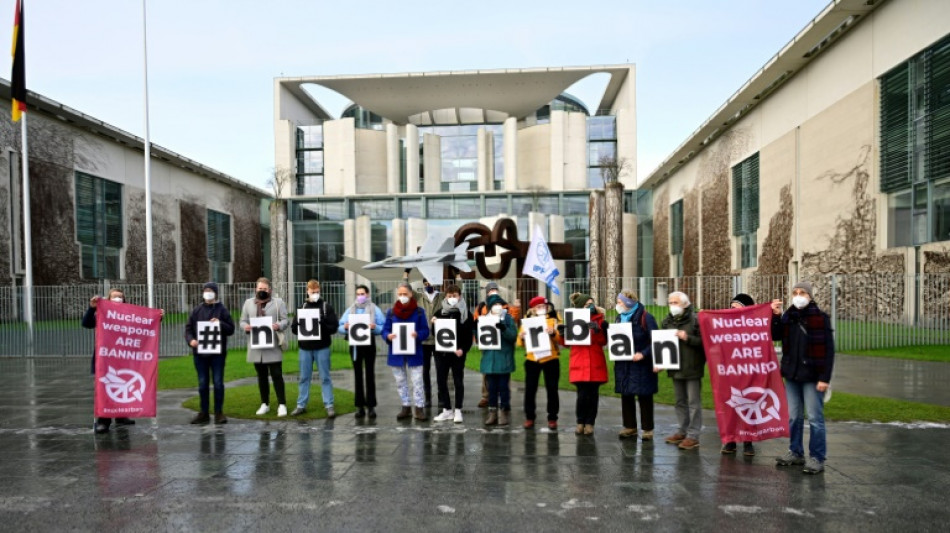
Putin nuclear threats 'extremely dangerous', 'blackmail': ICAN / Photo: ©

 'American Doctor' shows brutality of conflict in Gaza

 New Zealand blocks lawsuits against firms over climate harm
 Aussie Rules club suspends five players amid police probe
 No.1 Sabalenka slams Wang to power ahead in Cincinnati
 Israel blames Turkey after strike on Syria air base
 Trump, Carney talk as Canada seeks to hold off new US tariffs
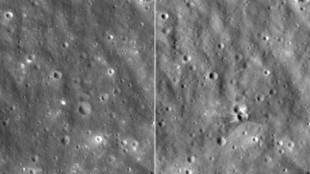 NASA images reveal crater left by SpaceX rocket's Moon crash
 UN atomic watchdog says found tons of nuclear material at Syria site
 Ecuadoran diplomat enters race to be next UN chief

 US sanctions ICC chief Tomoko Akane of Japan
 US moves to open vast tracts of pristine forests to logging
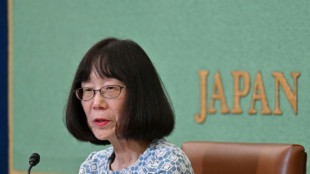 US sanctions International Criminal Court chief Tomoko Akane of Japan
 Meta hooked children and misled public: prosecutors

 France's first women's rights minister Yvette Roudy dies, aged 97
 French producer Nicolas Altmayer, Dior PR chief Favier die in car crash
 Bezos consortium bought nearly 40 percent of Liverpool: report
 Trump says no Iran talks planned, claims Hormuz 'new US territory'
 Canada seeks to avert new US tariffs as deadline looms
 US primaries test Democrat comeback hopes in Trump stronghold
 Scientists discover how narwhals grow nature's only straight tusk

 DR Congo Ebola outbreak 'far from being under control': WHO chief

 Firefighters in 'decisive' push to encircle Belgian wildfire
 Tribal Partners with ServiceNow to Empower Enterprise Teams to Build and Deploy Apps & Agents

 Fusion Markets Extends Negative Balance Protection to Clients Globally
 India close on victory in first Test against Sri Lanka
Russian President Vladimir Putin is using nuclear "blackmail" to keep the international community from interfering in his Ukraine invasion, the head of the Nobel prize-winning group ICAN said.
"This is one of the scariest moments really when it comes to nuclear weapons," Beatrice Fihn, who leads the International Campaign to Abolish Nuclear Weapons, told AFP in an interview Tuesday.
The 40-year-old Swede, who has spearheaded the group's global efforts to ban the weapons of mass destruction since 2013, said she had never in her lifetime seen the nuclear threat level so high.
"It is incredibly worrying and overwhelming."
Just days after Russia launched its full-scale invasion of its pro-Western neighbour on February 24, Putin ordered his country's nuclear forces to be put on high alert, sparking global alarm.
Addressing the US Congress on Tuesday, Avril Haines, US Director of National Intelligence, described Putin's move as "extremely unusual".
"We have not seen a public announcement from the Russians regarding a heightened nuclear alert status since the 1960s," she pointed out.
Fihn described the move as "extremely dangerous".
"Not only is this meant to instil fear in the whole world; it's also meant to scare anyone from helping in Ukraine."
- 'Everyone is terrified' -
Countries during the Cold War argued that large nuclear arsenals served as deterrents, helping avoid conflict. Now Moscow was using its arsenal to enable conflict, she said.
"Russia is using it to blackmail almost, to be able to invade Ukraine, and nobody can interfere."
The nuclear threat "is now being used in an extremely malicious and evil way, to... enable an illegal invasion of a country that doesn't have nuclear weapons."
Would Putin actually use nuclear weapons? Fihn stressed she still did not think it was likely.
But "it is not ruled out", she said. "We are starting to worry that it might happen."
But even if there is no plan to actually use such weapons, with tensions soaring "misunderstandings can escalate quickly and we could stumble into nuclear use by accident", she warned.
Fihn said she had received numerous messages from people asking how to speak to their children about the threat.
"Everyone is terrified right now," she said, acknowledging that the situation was getting to her too.
"I spent the last decade talking about what happens when a nuclear weapon is used, what happens to bodies, what happens to cities," she said.
"I am finding it very difficult to talk about it now."
- 'Wake-up call' -
But Fihn hopes the current crisis will serve as a wake-up call that will push countries towards nuclear disarmament.
"If we survive this, we're not going to be so lucky all the time," she said.
"We cannot let countries do this to other countries anymore, (just) because they have nuclear weapons."
ICAN won the 2017 Nobel Peace Price for its key role in drafting the Treaty on the Prohibition of Nuclear Weapons, which took effect a year ago.
Fifty-nine countries have ratified the treaty, and more have signed it.
Fihn pointed out that the treaty bans the kinds of nuclear threats being made by Russia, which is not a party to it. Nor are any of the states known to possess nuclear weapons.
But the current crisis has sparked growing interest in the treaty, she said.
"I feel like there's an opening now that we can really start working towards nuclear disarmament."
Once the conflict ends, she aid, Russia should not be permitted to maintain its current nuclear arsenal.
"They're going to have to do something... in order to be able to be let back into the international community again, and nuclear disarmament should be that."
O.Lorenz--BTB