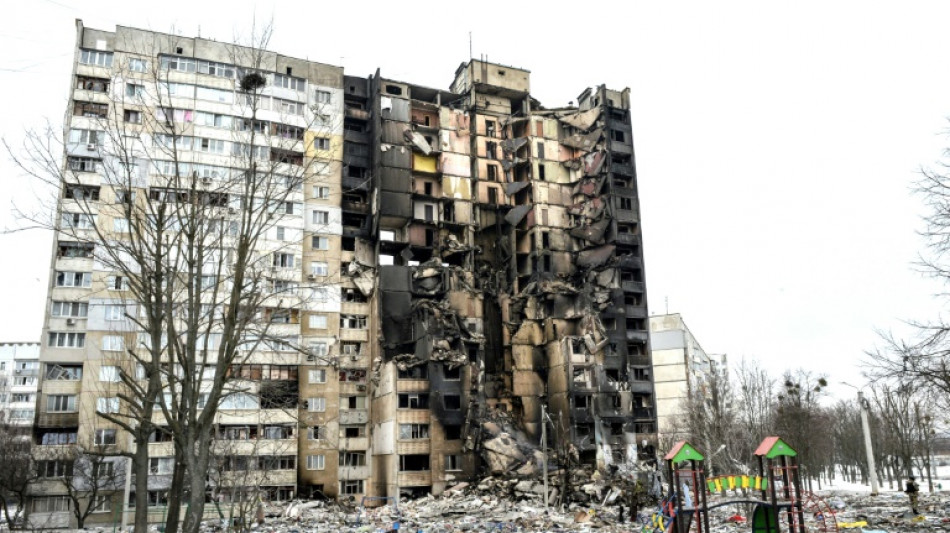
Urban warfare 'nightmare' looms if Russia enters Ukraine cities / Photo: ©

 'American Doctor' shows brutality of conflict in Gaza

 New Zealand blocks lawsuits against firms over climate harm

 Aussie Rules club suspends five players amid police probe

 No.1 Sabalenka slams Wang to power ahead in Cincinnati
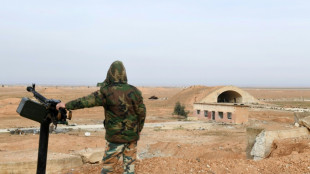 Israel blames Turkey after strike on Syria air base

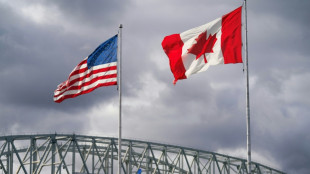 Trump, Carney talk as Canada seeks to hold off new US tariffs

 NASA images reveal crater left by SpaceX rocket's Moon crash

 UN atomic watchdog says found tons of nuclear material at Syria site

 Ecuadoran diplomat enters race to be next UN chief

 US sanctions ICC chief Tomoko Akane of Japan

 US moves to open vast tracts of pristine forests to logging
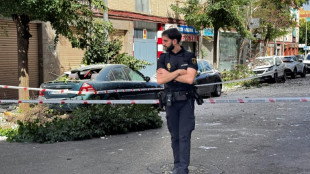
 US sanctions International Criminal Court chief Tomoko Akane of Japan
 Meta hooked children and misled public: prosecutors

 France's first women's rights minister Yvette Roudy dies, aged 97

 French producer Nicolas Altmayer, Dior PR chief Favier die in car crash
 Bezos consortium bought nearly 40 percent of Liverpool: report

 Trump says no Iran talks planned, claims Hormuz 'new US territory'

 Canada seeks to avert new US tariffs as deadline looms

 US primaries test Democrat comeback hopes in Trump stronghold
 Scientists discover how narwhals grow nature's only straight tusk

 DR Congo Ebola outbreak 'far from being under control': WHO chief

 Firefighters in 'decisive' push to encircle Belgian wildfire

 Tribal Partners with ServiceNow to Empower Enterprise Teams to Build and Deploy Apps & Agents

 Fusion Markets Extends Negative Balance Protection to Clients Globally
 India close on victory in first Test against Sri Lanka

The next step in Russia's invasion of Ukraine could lead to urban warfare, an immense challenge for even numerically superior armies with deadly consequences for civilians caught up in the fighting, experts say.
Nearly two weeks after the start of the Russian offensive, fears are growing that troops are preparing to launch major moves on Ukrainian cities that have so far escaped their grasp.
Russian artillery and rockets have been striking cities including the capital Kyiv, as well as smaller regional centres such as Kharkiv, Mariupol and Chernihiv.
Inhabitants there, as well as in the southern port of Odessa, another strategic target, are now preparing for possible ground attacks.
"You still see them (Russians) holding back compared to what they could be doing," said Michael Kofman, a specialist on the Russian military at the US-based Center for Naval Analyses (CNA).
"But I'm fairly concerned that that might actually turn into some smaller or lesser version of Grozny," he said, referring to Russia's offensive against the capital of separatist-controlled Chechnya in the 1990s.
"I doubt that they will try to level cities the way they did in Chechnya but nonetheless I think they’re going to see heavy destruction if they attempt an urban assault."
Lance Davies, a defence specialist at the Royal Military Academy Sandhurst in Britain, said that ground operations in hostile cities were "notoriously difficult to fight."
"Urban operations are the worst nightmare for military forces, commanders and political leaders," he said.
"The likelihood of becoming bogged down in brutal house-to-house fighting is almost guaranteed –- and an assault on Kyiv would require a huge commitment in resources and manpower, but more importantly place Russian forces in close contact with legally protected civilian populations and critical infrastructure."
- Resources -
There remain doubts about whether Russia has the resources needed to capture and hold urban areas in Ukraine, and whether the country and President Vladimir Putin are ready to accept mounting casualties.
A French military source told AFP that the rule of thumb was that attacking forces needed to outnumber defenders 10-1 because the defenders had the advantage of knowing the territory.
Defenders can also benefit from the height advantages from local buildings, with Russian tanks and other armoured vehicles vulnerable to attacks from above.
"It would be suicide to send tanks into urban areas," said Alexander Grinberg from the Israeli think-tank JISS.
"They can't manoeuvre or move around... To conquer cities, you need professional infantry that is very motivated because it is always very difficult."
Between 2016-17, the Iraqi army required eight months to dislodge a few thousand jihadists from the Islamic State group in Mosul after they had seized control of the city.
- History -
John Spencer from the Modern War Institute at the American military academy West Point says that fighting in cities is a relatively modern phenomenon.
In Antiquity and the Middle Ages, armies would lay siege to cities but fighting usually took place at their fortifications and populations were often starved into submission.
After this, battles were conducted in open spaces between armies, rather than in inhabited areas.
"It was not until World War II that Western military formations experienced heavy and frequent fighting in cities," he said.
The mother of such battles was the fight for the Russian city of Stalingrad (now Volgograd) in 1942-43 between Soviet and Nazi forces, which left an estimated two million people dead.
Many Ukrainians have signed up to territorial defence units and are preparing to join the fight.
"Every house, every street, every check point will resist, until death if necessary," the mayor of Kyiv, former boxing champion Vitali Klitschko, wrote on Instagram.
S.Keller--BTB