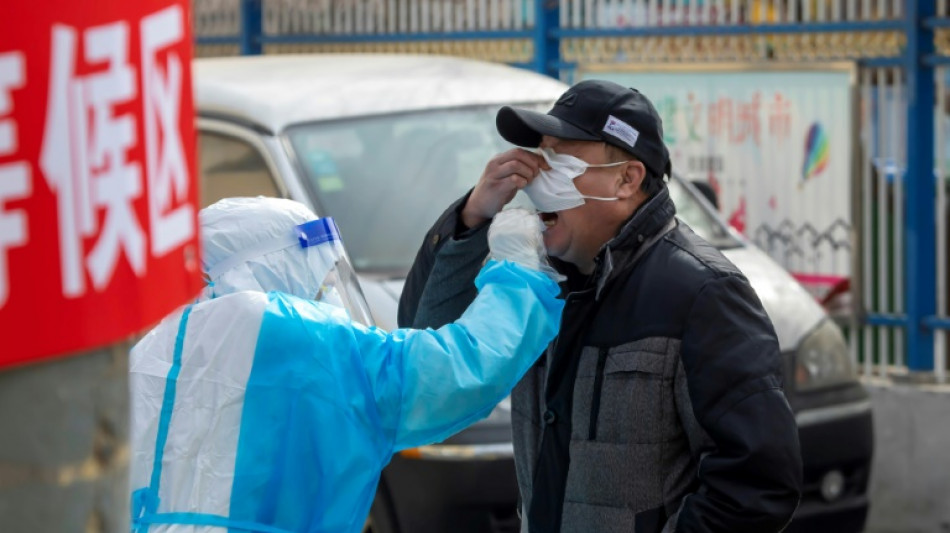
Two years on, WHO warns pandemic 'far from over' / Photo: ©

 'American Doctor' shows brutality of conflict in Gaza

 New Zealand blocks lawsuits against firms over climate harm

 Aussie Rules club suspends five players amid police probe

 No.1 Sabalenka slams Wang to power ahead in Cincinnati
 Israel blames Turkey after strike on Syria air base

 Trump, Carney talk as Canada seeks to hold off new US tariffs

 NASA images reveal crater left by SpaceX rocket's Moon crash

 UN atomic watchdog says found tons of nuclear material at Syria site

 Ecuadoran diplomat enters race to be next UN chief

 US sanctions ICC chief Tomoko Akane of Japan

 US moves to open vast tracts of pristine forests to logging

 US sanctions International Criminal Court chief Tomoko Akane of Japan

 Meta hooked children and misled public: prosecutors

 France's first women's rights minister Yvette Roudy dies, aged 97

 French producer Nicolas Altmayer, Dior PR chief Favier die in car crash

 Bezos consortium bought nearly 40 percent of Liverpool: report
 Trump says no Iran talks planned, claims Hormuz 'new US territory'
 Canada seeks to avert new US tariffs as deadline looms

 US primaries test Democrat comeback hopes in Trump stronghold
 Scientists discover how narwhals grow nature's only straight tusk

 DR Congo Ebola outbreak 'far from being under control': WHO chief

 Firefighters in 'decisive' push to encircle Belgian wildfire

 Tribal Partners with ServiceNow to Empower Enterprise Teams to Build and Deploy Apps & Agents

 Fusion Markets Extends Negative Balance Protection to Clients Globally

 India close on victory in first Test against Sri Lanka
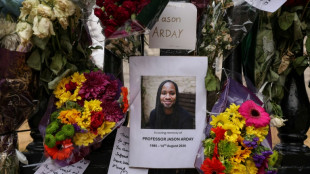
The pandemic is far from over, the WHO's leader insisted Wednesday, two years after he first used the term to wake the world up to the emerging threat of Covid-19.
The World Health Organization's director-general Tedros Adhanom Ghebreyesus first described Covid-19 as a pandemic on March 11, 2020.
Two years on, he lamented how the virus was still evolving and surging in some parts of the world.
The WHO declared a public health emergency of international concern -- the highest level of alarm in the UN health agency's regulations -- on January 30, 2020, when, outside of China, fewer than 100 cases and no deaths had been reported.
But it was only the use of the word pandemic six weeks on that seemed to shake many countries into action.
"Two years later, more than six million people have died," Tedros told a press conference, while nearly 444 million cases have been registered.
"Although reported cases and deaths are declining globally, and several countries have lifted restrictions, the pandemic is far from over -- and it will not be over anywhere until it's over everywhere."
He noted the 46-percent rise in new cases last week in the WHO's Western Pacific region, where 3.9 million infections were recorded.
"The virus continues to evolve, and we continue to face major obstacles in distributing vaccines, tests and treatments everywhere they are needed," Tedros said.
He also sounded a warning on the recent plunge in testing rates, saying it left the planet blind to what Covid-19 was up to.
"WHO is concerned that several countries are drastically reducing testing," Tedros said.
"This inhibits our ability to see where the virus is, how it's spreading and how it's evolving."
- Call for vigilance -
The number of fresh cases fell five percent worldwide last week compared to the week before, while the number of deaths dropped eight percent.
However, Maria Van Kerkhove, the WHO's Covid-19 technical lead, warned that the case rate was certainly an underestimate due the dramatic drop-off in testing.
"The virus is still spreading at far too intensive a level, three years into this pandemic," she said.
"Even though we are seeing declining trends... there were still more than 10 million reported cases reported at a global level last week.
"We have to remain vigilant."
In its weekly update on the spread of the virus, the WHO said earlier that the Omicron variant had "global dominance" over other mutations of the virus.
The WHO said Omicron accounted for 99.7 percent of samples collected in the last 30 days that have been sequenced and uploaded to the GISAID global science initiative.
The WHO says unequal access to Covid-19 vaccines, tests and treatments remains rampant and is prolonging the pandemic.
On jabs, the WHO's latest figures show 23 countries are yet to fully immunise 10 percent of their populations, while 73 countries are yet to achieve the 40 percent coverage target set for the start of 2022.
F.Müller--BTB