Outside New York, a warehouse becomes rear base for Ukraine aid / Photo: ©

 'American Doctor' shows brutality of conflict in Gaza

 New Zealand blocks lawsuits against firms over climate harm

 Aussie Rules club suspends five players amid police probe

 No.1 Sabalenka slams Wang to power ahead in Cincinnati
 Israel blames Turkey after strike on Syria air base

 Trump, Carney talk as Canada seeks to hold off new US tariffs

 NASA images reveal crater left by SpaceX rocket's Moon crash

 UN atomic watchdog says found tons of nuclear material at Syria site

 Ecuadoran diplomat enters race to be next UN chief

 US sanctions ICC chief Tomoko Akane of Japan

 US moves to open vast tracts of pristine forests to logging

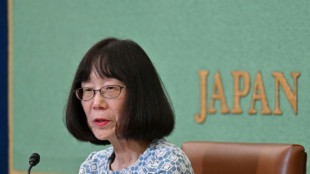 US sanctions International Criminal Court chief Tomoko Akane of Japan

 Meta hooked children and misled public: prosecutors

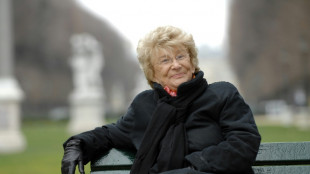 France's first women's rights minister Yvette Roudy dies, aged 97

 French producer Nicolas Altmayer, Dior PR chief Favier die in car crash
 Bezos consortium bought nearly 40 percent of Liverpool: report

 Trump says no Iran talks planned, claims Hormuz 'new US territory'

 Canada seeks to avert new US tariffs as deadline looms

 US primaries test Democrat comeback hopes in Trump stronghold
 Scientists discover how narwhals grow nature's only straight tusk

 DR Congo Ebola outbreak 'far from being under control': WHO chief

 Firefighters in 'decisive' push to encircle Belgian wildfire

 Tribal Partners with ServiceNow to Empower Enterprise Teams to Build and Deploy Apps & Agents

 Fusion Markets Extends Negative Balance Protection to Clients Globally

 India close on victory in first Test against Sri Lanka
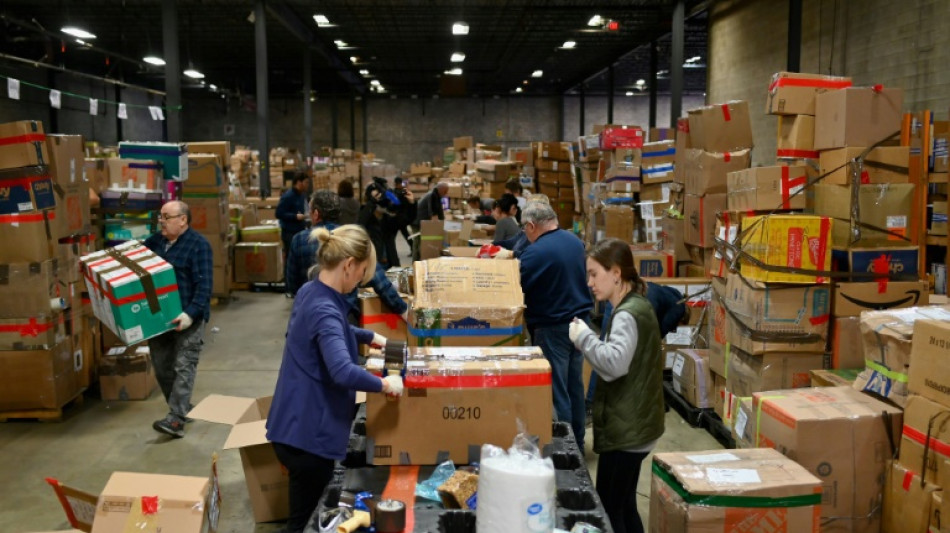
In a large warehouse near New York, dozens of volunteers and workers open, sort and tape up boxes -- in a hurry.
International delivery company Meest, which specializes in sending items to Eastern Europe, has transformed itself into a wartime transit depot that delivers tons of aid to Ukraine.
"When the war started, we lost most of our business. A few days later, we organized our operations to move humanitarian aid," said Natalia Brandafi, chief operating officer at Meest-America.
In front of her, along about 30 wooden shelves, sit packages, parcels and envelopes -- gifts and letters that the Ukrainian diaspora normally sends home, but which are all now stuck.
"That (work) completely stalled because of the war," said Brandafi over the background sound of Ukrainian radio.
The rest of the 8,500-square-meters warehouse, set deep in an New Jersey industrial zone, has been re-purposed to work 12 hours a day arranging emergency deliveries to the war-torn country.
Stephanie Domaradsky, 23, works in a team of 20 volunteers on a rudimentary production line, sorting through hundreds and hundreds of boxes donated by Ukrainians, supporters, or churches and other groups.
The packages are opened one by one, their contents checked to remove any perishable products, plus aerosol cans or alcohol.
Sometimes a child's drawing is slipped in before the box is labelled, closed and stacked on the correct palette for onwards transport to those left desperately in by need by the conflict.
- From pillows to painkillers -
"This is kid stuff, baby clothes, diapers," explains Domaradsky, born to Ukrainian parents in the United States, where she has just got her engineering degree.
"That's sleeping bags, blankets, pillows. This is all clothes, and then we have hygiene stuff."
Also packaged up are medical supplies -- bandages, compresses, suture threads, anti-burn ointments, painkillers.
"Sitting at home, scrolling (on my phone) for hours a day wasn't doing me any good -- so I might as well come here and help out.
"I have cousins from Kiev. But they're currently making their way west even it's really dangerous to be on the roads. I just heard from them yesterday."
Meest has also hastily obtained a license to export light, non-lethal military equipment, such as body armor and helmets.
"Everybody is under stress. About 80 percent of our employees are from Ukraine, some from the cities that were already bombed," said Brandafi.
"We had a volunteer who collapsed in the warehouse, because she received a phone call from her sister in Ukraine that a nephew was killed in the city of Sumy. He was 28."
Meest is working with three nonprofit organizations on the ground in Ukraine, delivering supplies to civilians in the war zone, as well as making direct deliveries to some areas not yet attacked by Russian forces.
Last week, the company delivered 120 tons of aid, by air and then by road -- the tricky final stage of operations.
"Our trucks and our drivers are working in an extremely dangerous environment," human resources manager Myroslava Downey, 59, explained.
"Sometimes they go to an area where today it's safe, but what’s happening is changing daily. And our enemy decides they’re going to bomb that area."
With the war now in its second week, the financial reality of the operation is beginning to show, and Meest is asking for donations to cover its transport costs.
"We have the optimum logistics solution because we've been sending cargo and packages to Ukraine for many years, but we lost our business two weeks ago, said Downey.
"When we book the plane, they want to get paid for it."
M.Ouellet--BTB