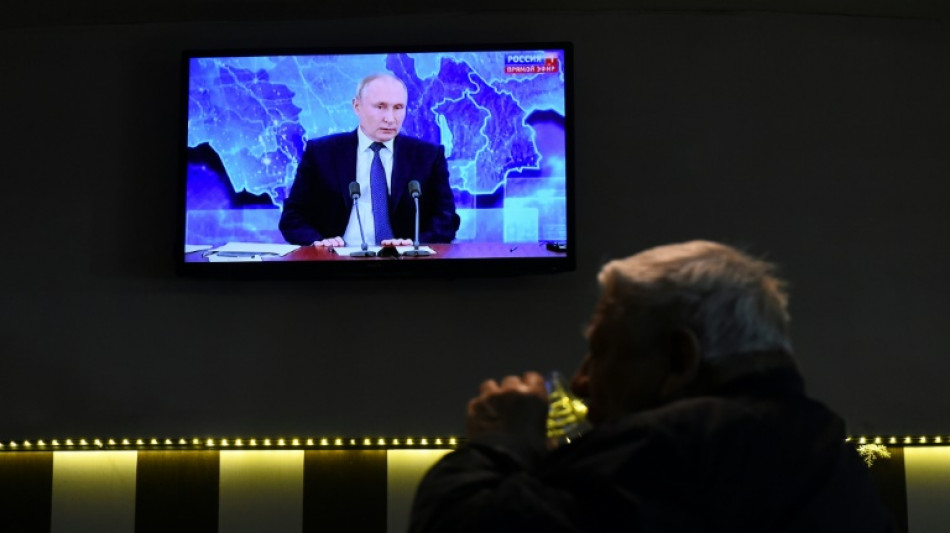
Letting state TV dominate, Russia chokes free media / Photo: ©

 Trump pauses 50% tariffs on Canadian goods for three days

 Five Premier League stars to watch this season
 China's robots open to opportunities in search of commercial breakthrough
 Tech leads losses as Asian stocks track Wall St selloff
 US, South Korea cut drills short after Trump criticism
 Italian scientists bet on octopus to fight crab invasion
 New 'Insidious' reflects anxiety of being a new parent: director
 No.1 Sabalenka slams Wang to advance at Cincinnati
 Turkey rejects Israeli claims after strike on Syria air base
 Climate change main driver of European ocean warming: study
 Gauff finds a way into the Cincinnati fourth round
 ZZ Top drummer Frank Beard dies at age 77
 Bayern's Musiala reveals 'neurological disorder' after on-field collapse
 Angelique Kidjo immortalised on Hollywood Walk of Fame
 France to expel two Iranian diplomats: foreign minister

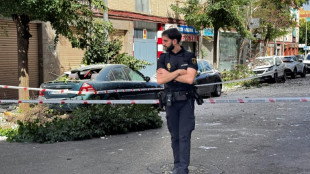 Spain's Granada closes iconic Alhambra as new quake hits
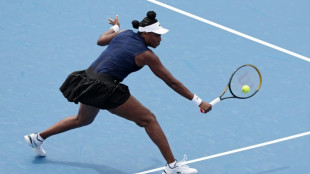 Venus, Stephens, Monfils named among US Open wild cards
 Rodri joins La Liga champions Barcelona from Manchester City
 Disney, ABC sue US regulator over threat to broadcast licenses
 Trump, Carney hold talks as new US tariffs on Canada loom
 Germany opens new drone research centre as security threats mount
 How only a few tree species drive Amazon forest recovery
 Ivonne A-Baki enters race to be next UN chief
 Ukraine says Russian strike kills 10 in northeast region
 Meta in court over child social media addiction
Russia has moved to throttle independent media after its invasion of Ukraine, allowing state television to dominate the airwaves with broadcasting that relentlessly promotes Russian successes and carefully toes the Kremlin line.
Even in the restrictive climate under President Vladimir Putin, Russia before the invasion still had a relatively diverse landscape in television, newspapers and online.
But draconian new rules ordered after the operation was launched -- which have made it illegal to call the military action an "invasion" or disseminate "fake" news about it -- have transformed the scene.
The two pillars of Russian independent media over the last years -- the radio Echo of Moscow (Ekho Moskvy) and TV channel Rain (Dozhd) -- have halted broadcasts, while access has been blocked to pro-opposition online news sites and major social networks.
The changes leave "no space for free speech and opinion on the war", said the Council of Europe's Commissioner for Human Rights, Dunja Mijatovic.
Jeanne Cavelier, the head of Eastern Europe for press freedom group Reporters Without Borders (RSF), said an information war was in "full swing" in Russia.
"President Vladimir Putin needs to put all the media on a battle footing in order to justify the invasion of Ukraine to Russian citizens by concealing the war's victims," she added.
- 'Even more controlled' -
This has left Russian state television's slick but aggressive news broadcasts dominating the airwaves and given every chance to shape public opinion.
Channel One's main news show Vremya (Time), an evening fixture since the Soviet era, opens each night by hailing the exploits of individual Russian soldiers who have shown "heroism and courage" in battle.
There is no mention of the death toll -- Moscow has said 498 soldiers have died but Ukraine and Western sources claim it is much higher.
Western anger is denounced as "hysteria" and Ukrainian "aggression" carried out by "neo-Nazis" is condemned.
With the word "invasion" banned, the term "special military operation in Ukraine" is used by presenters and reporters.
Ukrainian President Volodymyr Zelensky is the target of mockery and questions about his mental health, with a media conference edited in a bid to show he is in what the reporter describes as an "inadequate condition".
Frequent reports are broadcast by Russian state TV's chief war correspondent Yevgeny Poddubny, who won national fame during the conflict in Syria, and is embedded with Russian troops outside Kyiv.
The actions of Ukraine are "slowing down the advance of Russian troops but won't stop it", he declared emphatically in a report.
While drawing conclusions about public opinion in Russia is currently hazardous, a poll last week by Russian pollster VTsIOM -- seen as sympathetic to the government -- said that 71 percent of Russians support the invasion and the number was rising.
"Not everyone in Russia understands what is going on," said Kadri Liik, a senior policy fellow at the European Council on Foreign Relations.
"Russia's information space was very tightly controlled already and now it has become even more so," she added.
- Like 'in prison' -
Other shows echo the message of the news programmes, notably the programmes hosted by notorious presenters Vladimir Solovyov and Dmitry Kiselyov, both on the EU sanctions list.
Kiselyov, who even in 2014 famously warned that Russia could turn the US to "radioactive ash", presents the weekly Sunday show Vesti Nedeli (News of the Week) but is also the deputy head of Russian state TV VGTRK and one of the most powerful figures in Russian media.
"Our submarines are capable of firing 500 nuclear warheads to guarantee the destruction of the USA and all NATO countries," he declared after Putin ordered nuclear forces to move to combat readiness.
One of Solovyov's guests on a recent edition of his debate show was the editor-in-chief of state-run international channel RT Margarita Simonyan, who argued that Russia should adopt an approach similar to China in banning access to foreign social media.
"We allowed into our country -- years ago -- an alien army -- we allowed army bases to be set up in the name of this Facebook and things like that. And now we are surprised that this foreign army is shooting at us," she said.
In this climate, Russia's best known independent newspaper Novaya Gazeta -- whose editor-in-chief was awarded the Nobel Peace Prize last year -- has now said it would be removing archive content on Ukraine from its website so as not to fall foul of the new law.
"I am in shock not just about the news but the news about the news," said Putin's jailed opponent Alexei Navalny through his social media channels.
"Soon you (Russians) will have the same access to information as I do in prison. In other words -- nothing."
R.Adler--BTB