Macron seeks EU resolve at Ukraine crisis summit / Photo: ©

 Trump pauses 50% tariffs on Canadian goods for three days

 Five Premier League stars to watch this season
 China's robots open to opportunities in search of commercial breakthrough
 Tech leads losses as Asian stocks track Wall St selloff
 US, South Korea cut drills short after Trump criticism
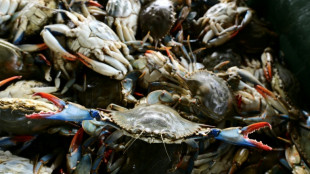 Italian scientists bet on octopus to fight crab invasion
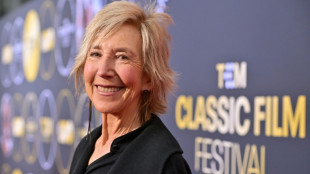 New 'Insidious' reflects anxiety of being a new parent: director
 No.1 Sabalenka slams Wang to advance at Cincinnati
 Turkey rejects Israeli claims after strike on Syria air base
 Climate change main driver of European ocean warming: study
 Gauff finds a way into the Cincinnati fourth round
 ZZ Top drummer Frank Beard dies at age 77
 Bayern's Musiala reveals 'neurological disorder' after on-field collapse
 Angelique Kidjo immortalised on Hollywood Walk of Fame
 France to expel two Iranian diplomats: foreign minister
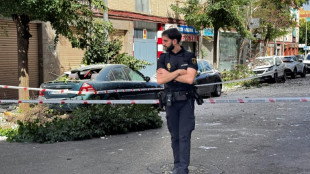 Spain's Granada closes iconic Alhambra as new quake hits
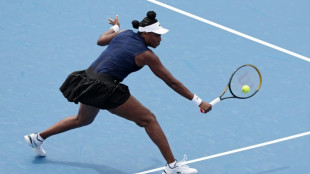 Venus, Stephens, Monfils named among US Open wild cards
 Rodri joins La Liga champions Barcelona from Manchester City
 Disney, ABC sue US regulator over threat to broadcast licenses
 Trump, Carney hold talks as new US tariffs on Canada loom
 Germany opens new drone research centre as security threats mount
 How only a few tree species drive Amazon forest recovery
 Ivonne A-Baki enters race to be next UN chief
 Ukraine says Russian strike kills 10 in northeast region
 Meta in court over child social media addiction
EU leaders will scramble Thursday to find ways to urgently address the fallout of Russia's invasion of Ukraine and carefully tell Kyiv that joining the bloc remains years away.
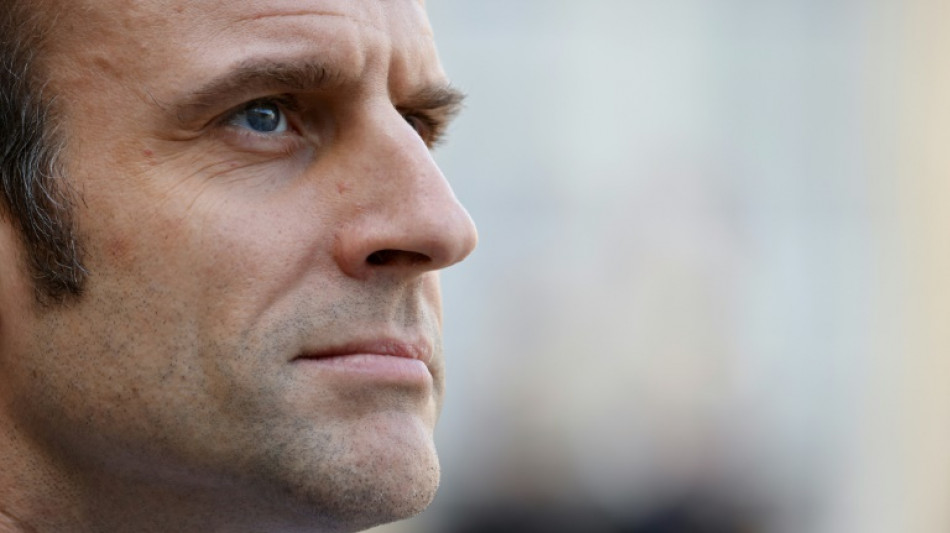
The meeting at the Versailles palace was set to be the high point of France's six-month EU presidency, but President Emmanuel Macron will instead spearhead a crisis summit to answer Russian leader Vladimir Putin's brutal disruption to decades of stability in Europe.
The Ukraine war and the EU's energy supply will dominate the two-day meeting, with leaders sitting down for dinner in the palace's Hall of Mirrors where Western allies carved out a new map of Europe in 1919 after World War I.
"Russia's war of aggression constitutes a tectonic shift in European history," a draft of the two-day meeting's final declaration said.
The leaders will grasp "how the EU can live up to its responsibilities in this new reality, protecting our citizens, values, democracies, and our European model".
The 27 heads of state and government meet as fighting raged for a 15th day in Ukraine, with more than two million refugees escaping mainly to Poland but also to countries across Europe.
The heart-wrenching conflict has seen a swell of support in the EU for Ukrainian President Volodymyr Zelensky, but leaders were expected to use the talks to reiterate that a fast-tracked membership to the union was impossible.
"We want to express moral support for President Zelensky and show they are part of the European family," a senior EU diplomat involved in preparing the summit told reporters.
"But let's not start a process that will take years and find ways to really help Ukraine in the near term," the diplomat added.
- 'Biggest issue' -
Even before the war, Macron's ambition for the summit in France's most august setting was to lay down a path to strengthen Europe's stature on the world stage.
The issue took a more dire turn with Russia's war on the bloc's eastern edge and leaders were to explore ways to shore up Europe's self-reliance in a starkly more dangerous world, especially on energy.
"I think energy is the biggest issue on leaders' minds right now," said a European source with close knowledge of the matter.
The conflict has seen energy prices skyrocket, threatened the economy and sparked a pressing discussion on where Europeans can turn for gas and oil.
The EU imports about 40 percent of its natural gas from Russia with Germany, Europe's biggest economy, especially dependent on the energy flow, along with Italy and several central European countries.
About a quarter of the EU's oil imports also come from Russia.
Europe's dependency on Russian energy even caused the first crack in the West's unified response to Putin's aggression, with the EU this week shying away from a ban on Russian oil imports implemented by the United States and Britain.
According to the meeting's final declaration, the 27 leaders will cautiously agree to "phase out" the bloc's dependency on Russian gas, oil and coal.
- 'Resolutely invest' -
The EU leaders will also try to advance on ways Europe can gain independence in highly sensitive sectors, including semiconductors, food production and most notably defence.
Collective security in the European Union is primarily handled by the US-led NATO alliance, but France, the EU's biggest military power, would like the bloc to play a bigger role.
Since Russia's belligerence against its pro-EU neighbour, bloc members have approved a total of half a billion euros in defence aid to Ukraine.
Berlin dramatically broke with long-standing doctrine when it announced it will plough 100 billion euros into national defence.
In view of the challenges, "we must resolutely invest more and better in defence capabilities and innovative technologies", the leaders were expected to say.
D.Schneider--BTB