Russia tactics in Ukraine war mirror Syria testing ground: experts / Photo: ©

 Trump pauses 50% tariffs on Canadian goods for three days

 Five Premier League stars to watch this season
 China's robots open to opportunities in search of commercial breakthrough

 Tech leads losses as Asian stocks track Wall St selloff

 US, South Korea cut drills short after Trump criticism
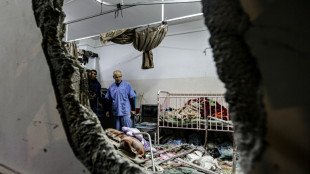
 Italian scientists bet on octopus to fight crab invasion

 New 'Insidious' reflects anxiety of being a new parent: director

 No.1 Sabalenka slams Wang to advance at Cincinnati
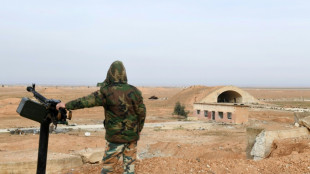
 Turkey rejects Israeli claims after strike on Syria air base
 Climate change main driver of European ocean warming: study

 Gauff finds a way into the Cincinnati fourth round

 ZZ Top drummer Frank Beard dies at age 77
 Bayern's Musiala reveals 'neurological disorder' after on-field collapse

 Angelique Kidjo immortalised on Hollywood Walk of Fame

 France to expel two Iranian diplomats: foreign minister

 Spain's Granada closes iconic Alhambra as new quake hits

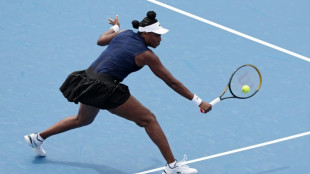 Venus, Stephens, Monfils named among US Open wild cards

 Rodri joins La Liga champions Barcelona from Manchester City

 Disney, ABC sue US regulator over threat to broadcast licenses

 Trump, Carney hold talks as new US tariffs on Canada loom

 Germany opens new drone research centre as security threats mount

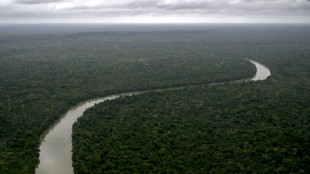 How only a few tree species drive Amazon forest recovery

 Ivonne A-Baki enters race to be next UN chief

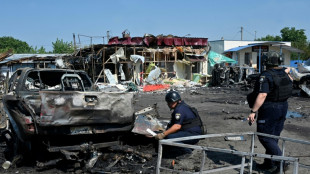 Ukraine says Russian strike kills 10 in northeast region

 Meta in court over child social media addiction
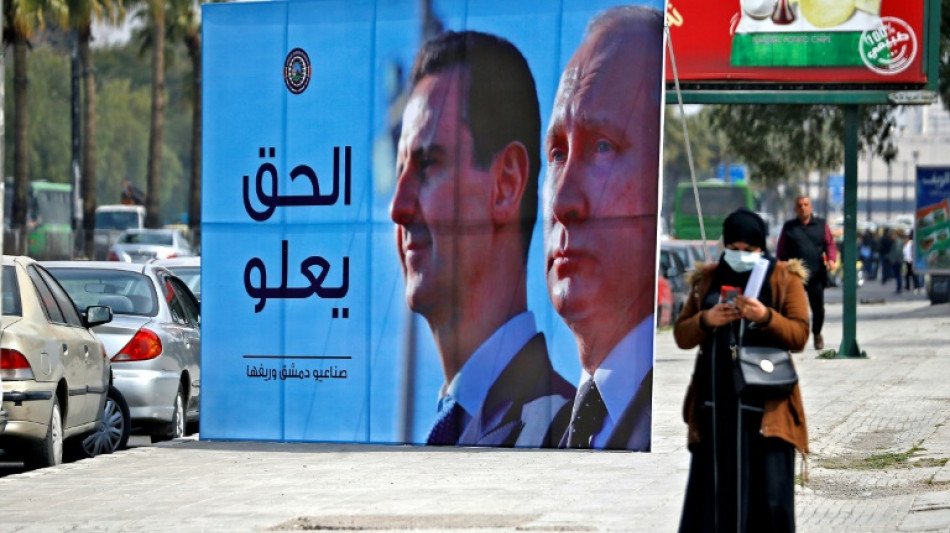
Besieging cities, shelling civilian infrastructure and arranging "safe corridors": the tactics used by Russia in its war on Ukraine mirror those it tested and fine-tuned to drain resistance in Syria's conflict.
But unlike its Syria play book, the challenge Russia faces from a Western-backed army in Ukraine dwarfs that of Syrian rebels who lacked military might or broad international backing, analysts said.
Russia entered Syria's civil war in 2015 on the side of President Bashar al-Assad's regime, allowing Damascus to clock up decisive victories in the decade-long conflict.
Since President Vladimir Putin ordered an invasion on February 24, tens of thousands of Russian troops have swarmed into Ukraine, where they have shelled urban centres and forced people to flee, sparking international outrage.
Moscow denies targeting civilian areas in Ukraine, despite widespread evidence suggesting otherwise, with Western powers and rights groups accusing it of committing possible war crimes.
A French military source said Russia's operations in Ukraine marked a "change of scale".
"Syria was a small theatre," he told AFP on condition of anonymity.
But many of the tactics deployed in Ukraine draw from Russia's battles in Syria, where it tested weapons systems and gained vital combat experience.
"For Russia, Syria is a training ground for men and equipment," said analyst Fabrice Balanche.
- Strategy to 'terrorise' -
Russia has long been accused by rights groups of supporting Syria's regime in besieging civilian populations and bombing infrastructure to draw rebels out of key areas.
To bolster Assad, "Russia's first goal in Syria was to reconquer big cities," including the economic hub of Aleppo and rebel-held districts around Damascus, Balanche said.
In Ukraine, Russia's push towards major cities including Kyiv, Kharkiv and Odessa follows a similar pattern but is meant to strip legitimacy from authorities there, he said.
Balanche said indiscriminate Russian bombing of hospitals and schools is another aspect of the Syrian conflict playing out in Ukraine as part of a strategy to "terrorise" civilians.
At least 270 medical facilities in Syria have been attacked by Russia and Assad's regime since 2011, according to the Syrian Archive, a non-profit organisation that archives digital material from the war.
Russia also targeted schools and markets during a blistering Aleppo offensive in 2016 and a devastating 2019-2020 campaign against rebels in neighbouring Idlib province, the country's last major opposition bastion, according to rights groups.
"Russia bombs military targets... then health and energy infrastructure to make life impossible for civilians and to push them to leave," Balanche told AFP.
"Once the civilians are gone, it is easier for the army to move forward."
Last month, Human Rights Watch and Amnesty International accused Russia of using cluster munitions on a hospital and school in Kharkiv, saying the attacks could constitute war crimes.
On Wednesday, Russian forces reportedly bombed a children's hospital in the Ukrainian city of Mariupol that Kyiv says killed three people, including a girl.
That attack sparked international outrage with many global powers accusing Russia of committing an atrocity.
- Different battlefield -
In another parallel strategy, Russia has announced so-called safe corridors to allow civilians to exit Ukrainian cities it has laid siege to.
It is a strategy tried and tested in Syria, sometimes resulting in the death, injury and detention of civilians who try to escape besieged rebel districts without international guarantees, according to experts.
But Russia faces a different landscape in Ukraine, where it has deployed a much larger contingent, in a high-stakes intervention.
"In Syria, Russia primarily relied on its air power and certain specialised units to advise and assist the pro-Assad forces," said Nicholas Heras of the Newlines Institute in Washington.
"Whereas in Ukraine the Russians are the (main) fighting force," he added.
Another key difference, according to Heras, concerns the capabilities of Russia's opponents.
In Ukraine, Russia is confronted by an army that is armed and supported by Western nations, Heras said, flagging its anti-air and anti-armour capabilities.
Meanwhile, "Russia was involved in a minor league war in Syria where it had total dominance," he added.
According to Anton Mardasov, a non-resident expert at the Russian International Affairs Council, Moscow now has a sharper sense of its weapons systems.
It has "corrected many of the shortcomings of high-precision ground, sea and air-based weapons that were identified during the use of missile systems in Syria," he told AFP.
"In Ukraine, high-precision weapons are used quite actively and accurately."
C.Kovalenko--BTB