Ukrainian pediatrician, beloved in Russia, pleads for children / Photo: ©

 Trump pauses 50% tariffs on Canadian goods for three days
 Five Premier League stars to watch this season
 China's robots open to opportunities in search of commercial breakthrough
 Tech leads losses as Asian stocks track Wall St selloff

 US, South Korea cut drills short after Trump criticism
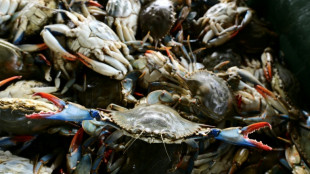 Italian scientists bet on octopus to fight crab invasion
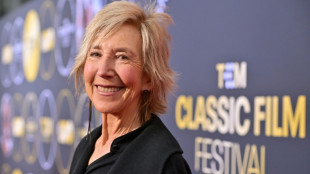 New 'Insidious' reflects anxiety of being a new parent: director

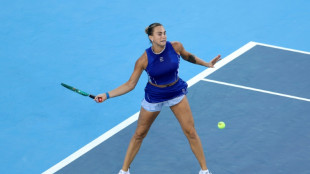 No.1 Sabalenka slams Wang to advance at Cincinnati
 Turkey rejects Israeli claims after strike on Syria air base
 Climate change main driver of European ocean warming: study
 Gauff finds a way into the Cincinnati fourth round

 ZZ Top drummer Frank Beard dies at age 77
 Bayern's Musiala reveals 'neurological disorder' after on-field collapse
 Angelique Kidjo immortalised on Hollywood Walk of Fame
 France to expel two Iranian diplomats: foreign minister

 Spain's Granada closes iconic Alhambra as new quake hits
 Venus, Stephens, Monfils named among US Open wild cards
 Rodri joins La Liga champions Barcelona from Manchester City
 Disney, ABC sue US regulator over threat to broadcast licenses

 Trump, Carney hold talks as new US tariffs on Canada loom
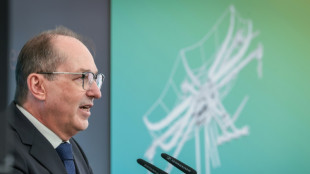 Germany opens new drone research centre as security threats mount

 How only a few tree species drive Amazon forest recovery
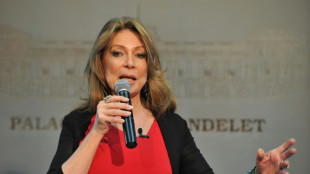 Ivonne A-Baki enters race to be next UN chief

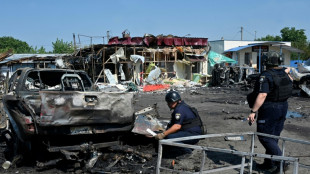 Ukraine says Russian strike kills 10 in northeast region
 Meta in court over child social media addiction
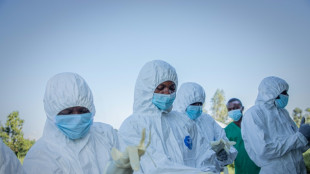
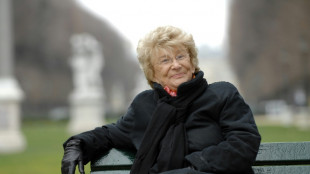
When anxious parents in Ukraine and Russia need advice on a child's sore throat or upset stomach, they often turn to the same man -- pediatrician Yevgen Komarovskiy.
The hugely popular author and TV host has long been the go-to source on raising children for millions of parents in both countries and other ex-Soviet nations.
But now Komarovskiy dispenses a different kind of advice to his millions of social media followers: how to prepare infant formula from scratch, how to perform first aid, how to survive a rocket attack, how to administer iodine in case of nuclear contamination.
"Can you imagine what a mother feels when her child is sick and on an IV, and there are bombs exploding around them, and she needs to take her child with the IV to a bomb shelter?" Komarovskiy told AFP.
With salt-and-pepper hair and a thick moustache, Komarovskiy, 61, spoke by video call from an undisclosed location in his native Ukraine, with the national yellow-and-blue flag in the background.
His voice is one among many doctors and mothers in Ukraine telling harrowing tales of life under bombardment that underscore the toll Russia's war has taken on Ukrainian children.
In the two weeks since the invasion, Komarovskiy, who has two sons and three grandchildren, has been issuing emotional, angry pleas to Russian parents, exhorting them to take to the streets and protest the war.
"Don't give away your children," he wrote in a recent Instagram post. "And don't take away mine."
- Children caught up in horror -
More than 40 children have been killed and scores injured in the war, according to Ukrainian officials, with the latest outrage focused on an air strike that destroyed a pediatric and maternity hospital in city of Mariupol on Wednesday.
Over two million people have already fled Ukraine, many of them children, and millions more have been psychologically scarred.
"No disagreements between people, countries, politicians and states should be solved by bombing residential neighborhoods," Komarovskiy told AFP.
This week, the mayor of Mariupol said a six-year-old girl named Tanya died of dehydration under the rubble of a building destroyed by Russian shelling after her mother was killed.
"If somebody had told me that in the 21st century, practically in the middle of Europe we would see this pain, I wouldn't believe them," said Serhii Tsemashko, head doctor at Kyiv's Maternity Hospital No. 6.
"It used to be that when a woman gave birth, right away there were smiles and happiness, but today the happiness is diluted by pain, sorrow and fear," Tsemashko told AFP over video call, choking back tears.
Many of Tsemashko's patients now give birth in the basement of his clinic, while the operating room and all its equipment have been moved to a safer location inside the building.
Hospital staff sleep at the clinic, fearful they would be unable to return to work from home, while volunteers supply diapers, baby formula and food for patients and staff.
- Desperate race to hospital -
When Polina Chechet went into labor shortly after the war started, she knew she had to get to a hospital in Kyiv from her suburb of Irpin.
She required a C-section because of a medical condition, which left her with a dislocated pelvis and limited use of her right arm and leg.
Carrying a bag of belongings, and hugging her belly, she ran two miles to the nearest train station with her sister to catch the last train to Kyiv as rockets exploded in the distance.
Chechet made it to Hospital No. 6 and on February 25, the second day of the war, delivered a healthy girl, whom she named Elizaveta.
"I didn't cry when first I saw her," the 29-year-old brunette told AFP on a video call, as she cradled a sleeping Elizaveta.
"I cry when I see on TV how cities are being bombed, how people are being destroyed. What for? I didn't want this kind of future for my daughter."
Since Elizaveta was born, Chechet's hometown of Irpin on the northwest edge of Kyiv, has been devastated by Russian shelling and at least four civilians were killed trying to flee.
Komarovskiy says that -- if the war can be halted soon -- with time and help from mental health professionals, Ukrainian children will be able to recover from the trauma of war.
But to be happy, they need their parents by their side, he says.
"Modern medicine knows how to rehabilitate a child, how to revive and distract him," Komarovskiy said. "What it cannot do is bring back a dad who died at the front."
D.Schneider--BTB