US says North Korea testing new ICBM system / Photo: ©

 Trump pauses 50% tariffs on Canadian goods for three days

 Five Premier League stars to watch this season

 China's robots open to opportunities in search of commercial breakthrough

 Tech leads losses as Asian stocks track Wall St selloff

 US, South Korea cut drills short after Trump criticism
 Italian scientists bet on octopus to fight crab invasion

 New 'Insidious' reflects anxiety of being a new parent: director

 No.1 Sabalenka slams Wang to advance at Cincinnati

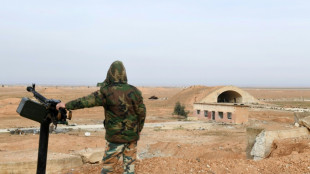
 Turkey rejects Israeli claims after strike on Syria air base
 Climate change main driver of European ocean warming: study

 Gauff finds a way into the Cincinnati fourth round

 ZZ Top drummer Frank Beard dies at age 77

 Bayern's Musiala reveals 'neurological disorder' after on-field collapse

 Angelique Kidjo immortalised on Hollywood Walk of Fame

 France to expel two Iranian diplomats: foreign minister

 Spain's Granada closes iconic Alhambra as new quake hits

 Venus, Stephens, Monfils named among US Open wild cards

 Rodri joins La Liga champions Barcelona from Manchester City

 Disney, ABC sue US regulator over threat to broadcast licenses

 Trump, Carney hold talks as new US tariffs on Canada loom

 Germany opens new drone research centre as security threats mount

 How only a few tree species drive Amazon forest recovery

 Ivonne A-Baki enters race to be next UN chief

 Ukraine says Russian strike kills 10 in northeast region

 Meta in court over child social media addiction
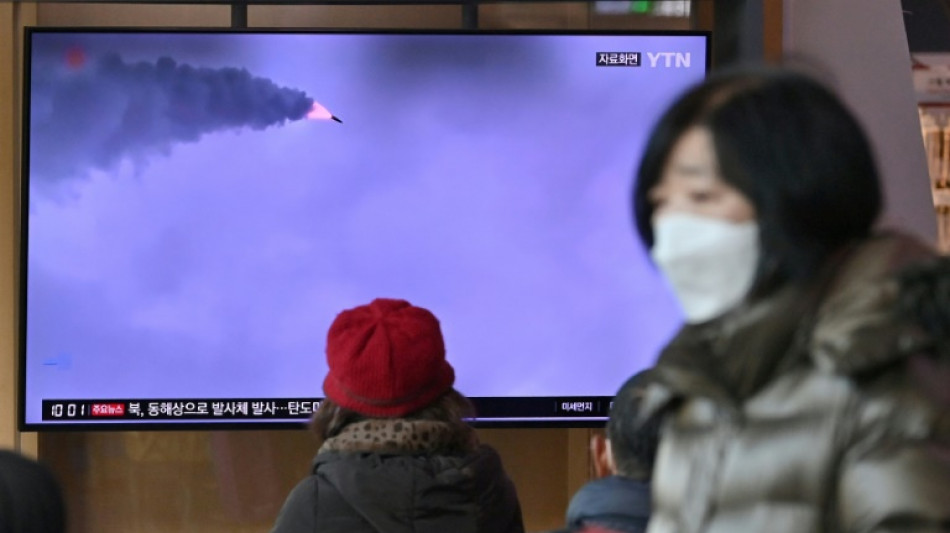
Two recent missile tests conducted by North Korea were of a new intercontinental ballistic missile (ICBM) system, the Pentagon said Thursday, marking what one US official called a "serious escalation" that will be punished with fresh sanctions.
According to North Korea, the February 26 and March 4 tests were focused on developing a reconnaissance satellite, but the Pentagon said rigorous analysis concluded they were actually experimental precursors to a likely full-range ICBM launch.
Any such launch would mark the end of a self-imposed moratorium Pyongyang has had in place since 2017 and send military tensions soaring on the Korean peninsula and beyond.
The North has carried out three ICBM tests; the last in November 2017 of a Hwasong-15 -- deemed powerful enough to reach Washington and the rest of the continental United States.
Pentagon spokesman John Kirby said the recent two tests "involved a new intercontinental ballistic missile system" that Pyongyang had first showcased at a military parade in October 2020.
While neither launch displayed ICBM range or capability, they were clearly intended "to evaluate this new system before conducting a test at full range in the future, potentially disguised as a space launch," Kirby said.
Prior to its ICBM tests in 2017, the North had carried out a series of powerful rocket launches that it insisted were part of a wider civilian space program.
Those launches were made from the Sohae Satellite Launching Station on the northwest coast, and North Korea's official KCNA news agency reported Friday that leader Kim Jong Un visited the facility and ordered that it be expanded and modernized -– a move that will only fuel speculation of an imminent, disguised ICBM test.
North Korea is already under biting international sanctions over its missile and nuclear weapons program.
But a senior US official said that the latest tests were a "serious escalation" and the Treasury would announce fresh measures on Friday to help prevent Pyongyang accessing "foreign items and technology" to advance that program.
Such measures underline that the North's "unlawful and destabilizing activities have consequences" and that diplomatic negotiations are the only viable path forward for Pyongyang, the official said, speaking on condition of anonymity.
Kirby said Washington "remains committed to a diplomatic approach" but "will take all necessary measures to ensure the security of the United States and our allies."
In Tokyo, the defense ministry said it had reached the same conclusion as Washington, adding that the February launch had an altitude of up to 600km (370 miles) and travelled about 300km, while the March launch had an altitude of up to 550km and also travelled about 300km.
It called the tests a "threat to peace and security... that can never be tolerated."
- Nine weapons tests so far -
When the new ICBM was unveiled at the 2020 parade, military analysts said it appeared to be the largest road-mobile, liquid-fueled missile anywhere in the world -- and likely designed to carry multiple warheads in independent re-entry vehicles (MIRVs).
North Korea watchers regularly caution that the devices Pyongyang puts on show at its parades may be mock-ups or models, and there is no proof they work until they are tested.
Pyongyang has been abiding by its moratorium on testing ICBMs and nuclear weapons since Kim embarked on a flurry of high-profile diplomatic engagement with then US president Donald Trump in 2017.
Talks later collapsed and diplomacy has languished ever since, despite efforts by the administration of US President Joe Biden to offer fresh negotiations.
The North started hinting in January that it might lift the moratorium, and it has conducted nine weapons tests this year, including of banned hypersonic and medium range ballistic missiles.
Pyongyang has also carried out several rocket launches that were condemned by the United States and others as disguised long-range ballistic missile tests.
A fresh ICBM launch would be an early challenge for South Korea's new president-elect, Yoon Suk-yeol, who has vowed to take a hard line with the North's provocations.
Yoon has not ruled out the possibility of dialogue with Pyongyang, but analysts say his hawkish position puts him on a completely different footing and significantly reduces the prospect of substantive engagement.
I.Meyer--BTB