Colombians vote for Congress, short-list presidential contenders / Photo: ©

 Trump pauses 50% tariffs on Canadian goods for three days

 Five Premier League stars to watch this season
 China's robots open to opportunities in search of commercial breakthrough
 Tech leads losses as Asian stocks track Wall St selloff

 US, South Korea cut drills short after Trump criticism
 Italian scientists bet on octopus to fight crab invasion
 New 'Insidious' reflects anxiety of being a new parent: director

 No.1 Sabalenka slams Wang to advance at Cincinnati
 Turkey rejects Israeli claims after strike on Syria air base

 Climate change main driver of European ocean warming: study
 Gauff finds a way into the Cincinnati fourth round

 ZZ Top drummer Frank Beard dies at age 77
 Bayern's Musiala reveals 'neurological disorder' after on-field collapse

 Angelique Kidjo immortalised on Hollywood Walk of Fame
 France to expel two Iranian diplomats: foreign minister

 Spain's Granada closes iconic Alhambra as new quake hits
 Venus, Stephens, Monfils named among US Open wild cards

 Rodri joins La Liga champions Barcelona from Manchester City
 Disney, ABC sue US regulator over threat to broadcast licenses

 Trump, Carney hold talks as new US tariffs on Canada loom

 Germany opens new drone research centre as security threats mount
 How only a few tree species drive Amazon forest recovery
 Ivonne A-Baki enters race to be next UN chief
 Ukraine says Russian strike kills 10 in northeast region

 Meta in court over child social media addiction
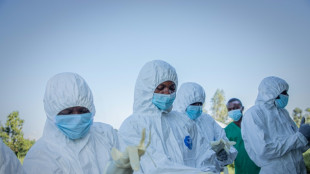
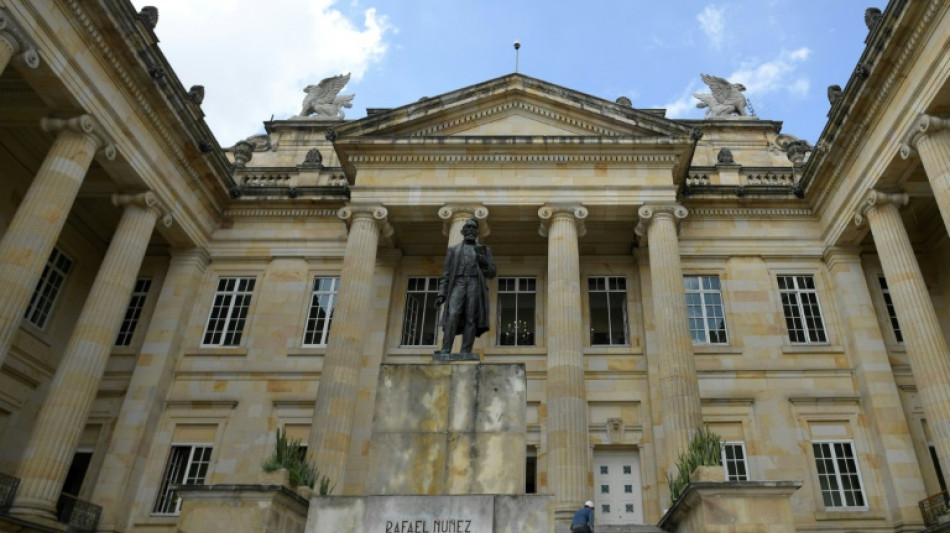
Colombians vote Sunday to draw up a shortlist of presidential candidates for elections in May while also electing the 296 members of its Congress.
Nearly 39 million of Colombia's 50 million inhabitants are eligible to vote in a complex but critical election that comes with the president and legislature both at rock-bottom levels of public opinion.
In a country with a history of political violence and voter turnout traditionally below 50 percent, outgoing President Ivan Duque has promised safety "guarantees" for the non-compulsory vote.
On one part of the ballot, voters will determine the composition of the Senate and House of Representatives, currently in the hands of right-wing parties.
But all eyes will really be on the outcome of the presidential primary -- called inter-party "consultations" -- happening alongside the legislative vote.
In a country that has always been ruled by the political right, polls show that former guerrilla, ex-Bogota mayor and senator Gustavo Petro, 61, stands a real chance of becoming Colombia's first-ever leftist leader.
Also in the running is former FARC hostage Ingrid Betancourt, who said in January she would vie to represent centrist parties as an alternative to both the ruling right and Petro.
The process must yield three presidential contenders from 15 candidates vying to represent groups of politically-aligned parties -- one each for the left, right and center.
Three others have already been chosen by their respective groupings.
Six finalists will face off in a first round of presidential elections on May 29, which will be followed by a runoff on June 19 if no one wins am outright majority.
- First leftist president? -
Petro enjoys polled support of about 45 percent -- more than any other candidate in a country traditionally distrustful of the left.
That distrust is widely associated with the now defunct Revolutionary Armed Forces of Colombia (FARC) and other rebel groups that fought the government in a near six-decade civil conflict.
"When the government is unpopular, there is alternation and the opposition wins, but in Colombia, this is new: the left has never really been in a position to win an election," said analyst Yann Basset of the Rosario University in Bogota.
In 2018, Petro lost the presidential race to Duque, who is leaving office as his country's most unpopular president in history following a year marked by social unrest and a violent police crackdown that drew international condemnation.
The political right he represents is divided and weakened by the absence of popular former president Alvaro Uribe, who had to resign from the senate under a cloud of alleged bribery and witness tampering. It has no clear frontrunner.
For Betancourt, it is her second presidential run: she was abducted 20 years ago while campaigning and held captive in the jungle for more than six years.
Colombian presidents serve only one four-year term.
- Economy dominates -
Duque's successor faces a multitude of challenges, not least of which is a new cycle of murders and kidnappings as violence has surged despite a 2016 peace deal that disarmed the FARC and officially ended the civil war.
The new president will also contend with an economy hard hit by the fallout from the coronavirus pandemic.
"What dominates the agenda today is how we will get out of the economic and social crisis," said Basset.
Congress, for its part, enters Sunday's election with an 86 percent disapproval rating, according to the Invamer polling agency, due to multiple corruption scandals.
Despite the peace pact, fighters of the leftist National Liberation Army (ELN) still battle dissidents of the disbanded FARC, paramilitary forces and drug cartels for territory, resources and smuggling routes.
Colombia is the world's largest cocaine exporter.
The right-wing government in Bogota accuses its populist socialist counterparts in Venezuela of supporting and providing refuge for far left guerrillas.
K.Thomson--BTB