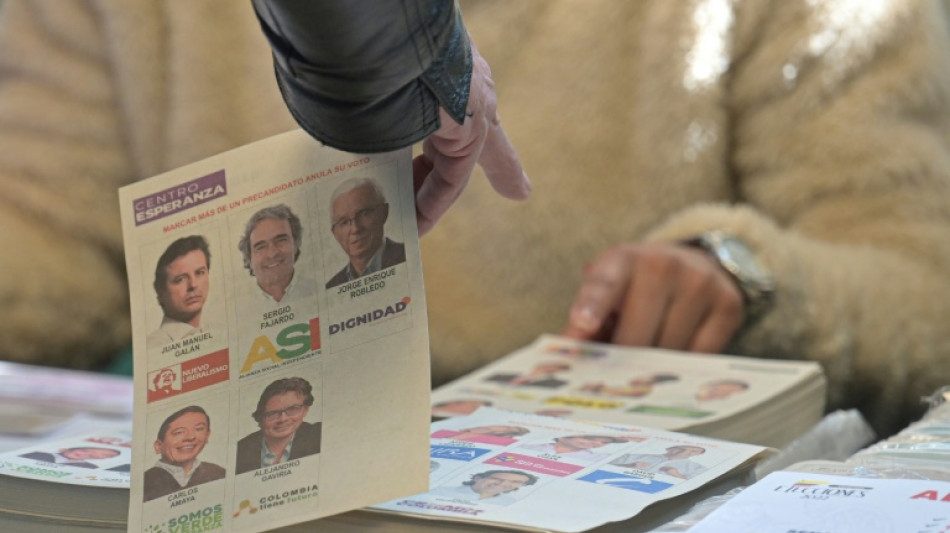
Ex-guerrilla Petro front runner in Colombia presidential primaries / Photo: ©

 UK PM unveils plan to help rough sleepers off streets by Christmas

 Tokyo opposes US sanctions on Japanese ICC chief Akane
 Humanoid-maker Unitree surges more than 600% on Shanghai debut
 Bowling great Donald warns Bangladesh that Australia will hit back hard
 STARPRIME Completes Beta Testing of Market-Maker Model for Retail Brokers
 Campaigns kick off in Nigerian presidential race
 Aussie Rules club suspends five players for drinking, bringing women to hotel

 Trump pauses 50% tariffs on Canadian goods for three days

 Five Premier League stars to watch this season
 China's robots open to opportunities in search of commercial breakthrough
 Tech leads losses as Asian stocks track Wall St selloff

 US, South Korea cut drills short after Trump criticism
 Italian scientists bet on octopus to fight crab invasion

 New 'Insidious' reflects anxiety of being a new parent: director

 No.1 Sabalenka slams Wang to advance at Cincinnati

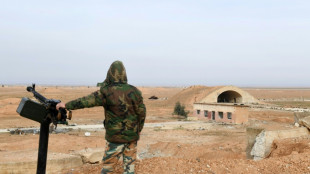 Turkey rejects Israeli claims after strike on Syria air base
 BioNxt Advances Cladribine Clinical Program with Completion of the Investigational Medicinal Product Dossier (IMPD) Ahead of Human Clinical Studies

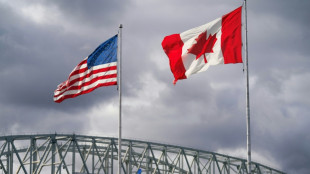 Trump, Carney talk as Canada seeks to hold off new US tariffs

 NASA images reveal crater left by SpaceX rocket's Moon crash

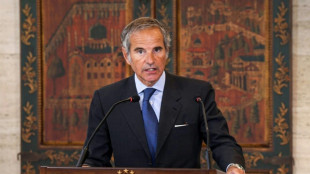 UN atomic watchdog says found tons of nuclear material at Syria site

 Ecuadoran diplomat enters race to be next UN chief

 US sanctions ICC chief Tomoko Akane of Japan

 US moves to open vast tracts of pristine forests to logging

 US sanctions International Criminal Court chief Tomoko Akane of Japan

 Meta hooked children and misled public: prosecutors

Colombians voted for senator and former guerrilla Gustavo Petro as the left's presidential nominee by a wide margin on Sunday, making him the front runner in an election that could yield the country's first-ever leftist leader in May.
As predicted, the 61-year-old came out on top in the primaries -- called inter-party "consultations" -- which took place alongside elections for the Senate and House of Representatives, currently in the hands of right-wing parties.
But leftist candidates were projected to win the most seats in Colombia's Senate, as well as contending for second place in the lower house, partial results showed.
With more than 90 percent of polling stations counted, the left's Historical Pact coalition is set to win 17 of the 102 seats in the upper house, according to electoral authority figures.
In the lower house, it looks set to take 25 of the 165 seats in a tie with the Conservatives and behind the Liberals.
Nearly 39 million of Colombia's 50 million inhabitants were eligible to vote in a complex but critical election in a country plagued by violence and growing poverty levels.
"Colombia saw an election day with transparency and respect for rights," election authority head Alexander Vega said, referring to a largely incident-free vote.
- 'Rejection of violence' -
Outgoing President Ivan Duque -- who called on Colombians to vote as a "rejection of violence" through the "triumph of democracy" -- had promised safety "guarantees" for the non-compulsory vote.
The polls came with the president and legislature both at rock-bottom levels of public support.
Colombia has always been ruled by the political right. But polls show that Petro -- a former guerrilla, ex-Bogota mayor and senator -- stands a real chance of winning.
Centrist Ingrid Betancourt, who was once held hostage by the guerrillas of the now-defunct Revolutionary Armed Forces of Colombia (FARC), won her coalition's nomination Sunday. She presents herself as an alternative to both the ruling right and Petro.
Sunday's process is to yield three presidential contenders from 15 candidates hoping to represent groups of politically aligned parties -- one each for the left, right and center.
Three others have already been chosen by their respective groupings.
Six finalists will face off in a first round of presidential elections on May 29, which will be followed by a runoff on June 19 if no one wins an outright majority.
Petro came away with more than 80 percent of the vote for the Historical Pact coalition, winning against environmentalist Francia Marquez, who snagged 15 percent of the left's vote, to represent the group at the polls this spring.
- First leftist president? -
Voters flocked to the polls in Bogota, although heavy rains at midday threatened turnout.
"I vote to change this Congress, where it is always the same people who do nothing" for years, nurse Carolina Lopez, 30, told AFP.
Colombia's distrust of the left is widely associated with FARC and other rebel groups that fought the government in a nearly six-decade civil conflict.
"When the government is unpopular, there is alternation and the opposition wins, but in Colombia, this is new: the left has never really been in a position to win an election," said analyst Yann Basset of the Rosario University in Bogota.
In 2018, Petro lost the presidential race to Duque, who is leaving office as his country's most unpopular president in history following a year marked by social unrest and a violent police crackdown that drew international condemnation.
"Today, change starts at the polls, with a vote that supports hope and life in Colombia," Petro said while voting.
It is also Betancourt's second presidential run: she was abducted 20 years ago while campaigning and held captive in the jungle for more than six years.
Her vice presidential running mate is set to be retired colonel Jose Luis Esparza, who rescued Betancourt from her FARC captors.
Colombian presidents serve a non-renewable four-year term.
At midday, the government said there was "total normality" in voting throughout the country. But the army reported two soldiers had been killed and another two wounded in bomb attacks in southern Colombia.
The country's election authority confirmed an attempted cyberattack against its website before polling had begun, which they said was immediately controlled.
And Interior Minister Daniel Palacios said there had been 662 reports of incidents related to the vote, including 166 complaints, 120 cases of voter coercion and 120 cases of attempted bribery.
- Economy dominates -
Duque's successor faces a multitude of challenges, not least of which is a new cycle of murders and kidnappings as violence has surged despite the 2016 peace deal that disarmed the FARC and officially ended the civil war.
Fighters of the leftist National Liberation Army (ELN) still battle dissidents of the disbanded FARC, paramilitary forces and drug cartels for territory, resources and smuggling routes in Colombia, the world's largest cocaine exporter.
The new president will also have to contend with an economy hard hit by the fallout from the coronavirus pandemic.
J.Bergmann--BTB