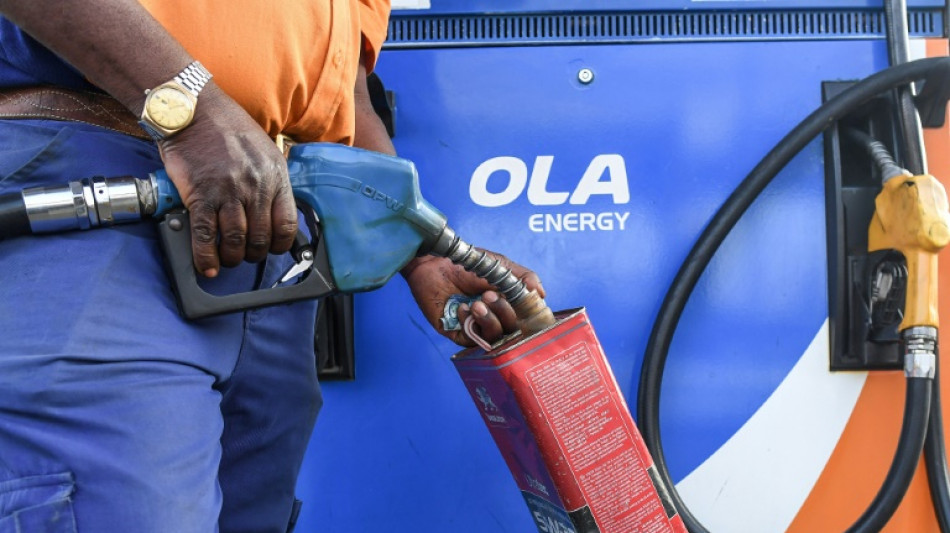
Far from Kyiv, Africa feels economic fallout from Ukraine crisis / Photo: ©

 Japan target record medal haul at home Asian Games

 ICC says US sanctions 'flagrant attack' on court independence

 Kyrgios admits 'huge mistake' after failing test for cocaine

 Europe can't afford to miss AI revolution: ECB chief

 Suthar shines as India crush Sri Lanka in 600th Test

 UK PM unveils plan to help rough sleepers off streets by Christmas

 Tokyo opposes US sanctions on Japanese ICC chief Akane
 Humanoid-maker Unitree surges more than 600% on Shanghai debut

 Bowling great Donald warns Bangladesh that Australia will hit back hard
 STARPRIME Completes Beta Testing of Market-Maker Model for Retail Brokers

 Campaigns kick off in Nigerian presidential race

 Aussie Rules club suspends five players for drinking, bringing women to hotel

 Trump pauses 50% tariffs on Canadian goods for three days

 Five Premier League stars to watch this season

 China's robots open to opportunities in search of commercial breakthrough
 Tech leads losses as Asian stocks track Wall St selloff

 US, South Korea cut drills short after Trump criticism
 Italian scientists bet on octopus to fight crab invasion

 New 'Insidious' reflects anxiety of being a new parent: director

 No.1 Sabalenka slams Wang to advance at Cincinnati

 Turkey rejects Israeli claims after strike on Syria air base
 BioNxt Advances Cladribine Clinical Program with Completion of the Investigational Medicinal Product Dossier (IMPD) Ahead of Human Clinical Studies

 Trump, Carney talk as Canada seeks to hold off new US tariffs

 NASA images reveal crater left by SpaceX rocket's Moon crash

 UN atomic watchdog says found tons of nuclear material at Syria site

From airlines in Nigeria to shoppers in Malawi, Africans are feeling the impact of the Ukraine crisis in wrenching increases in the price of fuel, grain and fertiliser.
Global oil prices scaled decade-long highs of more than $100 a barrel shortly after Russia invaded Ukraine on February 24, inflicting a hefty blow to many businesses south of the Sahara.
Both Ukraine and Russia are also major suppliers of wheat and other cereals to Africa, while Russia is a key producer of fertiliser.
The impact of the war and the West's sanctions against the Kremlin are already starting to translate into higher prices for farm inputs and imported grain, AFP bureaus in Africa report.
For Lagos baker Julius Adewale, the crisis is a perfect storm.
Nigeria's fragile power grid had recently been supplying just a few hours of electricity per day, forcing Adewale to turn to diesel-fueled generators for power -- the cost of which has now soared.
"There is no light since yesterday and we've been running on gen since yesterday," Adewale said this week, as workers stacked piles of loaves in his bakery.
"(The) cost of production has increased immensely."
Nigeria is Africa's largest oil producer and biggest economy, but it has little refining capacity.
The government subsidises the cost of petrol, but diesel and aviation fuel are sold at market price.
Several local airlines warned this month they were forced to cancel flights due to aviation fuel scarcities.
Diesel used to sell in Nigeria at around 300 naira (0.72 cents) a litre but now goes for 730 ($1.75) a litre.
"I don’t know how we are going to cope because 70 per cent of industries are running on diesel," Lanre Popoola, a regional chairman of Manufacturers Association of Nigeria (MAN), told local media.
"Other businesses are also running limited hours on diesel as they cannot afford to use generators all day."
- Hardship ahead -
If the crisis is sustained, said Eurasia Group analyst Amaka Anku, African countries which are big importers of fuel and grain will rank among the losers, although exporters of those commodities may be among the winners.
There are also countries that are heavily indebted, such as Ghana, which will struggle with higher borrowing costs as investor risk appetite lowers, she said.
Gas producers like Tanzania, Senegal and Nigeria may benefit from Europe's moves to end its dependence on Russian energy, said Danielle Resnick at the Brookings Institution think tank.
But, she said, the immediate challenge was hardship for African families, millions of which are already struggling to get by.
"War in Ukraine means hunger in Africa," International Monetary Fund (IMF) Managing Director Kristalina Georgieva said on Sunday.
High prices will for instance aggravate food insecurity in conflict-torn Ethiopia, where nearly 20 million people are in need of food aid.
- Inflation already here -
In many parts of Africa, the inflationary machine has already lurched into higher gear, AFP bureaus report.
In Kenya, a two kilogramme (4.4-pound) bag of wheat flour now sells for 150-172 Kenyan shillings (US$1.3 to US$1.5), compared to less than 140 shillings in February.
Sub-Saharan Africa's No. 3 economy usually gets a fifth of its imported wheat from Russia and another 10 percent comes from Ukraine, according to government figures.
As for fertiliser, a 50-kilo bag that cost 4,000 shillings last year now changes hands for 6,500 shillings ($57) -- a figure that is likely to increase as the planting season starts this month.
In the Ugandan capital Kampala, Ukraine's crisis has already caused a surge in prices of soap, sugar, salt, cooking oil and fuel.
"Most of the essential commodities are produced locally but some ingredients are imported and their prices are being dictated by the shocks on international markets," Junior Finance Minister David Bahati told AFP.
Cooking oil has risen from 7,000 shillings per litre ($1.94) in February to 8,500 shillings ($2.4) and a kilo of rice from 3,800 to 5,500 shillings, according to Kampala retail shops.
"My family of four people spend an average of 5,000 shillings to cater for food and other necessities but this is no longer enough... I now spend more than 10,000 shillings," Ritah Kabaku, 41, a shop assistant in Kampala, told AFP.
- 'Victims of war' -
Wary of Ukraine-fueled inflation, Mauritius' central bank has raised its key interest rate to two percent -- its first hike since 2011.
"It is unfortunate that as the sky cleared after Covid 19, more clouds appeared," Prime Minister Pravind Kumar Jugnauth said in a televised speech.
In Somalia's capital Mogadishu, prices for fuel, cooking oil, construction materials and electricity have shot up.
"A week ago, the 20-litre jerrycan of cooking oil was $25, today it's about $50. A litre of gasoline was $0.64 and today it runs about $1.80 -- it's crazy," said Mohamed Osman, a trader.
In southern Africa, bread and cooking oil prices in Malawi have shot up by an average 50 percent.
"This war doesn't concern us and it is not right that we should be paying such a high price," Fatsani Phiri, an auditor who was buying bread in the capital Lilongwe.
"We cannot always be victims every time there is a war somewhere in the world."
P.Anderson--BTB