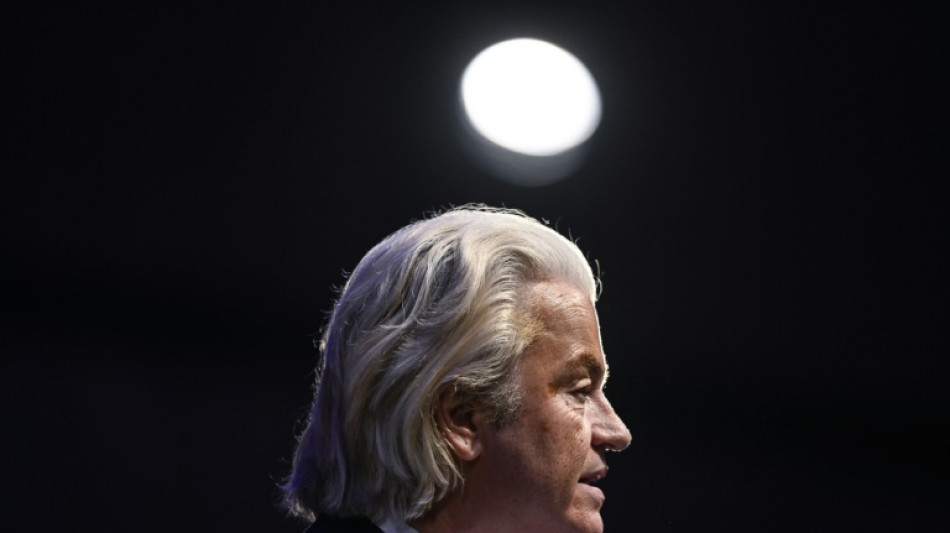
Wilders: firebrand 'Dutch Trump' finally wins big / Photo: © AFP

 Himalayan glacier study warns of flood and water-supply risks

 Kuwait schools restore classroom routines after remote learning
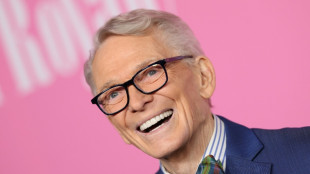 US designer Bob Mackie, known for Hollywood glamour, dies at 87

 BIS flags debt and profitability risks in AI-driven market rally

 Qatar Chamber and Maltese envoy consider business forum
 Spanish PM denies being blackmailed by Morocco
 Doha Islamic finance forum names AlRayan firms as co-lead partners
 Leeds thrash Newcastle to go third in the Premier League

 Zelensky says Ukraine ready for 'de-escalatory steps'

 In-form Malen fires Roma to Serie A summit, Inter on their heels
 Lebanese agency reports Israeli shelling and gunfire in south
 Expert proposes phased digital reform for Arab business schools
 Trump rejects 'hoax' warnings that AI could destroy humanity
 Houthis say Saudi Arabia hits Yemen with 54 strikes after attack on bases
 Why the far right is losing ground in Sweden
 Ex-Ireland fly-half O'Gara extends deal as La Rochelle coach

 Russian attacks on Ukraine railways escalating every week: rail CEO to AFP
 France, Iraq deepen energy, defence ties during Zaidi visit
 Trump says Ukraine, Russia agree not to hit energy targets

 Nigeria's Dangote refinery launches continent's biggest IPO
 Trump blasts 'sick conspiracy' against AI as warnings mount
 For Laura Linney, role in Parkinson's-themed movie marked a turning point
 Doctors face life sentence over Greek pop star's death
 Trump moves to axe power plant climate rules

 Slow the AI race? Investors weigh the potential cost

Known as the "Dutch Trump" both for his bouffant dyed hair and firebrand rhetoric, Geert Wilders' anti-Islam, anti-immigrant and anti-EU message seems to have finally swept him to first place at the polls.
From calling Moroccans "scum" to holding competitions for cartoons of the Prophet Mohammed, Wilders has built a career from his self-appointed mission to stop an "Islamic invasion" of the West.
He has remained defiant despite brushes with the law -- he was convicted for insulting Moroccans -- and death threats that have meant he has been under police protection since 2004.
"I don't regret fighting for freedom," Wilders told AFP in an interview ahead of elections in 2021. "Of course I take a stand, I am under attack, my country is under attack."
Nevertheless, at the sixth time of asking, Wilders appears to have finally triumphed in the polls by toning down some of his populist rhetoric and focusing on voters' other concerns.
There are "bigger problems than fighting against the flood of asylum-seekers and immigrants", he said in one of the final election debates, adding he was prepared to put his views on Islam "in the freezer" to govern.
The Dutch people still cared about crimping immigration but more about "whether they have more money left in their wallets". His focus was on "security and healthcare" more than opposing Islam.
- 'Cruise-ship buffets' -
Yet the manifesto of his PVV (Freedom Party) retained the sharp anti-immigrant tone that has become his hallmark.
"Asylum-seekers feast on delightful free cruise-ship buffets while Dutch families have to cut back on groceries," the manifesto reads.
Proposed immigration measures include: restoring Dutch border control, detaining and deporting illegal immigrants, returning Syrian asylum-seekers and re-introducing work permits for intra-EU workers.
As for Islam, the PVV manifesto says: "the Netherlands is not an Islamic country. No Islamic schools, Korans and mosques." He proposes banning the headscarf in government buildings.
On foreign policy, the PVV proposes a "Dutch first" approach that includes closing its representation in Ramallah and strengthening ties to Israel, including moving its embassy to Jerusalem.
A "binding referendum" on a "Nexit" -- the Netherlands leaving the EU -- is also in the manifesto, along with an "immediate halt" to development aid.
- 'Anger, not fear' -
Born in 1963 in southern Venlo, close to the German border, Wilders grew up in a Catholic family with his brother and two sisters.
His mother was half-Indonesian, a fact Wilders rarely mentions.
He developed an interest in politics in the 1980s, his older brother Paul told Der Spiegel magazine.
"He was neither clearly on the left or the right at the time, nor was he xenophobic. But he was fascinated by the political game, the struggle for power and influence," Paul Wilders said.
His hatred of Islam appeared to have developed slowly. He spent time in Israel on a kibbutz, witnessing first-hand tensions with the Palestinians.
He was also shocked by the assassinations of far-right leader Pim Fortuyn in 2002 and the radical anti-Islam filmmaker Theo van Gogh in 2004.
When he heard the news of Van Gogh's murder: "I remember my legs were shaking with shock and indignation," he wrote in a 2012 book. "I can honestly say that I felt anger, not fear."
Wilders entered politics in 1998 in the Liberal VVD party. During his early days in politics he started dying his brown hair blonde and learned his media-savvy ways, even as his views became increasingly silenced.
- Isolated figure -
Over the years he vowed not to be silenced, despite being convicted of insulting Moroccan-Dutch citizens.
Indeed, that high-profile trial boosted his visibility only months after Brexit and just as Donald Trump won the US presidential race.
In 2006 he quit the VVD to found his own party and in 2017 it became the second largest in parliament, falling back to third largest in 2021.
By tapping into a seam of Dutch discontent Wilders also managed to push the political discourse in the Netherlands to the right.
But Wilders also cut an isolated figure.
He was married to a Hungarian woman, but they had no children. When not posting anti-Islamic invective on his one social media account, he posted pictures of their cats on another.
His party consisted of just one person: himself. And his security meant he had little contact with the outside world.
"Geert's world has become very small," his brother told Der Spiegel. "It consists of the parliament, public events and his apartment. He can hardly go anywhere else."
P.Anderson--BTB