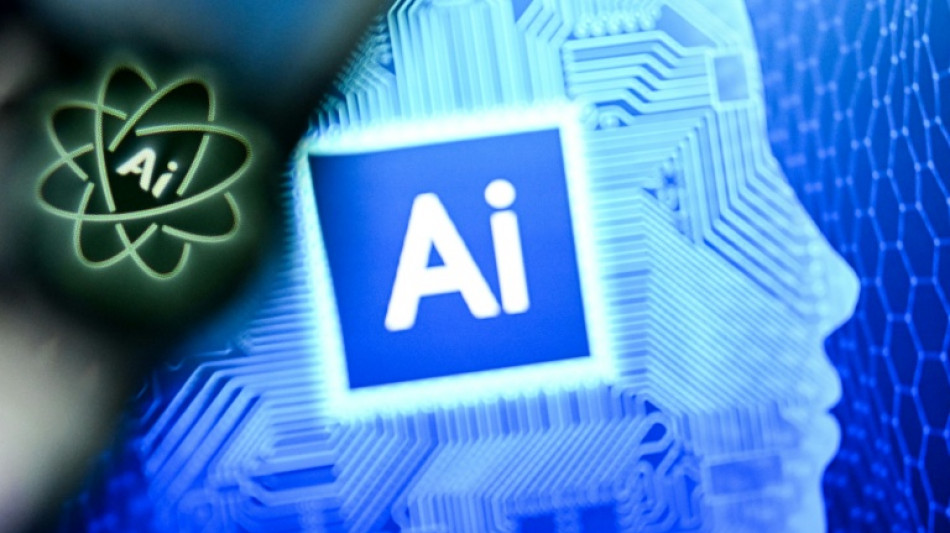
Doomers and boosters: who's who in the AI wars / Photo: © AFP/File

 Television's A-listers glitter on Emmys red carpet

 US Supreme Court blocks Trump mail-in ballot restrictions

 Dodgers clinch playoff berth in bid for third straight World Series

 Doomers and boosters: who's who in the AI wars

 GAC presents autonomous trucks and MONTX concepts at Hannover show

 EU extends Russia sanction deadline
 Thai wildlife investigators track traffickers through social media

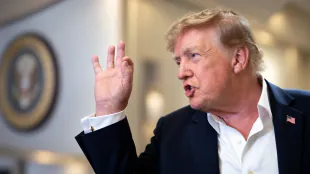 Trump rejects AI slowdown concerns as UN urges coordinated controls

 US judge postpones new visa rules for foreign students, journalists
 Higher wages draw migrant workers to Kashmir despite attacks

 Oil supply concerns and AI warnings weigh on global markets
 'I am the hoax buster': Trump rejects AI danger warnings
 Macklemore dropped from Ed Sheeran tour after 'free Palestine' speech

 Trump's son confirms Russian businessman paid for post-wedding festivities

 Betis beat winless Villarreal to go third

 Etihad capacity rises as war disruption weighs on annual earnings

 At G20 summit, US unravels power plant climate rules

 Russian disinformation campaign sets sights on US midterms
 England No 8 Pollock could move abroad or switch sports amid contract stand-off
 Canada makes pitch as safe place to invest in 'uncertain world'
 In-form Malen fires Roma to Serie A summit
 IOC visits Lyon amid leadership turmoil for 2030 Winter Olympics
 New York seizes 12 celeb deep-fake porn sites

 Jesse Eisenberg channels emotional intensity into 'The Debut'
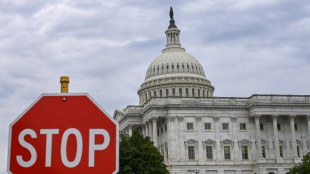 Alarm over AI grows as divided US Congress struggles to act
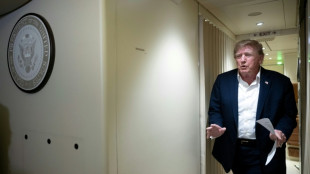
The furious debate over artificial intelligence has hardened into warring camps -- and a cautious middle.
Here is a look at the battle lines in the war over a technology that is now the backbone of the economy and could decide the future of the planet.
- The doomers -
Fear of technology's dangerous consequences for society goes back far in history.
OpenAI was founded in part because its backers, including first investor Elon Musk, feared that AI's development would end up in the hands of Google, which they believed could not be trusted with the technology.
Today, most of the doomers warning against the impact of artificial intelligence come from inside the companies themselves, from academia, or both.
Those inside the industry are best represented by Dario Amodei, who co-founded Anthropic, now a major AI giant heading toward a historic IPO. He left OpenAI because he felt the Sam Altman-led company was not taking the technology's potential and dangers seriously enough.
His stance is decried as hypocritical, coming from a company that is itself pushing out cutting-edge technology.
Former Google researcher Geoffrey Hinton and fellow computer scientist Yoshua Bengio led the warnings about AI's threats in the months after the release of ChatGPT in 2022, which kickstarted the latest AI frenzy.
MIT physicist Max Tegmark, who heads the Future of Life Institute, organized the open letter in 2023 that called for a six-month pause in the development of the most advanced AI systems, drawing thousands of signatures, including Musk's.
Further outside the industry is Eliezer Yudkowsky, a self-taught theorist who has spent two decades arguing that a sufficiently powerful AI would wipe out humanity.
- Build, build, build -
Diametrically opposed to the doomers are the accelerationists, who believe in technology's advancement, its inevitability and its fundamental benefit for society -- and who also make their fortunes on its success.
The ethos is widespread in Silicon Valley, but it is best represented by venture capital figures with considerable sway in the White House, such as Marc Andreessen, the influential head of venture capital firm Andreessen Horowitz, and David Sacks, the former White House AI czar.
Personally and philosophically aligned with tech figure Peter Thiel, the group is fundamentally opposed to regulation and battles behind the scenes and on X against what it calls a well-financed doomsday "cult."
They accuse doomers of being a front for companies seeking to use regulation to crush rivals.
Garry Tan, who runs the startup incubator Y Combinator, is among the loudest of those voices, casting safety-driven regulation as a threat to the small companies that cannot absorb its costs.
Andreessen and his allies lavishly fund political action committees that donate to Republican and Democratic lawmakers promoting AI growth, with Anthropic now leading an effort to match that spending through its own fundraising.
In the same go-faster camp is Jensen Huang, the CEO of Nvidia, whose chips are the bricks and mortar of the AI revolution -- housed in the gargantuan data centers now meeting opposition across the United States.
Also worth noting is Yann LeCun, who shared the Turing Award with Hinton and Bengio and has spent years dismissing their warnings of existential danger as overblown.
- Proceeding with caution -
Many big tech companies try to proceed carefully, in a positioning more typical of large corporations that do not want to be caught on the wrong side of a political fight.
At its founding in 2015, OpenAI was structured to ensure that researchers, and not investors, would have the final say on how the technology was deployed, with safety for humanity the guiding philosophy.
But under Altman, who survived an in-house coup in 2023 led by safety-focused colleagues, the company now toes a more complicated line, speaking to AI's dangers while still accelerating and cozying up to a no-holds-barred White House.
Google, Microsoft and Amazon are veterans of talking about safety in tech while navigating Washington successfully to keep regulation to a minimum. With AI, they are still walking that fine line.
F.Pavlenko--BTB