Kosovo's Serbs hit by lines, limited withdrawals after currency ban / Photo: © AFP

 Ukrainian fashion designer debuts art between air raids
 Gambian businesses struggle under prolonged blackouts
 Fiji declares national HIV crisis
 Australia to cut migration to fix housing crisis: minister
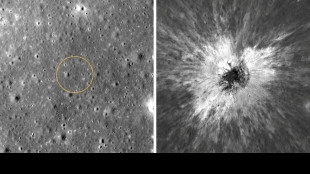 NASA scan discovers new, 'once in a century' Moon crater
 Most stocks rise as Fed hikes and indicates drive to curb inflation
 US again denies Palestinian leader Abbas visa to attend UN assembly
 Lula says he will go to UN to tell Trump to 'stay out' of Brazil's elections
 Messi heads Inter Miami to Campeones Cup triumph
 AI looms large ahead of Xi, Trump summit
 Smith still haunted by 'Sandpapergate' as he prepares for South Africa Tests
 UK-Sudanese author pens book to give children 'African history of Africa'

 Boehly and Walter sell Chelsea stake to Clearlake Capital
 US House backs data center power cost bill amid midterm backlash
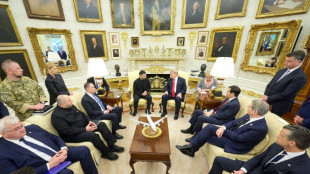 US Congress passes sweeping Russia sanctions bill
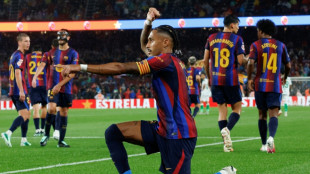 Barca hit Racing for seven as Atletico crush Osasuna

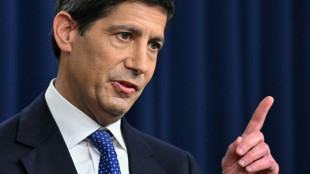 US Fed raises rates to tackle 'too high' inflation, irking Trump
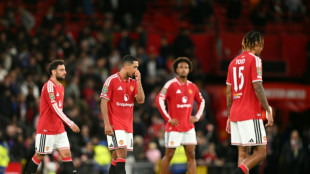
 Man Utd misery mounts after League Cup collapse against Brighton
 Turkey releases 106 protesters, jails more LGBTQ activists

 US Fed raises rates to tackle 'too high' inflation in move sure to rile Trump
 England were 'waiting for death' in World Cup semi-final defeat: Tuchel

 NFL star fined for displaying name of slain Palestinian girl
 Witsel retires from internationals after 18-year Belgium career
 US Fed raises rates to battle inflation in move likely to rile Trump

 Fitzpatrick 'not comfortable' over Dubai golf finale
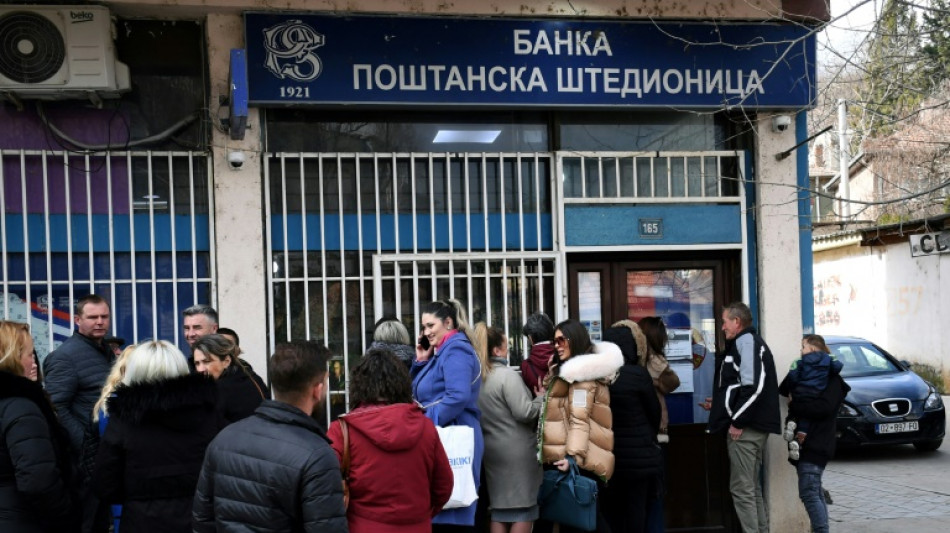
Long lines snaked around banks in northern Kosovo on Wednesday, as ethnic Serbs waited to receive salaries and pensions in limited tranches following a government regulation targeting Serbia's dinar currency.
The disruption comes weeks after a new rule entered into force in Kosovo on February 1 that made the euro the only legal currency for payments in commercial transactions and effectively banned the use of the dinar.
On Wednesday, Kosovo's Serbs working for government institutions in Serbia and pensioners were set to receive salaries in northern Kosovo, where many in the community are dependent on the payments.
Worries have been mounting for days over fears that cash was running short in the area, following the blocking of two deliveries of dinars after officials stopped cars transporting the currency at the border.
Serbia's central bank said the shipments were set to pay salaries, pensions, social benefits and other payments to Serbs in Kosovo.
On Wednesday, account holders were only able to withdraw limited amounts of dinars, according to an AFP reporter on the ground, usually in tranches of 5,000 to 10,000 ($46 to $92).
"It is most likely the dinar will be abolished because that is Pristina's position. What are we left with?" one pensioner told AFP, speaking on condition of anonymity.
Others said they would be forced to cross the border and travel to Serbia to collect their salary in full.
"Tomorrow, I plan to go to Raska and pick up my salary there," said Milica Ivanovic, a 25-year-old working at a Serbian government institution in northern Kosovo, referring to a town in southern Serbia.
"I can afford it but there are others who can't," she added.
- Rising tensions -
Kosovo's roughly 100,000-member Serb community has held tight to the dinar since a brutal late-1990s war between Serbia and ethnic Albanian insurgents saw Serbian troops and government personnel withdraw from the breakaway province.
"I don't think there is a Serbian family in Kosovo that is not affected by this decision," Aleksandar Rapajic, who works for the Advocacy Center for Democratic Culture in Kosovo's northern city of Mitrovica, told AFP.
"The only effect this decision has is to make life miserable for the Serbian community and to make it difficult to send money from Serbia," he added.
The move has seen already tense relations between Serbia and Kosovo inflamed.
Earlier this month, Serbia's President Aleksandar Vucic and Kosovo's Prime Minister Albin Kurti sparred over the new regulation during an emergency meeting at the UN Security Council in New York.
Kosovo officials have introduced a three-month transitional period, allowing time to resolve issues.
Despite criticism from several Western countries, Kosovo's government has continued to defend the regulation.
"Money cannot come across the border in bags, as it cannot in any democratic state, but it can come through bank accounts, withdrawn in euros," said Kurti earlier this month.
Serbia has never acknowledged Kosovo's 2008 declaration of independence, with the rivals regularly locked in fierce disagreements over bureaucratic matters in the former breakaway province, such as a recent spat over licence plates.
Kosovo adopted the euro as its currency in 2002, despite not being a formal member of the eurozone or the European Union.
The currency regulation follows a tumultuous year in Kosovo that saw an armed standoff between Serb gunmen and police at a monastery near the Serbian border in September. At least four people were killed.
R.Adler--BTB