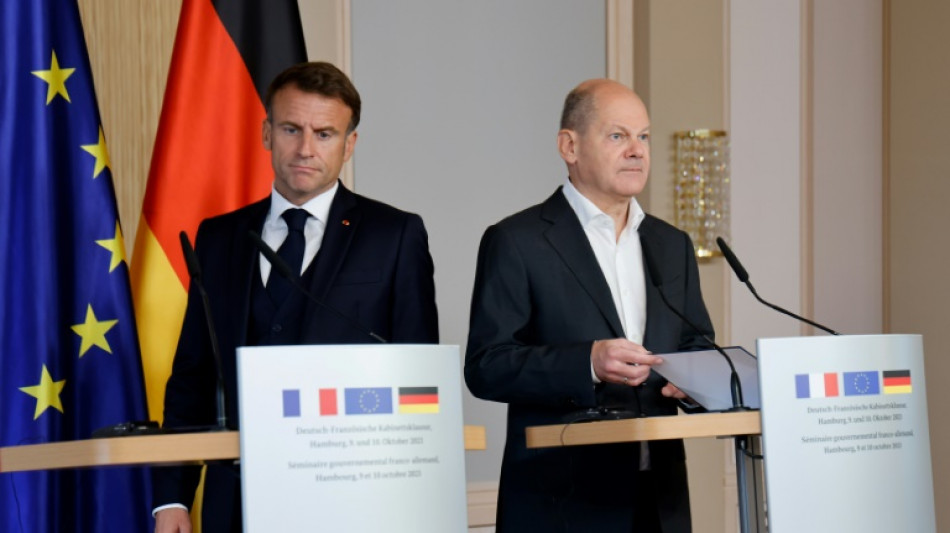
Macron-Scholz rift deepens with Ukraine war at crucial juncture / Photo: © AFP

 Beyond Investment Returns: Families Are Measuring Wealth by Freedom, Continuity, and Legacy, According to Nour Private Wealth
 King Charles disputes claims in book by Princess Diana's brother
 Real Madrid fan group wants Mbappe apology over Ceuta shirt snub
 Nepal floods among 'most challenging' disasters: WFP
 Doubts as Italy eyes electric future for steel plant
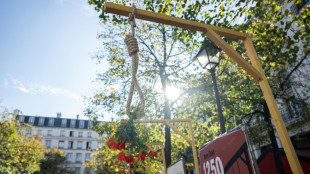 'One of the kindest people': Taraneh, 21, facing execution in Iran
 Japan eyes changing prostitution law to punish sex buyers
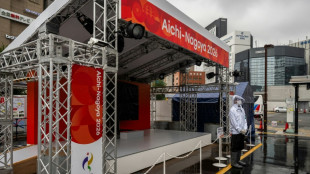 After record rain, typhoon threatens new challenge to Asian Games

 Kids and social media: what would change under new EU law
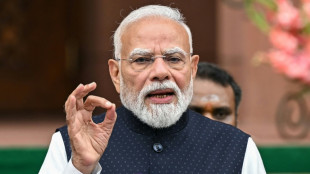 Modi pitches India as global chipmaking hub
 Ukraine plans record defence spending in 2027
 Klopp calls up 44 players in huge first Germany squad
 STARPRIME Responds to Diverging Gold Market Demand with AM/PM Fixing and XAU24/7
 Ukrainian fashion designer debuts art between air raids

 Gambian businesses struggle under prolonged blackouts
 Fiji declares national HIV crisis
 Australia to cut migration to fix housing crisis: minister

 NASA scan discovers new, 'once in a century' Moon crater
 Most stocks rise as Fed hikes and indicates drive to curb inflation

 US again denies Palestinian leader Abbas visa to attend UN assembly
 Lula says he will go to UN to tell Trump to 'stay out' of Brazil's elections

 Messi heads Inter Miami to Campeones Cup triumph

 AI looms large ahead of Xi, Trump summit
 Smith still haunted by 'Sandpapergate' as he prepares for South Africa Tests
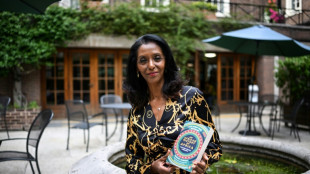 UK-Sudanese author pens book to give children 'African history of Africa'
Emmanuel Macron's refusal to rule out sending Western troops to Ukraine has exposed deep divisions with France's traditional partner, Germany, which could play into the hands of Russia, analysts warned Wednesday.
Following a meeting of Kyiv's backers in Paris on Monday, Macron made his suggestion, prompting a slapdown from German Chancellor Olaf Scholz who insisted there "will be no soldiers on Ukrainian soil sent there by European states or NATO states".
The very public differences between the two leaders of Europe's biggest powers was a "disaster", German magazine Spiegel said.
The two could have "demonstrated that they are determined to support the Ukrainians in the trenches".
"Instead, Chancellor Scholz and President Macron are airing their rivalry in public," Spiegel said, chalking it up to the leaders' ego.
The open display of discord underlined how relations were at a "very low point", Rym Momtaz of the International Institute for Strategic Studies told AFP.
Former German diplomat Wolfgang Ischinger, too, called it "deeply regrettable" that relations between the two were so fragile at a time "when Europe is confronted with the most strategically, militarily and politically difficult crisis in years".
"If Germany and France are presenting themselves bickering and disunity in front of Russia, where will champagne corks be popping? Not in Washington and not in Italy, but in Moscow," Ischinger told Welt newspaper.
- Cheques but no risk -
While Macron and former chancellor Angela Merkel had always sought to present a united front, the French leader and Scholz have struggled to do the same since the German Social Democrat took office in 2021.
There were "several fundamental differences" between the two sides which have spilled over to how to support Ukraine in their battle to repel Russia, Momtaz said, citing a litany of examples from the design of European air defence to sourcing of arms as two further issues.
Ultimately, "these divergences weaken Europe's capacity to address security challenges".
With the unease growing over the spat, Scholz's spokesman Steffen Hebestreit sought to play down the latest dispute, saying the disagreement between the two sides was "not dramatic".
But observers say the two sides share the blame as they jostle for prominence.
"Both are all too happy to present themselves as driving forces in Europe, as thought leaders and doers," Spiegel said.
Macron appeared to make a point at Germany's expense on Monday when he criticised partners who had said "we are going to offer sleeping bags and helmets" on the eve of Russia's invasion.
Berlin was derided when it said it would not send weapons to Ukraine but 5,000 helmets, as Russian forces massed behind Ukraine's border.
And once the invasion began, Germany had to be cajoled by allies to approve the delivery of modern battle tanks to Kyiv.
"Today they say, we have to go faster and harder to have missiles and tanks," Macron continued in his jibe against Berlin, adding that the realisation had a "six-to-12-month delay".
Berlin meanwhile has consistently rebuffed criticism that it is not doing enough to support Ukraine by pointing to the numbers.
Germany is Ukraine's second-biggest weapons donor behind only the United States, with France trailing far behind, according to figures compiled by the Kiel Institute for the World Economy.
With a new package of US military aid held up in Congress, Scholz has repeatedly called on his European neighbours to do more.
Macron's remarks were intended to counter criticism and show France is a "good ally of Ukraine", Gaspard Schnitzler from the French IRIS think tank told AFP.
This kind of competitiveness between allies however "leads to nothing", said Schnitzler.
For now, Paris has dug in its heels behind Macron's suggestion on ground troops, which he has said maintained "strategic ambiguity" that keeps Russian President Vladimir Putin guessing.
"Closing a door is strategically giving Putin a point," an adviser to the French executive told AFP.
"If we stop there, we reassure President Putin in his impression that we are weak," a French diplomatic source also told AFP.
"That is to say, we are willing to write cheques, we are willing to make declarations, we are willing to send guns and we don't want to take any risks for ourselves."
burs-sea/hmn/giv
T.Bondarenko--BTB