What to know about China's annual parliamentary meeting / Photo: © AFP

 Beyond Investment Returns: Families Are Measuring Wealth by Freedom, Continuity, and Legacy, According to Nour Private Wealth
 King Charles disputes claims in book by Princess Diana's brother

 Real Madrid fan group wants Mbappe apology over Ceuta shirt snub

 Nepal floods among 'most challenging' disasters: WFP
 Doubts as Italy eyes electric future for steel plant
 'One of the kindest people': Taraneh, 21, facing execution in Iran

 Japan eyes changing prostitution law to punish sex buyers

 After record rain, typhoon threatens new challenge to Asian Games

 Kids and social media: what would change under new EU law
 Modi pitches India as global chipmaking hub
 Ukraine plans record defence spending in 2027

 Klopp calls up 44 players in huge first Germany squad
 STARPRIME Responds to Diverging Gold Market Demand with AM/PM Fixing and XAU24/7

 Ukrainian fashion designer debuts art between air raids

 Gambian businesses struggle under prolonged blackouts
 Fiji declares national HIV crisis
 Australia to cut migration to fix housing crisis: minister

 NASA scan discovers new, 'once in a century' Moon crater
 Most stocks rise as Fed hikes and indicates drive to curb inflation

 US again denies Palestinian leader Abbas visa to attend UN assembly
 Lula says he will go to UN to tell Trump to 'stay out' of Brazil's elections

 Messi heads Inter Miami to Campeones Cup triumph

 AI looms large ahead of Xi, Trump summit

 Smith still haunted by 'Sandpapergate' as he prepares for South Africa Tests
 UK-Sudanese author pens book to give children 'African history of Africa'

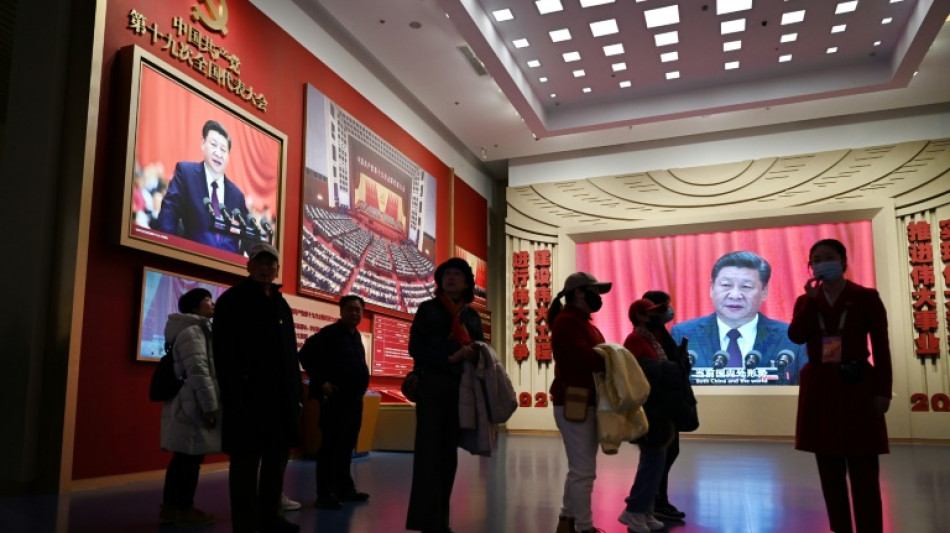
Thousands of delegates from across China will convene in Beijing next week for the start of the country's annual legislative meetings known as the "Two Sessions".
The tightly controlled voting on legislation already pre-approved by the ruling Communist Party means there will be no major changes.
But the meetings do provide a rare glimpse into the top leadership's priorities, with analysts eyeing support measures for China's ailing economy as well as an expected increase in defence spending.
Here's what you need to know:
- What are the 'Two Sessions'? -
The first one, due to kick off Monday, is a gathering of China's political advisory committee, the Chinese People's Political Consultative Conference (CPPCC).
The group's members -- who have included many of China's most famous celebrities, such as Yao Ming and Jackie Chan -- receive a lot of attention at home.
But its discussions are relatively low stakes: representatives provide lawmakers with policy suggestions that, more often than not, have little impact on national policy.
The real focus of the "Two Sessions" is the meeting of the National People's Congress (NPC), the country's legislature, starting Tuesday at Beijing's Great Hall of the People.
Two-thirds of the legislature's members come from the Communist Party.
And most of the bills that will be passed have already been decided by party leaders well in advance, leading to it being described as a "rubber-stamp" parliament.
- How important is it? -
China goes to great lengths to make sure there are no embarrassing incidents during the parliamentary session, which is touted by the Communist Party as proof that it answers to the people despite its monopoly on power.
The meeting place in the Great Hall of the People is freshened up, traffic is shut down, factories are closed to guarantee blue skies, plainclothes policemen seem to lurk on every corner and political dissidents are rounded up and asked -- or sometimes forced -- to go on "vacation" somewhere far away from the capital.
It is also the one time each year when the country's most powerful politicians are all in one place, making it a key venue for political horse-trading, glad-handing and backstabbing.
Every five years, the parliamentary session also sees the appointment of the president -- last year, Xi Jinping began his third term in the position, complementing two top Communist Party positions he secured at a congress in 2022.
This year's "Two Sessions" will also feature the first annual government work report presented by Premier Li Qiang since he ascended to the country's number-two position at last year's meeting.
- What are the top issues? -
The economy, beset by slumping consumer activity and a prolonged crisis in the property sector, will be the most closely-watched topic at this year's gathering.
The conference will see delegates set official growth targets for 2024, following a reported national GDP expansion of 5.2 percent last year -- the lowest rate in decades, excluding the pandemic years.
The release of details on military spending will offer signals as to China's confidence in current geopolitical conditions, as tensions persist across the Taiwan Strait and Russia's war in Ukraine enters its third year.
Observers will also be closely assessing any plans announced on the allocation of public resources into the tech sectors or major infrastructure development projects.
W.Lapointe--BTB