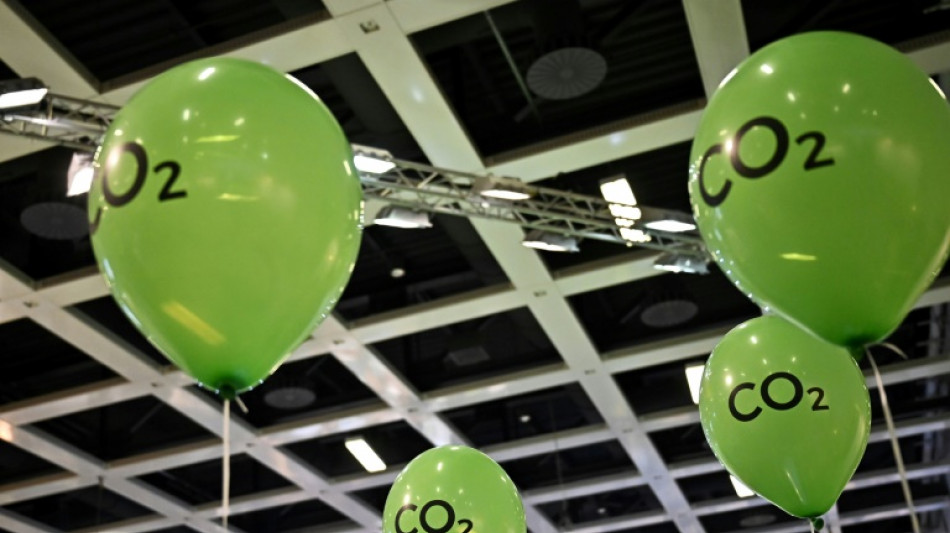
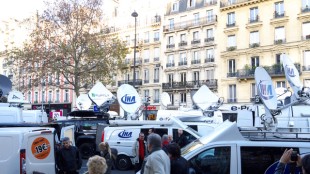
EU ministers mull climate policy, carbon border tax / Photo: ©

 Mali jails junta-critic broadcaster, influencer for seven years
 'Nowhere to run': Indonesian quake survivors plead for help
 Belgium fire makes 'limited' spread overnight, more help on way

 Vingegaard brings curtain down on season
 Dickwella, Dinusha hit fifties as Sri Lanka fight back
 Bangladesh Test cricket reboot delivers in style with historic win

 Virgin moves closer to launching Eurostar rival in 2030
 Indian marble waste dump becomes unlikely tourist attraction
 Coach says Australia 'let standards slip' in shock Bangladesh loss

 Hawaii recovery efforts begin as Lala downgraded, moves west

 Food safety crackdown snares Mumbai's famed restaurants
 Trump says US scaling back military drills with Seoul hours before start
 Nearly 13,000 displaced after deadly Indonesian quake
 Axe hangs over Australian batters after Darwin 'disaster'

 Is this cave in Turkey where Homer wrote 'The Odyssey'?
 Winning back walls from gangs, artists fill El Salvador's towns with color

 Opening arguments expected in Tupac murder trial
 As machinery removes rubble, hopes for survivors from Colombian quake dwindle
 Top-ranked Scheffler powers to PGA St. Jude Championship victory
 Jacquet scores on Liverpool debut in friendly win over Como
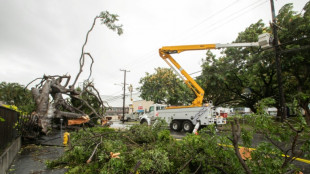 Hawaii's Big Island begins recovery efforts as Hurricane Lala downgrades, moves west
 Spidey swings high for third weekend in N. American box office

 Eagle and late birdie lift Jeeno to LPGA Portland Classic win
 Duplantis masterclass for fourth Euro pole vault title
 Records for Asher-Smith, Hunt as Britain win 4x100m mixed relay
European Union environment ministers gathered in France Thursday to mull climate policy and the merits of a carbon border tax, while airing differences on whether nuclear energy can be classified as "green".
The two-day informal talks in Amiens, hosted by France as it takes the rotating reins of the EU presidency, will look for a unified path toward achieving the 27-nation bloc's ambitious target of slashing carbon emissions 55 percent from 1990 levels.
Discussion on overhauling the EU's electricity market and carbon-trading system, already fraught, unfolds against a backdrop of sharp increases in energy prices, especially natural gas.
EU energy ministers will join the fray on Friday, and then continue on with separate talks.
Since last year, French President Emmanuel Macron has led the charge for the rapid implementation of a "carbon border adjustment mechanism", essentially a tax on imported products made in countries with less stringent rules on reducing carbon pollution.
The objective is to avoid shifting Europe's carbon emissions overseas as they are reduced at home -- known as "carbon leakage".
The sectors affected include steel, alumium, cement, fertiliser and electricity.
China and the United States are both opposed to such a tax, with Beijing saying last year when the plan was unveiled that it would "violate World Trade Organization (WTO) principles."
- Is nuclear 'green'? -
Even within Europe, Germany insists the mechanism can only be implemented gradually, and several countries are outright opposed, mainly because the tax would replace the allocation of free emissions permits.
"Spain, Portugal, Poland and Austria want to maintain free quotas," a European diplomat said.
Such a carbon tax "raises complicated questions," he added. "Who collects the money? Where does it go?"
But France's ecological transition minister Barbara Pompili said that there is already an "agreement in principle", and talks have shifted to questions of timing.
After EU ministers hammer out a consensus on "CBAM", as it is known, they will undertake negotiations with the EU Parliament to finalise an agreement.
Another divisive issue that has pitted Paris against Berlin is whether nuclear power's virtue as a source of carbon-free energy outweighs safety issues and the as-yet unsolved problem of nuclear waste.
A greater share of electricity in France -- about 70 percent -- is generated by nuclear power than any other country in the world.
The question on the table is whether nuclear power and natural gas should be officially classified in the "EU taxonomy" as environmentally sustainable, an important signal to companies, investors and policymakers.
Nuclear power is neither "sustainable" nor "economic", Germany environment minister Stefan Tidow said in Amiens. "It is not a green energy."
Pompili did not disagree, acknowledging that storage of spent nuclear fuel remains a major problem.
- 'Imported deforestation' -
But "nuclear is a decarbonised energy," she said. "We cannot deprive ourselves of it at the same time that we need to very rapidly reduce our carbon emissions."
A third initiative favoured by France is developing tools to fight so-called "imported deforestation," stemming from products indirectly responsible for the destruction of tropical forests.
Palm oil plantations in Southeast Asia and Africa, and commercial soy production in South America -- mostly to feed cattle -- are major drivers of deforestation.
A draft law submitted by the European Commission in November is currently under discussion in the bloc's Parliament.
Environmental NGOs said the text has too many loopholes, excluding commodities such as corn and rubber.
Yet another initiative running into stiff headwinds is a measure to expand the cap-and-trade system of carbon pollution quotas -- which currently covers heavy industry and the electricity sector -- to transport fuel for trucks and domestic heating fuel.
The controversial proposal, championed by the European Commission, has found scant support among ministers, concerned the measure would result in unpopular price hikes for consumers.
France has expressed "strong reservations," according to a French official.
"We saw the rise of the 'yellow vests'," he said, referring to popular protests in 2018 sparked by a modest increase in petrol prices.
B.Shevchenko--BTB