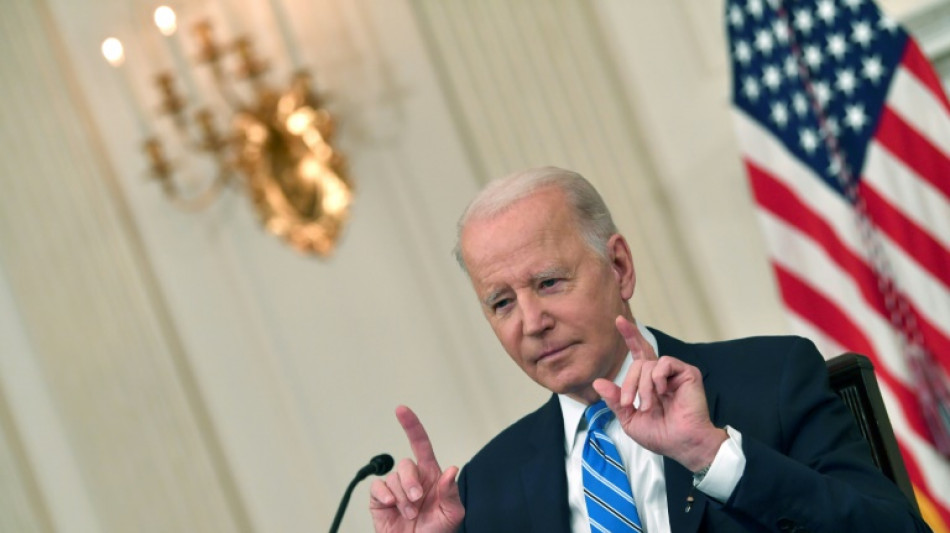
US economy grew 5.7% in 2021, but Omicron hit looms / Photo: ©

 Prague’s Concert for the Future Kicks Off on Wenceslas Square

 Prince William and Princess of Wales to Announce Earthshot Prize Winners in Mumbai

 Indonesia Forest Fires: Health Crisis, Diplomatic Strains and the Search for Solutions

 BYD Dolphin G Leasing Deal: Plug-in Hybrid Supermini Available from £174 a Month

 JUEL Group Expands from Real Estate to Hospitality with Hyatt Centric Malta Opening

 French Economy Shrinks 0.1% as Consumer Confidence Slumps

 Wall Street Ends Turbulent Week Higher Despite Inflation and AI Jitters

 Kansas City Fed Chief Says Inflation Is Still Running Too Hot

The world's largest economy staged a solid recovery last year as it grew at the fastest pace since 1984, but damage from the Omicron variant of Covid-19 still looms.
Surging prices continue to pose a challenge, as inflation picked up speed in the final three months of the pandemic's second year, according to official data released Thursday.
That threatens to dampen the consumer demand that has underpinned the recovery, while supply chain snarls continue to create headaches for businesses, and for President Joe Biden's efforts to return the country to normal.
After the downturn in 2020, US GDP expanded by 5.7 percent last year, the Commerce Department said in its latest quarterly report.
Amid the rise of Omicron in the October-November period, GDP grew 6.9 percent, the data showed. While that topped expectations, economists warn the figure was inflated by businesses' attempts to rebuild depleted inventories.
"The upside surprise came largely from a surge in inventories and the details aren't as strong as the headline would suggest," said Kathy Bostjancic of Oxford Economics.
"What's more, beneath the headline GDP print, the handoff to 2022 is weak. With consumer spending retrenching in December and Omicron dampening economic activity," she said in an analysis.
Ian Shepherdson of Pantheon Macroeconomics agreed, saying the start of the year looks grim: "Our tentative Q1 GDP forecast right now is zero."
But Biden, whose signature social spending bill is stalled in Congress, cheered the report, highlighting "the fastest economic growth in nearly four decades, along with the greatest year of job growth in American history."
And, he said, "for the first time in 20 years, our economy grew faster than China's."
"This is no accident. My economic strategy is creating good jobs for Americans, rebuilding our manufacturing, and strengthening our supply chains here at home to help make our companies more competitive."
- Inflation on the rise -
Ongoing supply snarls and shortages, combined with strong demand for goods fueled by generous government aid, have created a perfect storm of inflationary pressures that have undercut Biden's approval among American voters.
Prices accelerated during the year, peaking in the October-December period with a 6.5 percent surge in the personal consumption expenditures (PCE) price index -- the measure the Federal Reserve focuses on. That was the biggest increase in 40 years.
For the full year, inflation rose 3.9 percent, according to the data, still far above the Fed's two percent goal.
Excluding volatile food and energy prices which have increased sharply in the year, the core PCE price index rose 3.3 percent in 2021, and 4.9 percent in the fourth quarter.
The Federal Reserve on Wednesday issued a clear signal that it plans to begin raising interest rates in March to tamp down inflation, but that also could restrain growth next year.
N.Fournier--BTB