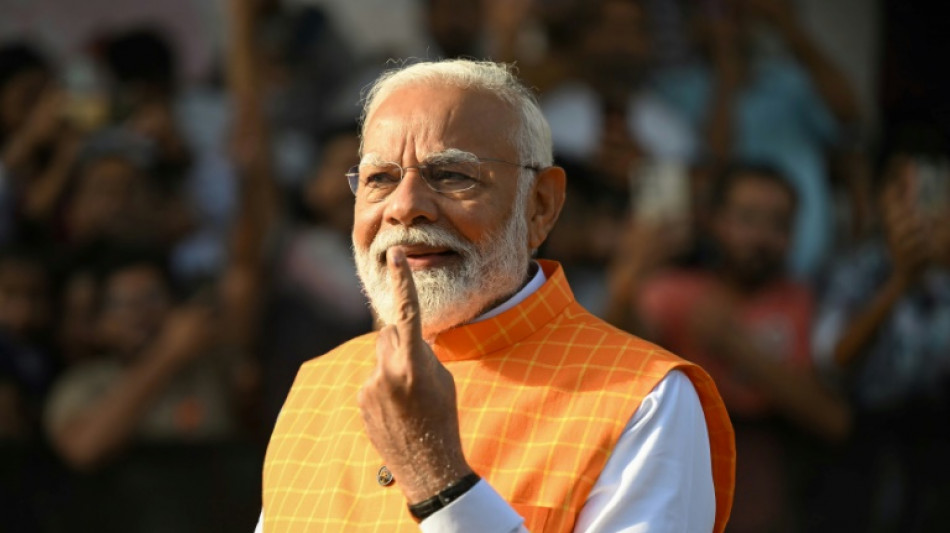
Modi: tea seller's son who became India's populist hero / Photo: © AFP

 Spain coach De la Fuente gets new deal after World Cup success

 Pressure grows on Germany's Merz after election defeats

 China's Zhang beats Japan rivals to Asian Games gymnastics gold
 Samlingen Haupt: Vad pengar avslöjar om oss människor

 Tens of thousands of German auto workers protest to save jobs

 हॉप्त् कलेक्शन: पैसा हमारे बारे में एक इंसान के रूप में क्या प्रकट करता है

 Συλλογή Haupt: Τι αποκαλύπτει το χρήμα για εμάς τους ανθρώπους

 TradersYard Shifts Focus to Futures Trading

 ハウプト・コレクション:お金が人間について明かすこと

 하우프트 컬렉션: 돈이 우리 인간에 대해 드러내는 것
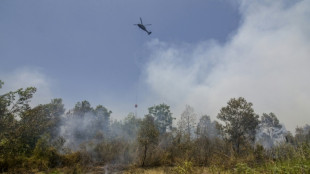
 Indonesia doing 'everything' but struggling to curb fires

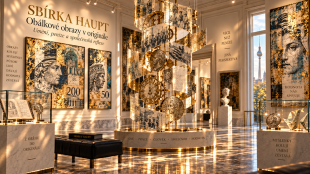 Sbírka Haupt: Co o nás lidech prozrazují peníze

 North and South Korea fight out draw in niggly Asian Games clash
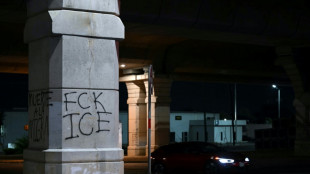 Officials say man shot, wounded by ICE agent in Texas
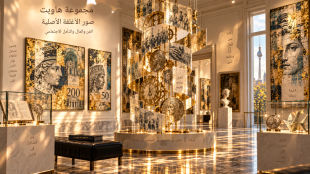
 豪普特收藏:金錢如何揭露人類的本質

 Kolekcja Haupta: Co pieniądze mówią o nas, ludziach
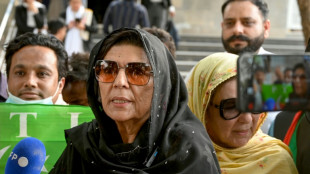
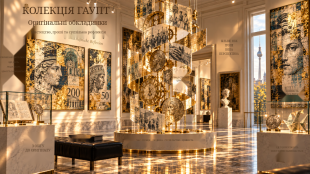
 The Haupt Collection: What Money Reveals About Us as Human Beings

 Barcelona enter new era aiming to retain Women's Champions League crown
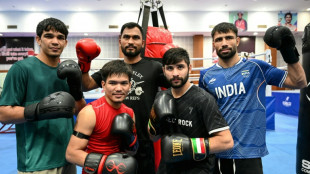
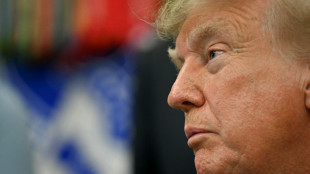 US has deported 25,000 to third countries under secretive deals: report
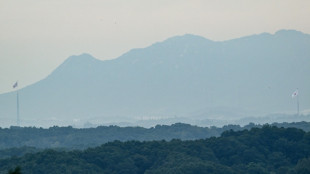 Three South Korean soldiers injured in DMZ blast: military

 New Zealanders pick endangered black robin as Bird of the Year

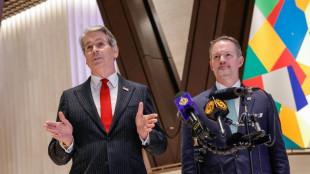 Asia stocks rise on AI, US-China trade talks optimism
 Malaysia's 'elephant whisperer' fights to save Borneo's endangered giants
 'I live in fear': 1.5 million Pakistani children sexually exploited online

 Cowboys beat Commanders, Vikings down Bears as star QBs injured
Once shunned and now eagerly courted by the West, Prime Minister Narendra Modi has steered India away from its secular traditions and towards the Hindu-first politics he has championed for decades.
Modi's political ascent was marred by allegations of his culpability in India's worst religious riots this century, and his tenure has dovetailed with rising hostility towards Muslims and other minorities.
But a decade after first sweeping to national office, the 73-year-old is also consistently ranked among the world's most popular leaders.
Supporters revere his tough-guy persona, burnished by his image as a steward of India's majority faith and myth-making that played up his modest roots.
"They dislike me because of my humble origins," he said in rallies ahead of the last elections, lambasting his opponents.
"Yes, a person belonging to a poor family has become prime minister. They do not fail to hide their contempt for this fact."
Modi was born in 1950 in the western state of Gujarat, the third of six children whose father sold tea at a railway station.
An average student, his gift for rousing oratory was first seen with his keen membership of a school debate club and participation in theatrical performances.
But the seeds of his political destiny were sown at the age of eight when he joined the Rashtriya Swayamsevak Sangh (RSS), a hardline nationalist group.
Modi dedicated himself to its cause of promoting Hindu supremacy in constitutionally secular India, even walking out of his arranged marriage soon after his wedding aged 18.
Remaining with his wife -- whom he never officially divorced -- would have hampered his advancement through the ranks of the RSS, which expected senior cadres to stay celibate.
- Deadly riots -
The RSS groomed Modi for a career in its political wing, the Bharatiya Janata Party (BJP), which through the 1990s was growing into a major force.
He was appointed chief minister of Gujarat in 2001 but the following year the state was rocked by sectarian riots, sparked by a fire that killed dozens of Hindu pilgrims.
At least 1,000 people were killed in the ensuing violence, with most of the victims Muslims.
Modi was accused of both helping stir up the unrest and failing to order a police intervention.
Modi later told a BBC reporter that his main weakness in responding to the riots was not knowing "how to handle the media".
A probe by India's top court eventually said there was no evidence to prosecute Modi, but the international fallout saw him banned from entering the United States and Britain for years.
However, it was a testament to India's changing political tides that his popularity only grew at home.
He built a reputation as a leader ready to assert the interests of Hindus, who he contended had been held back by the secularist forces that ruled the country almost continuously since independence from Britain.
- 'A new history' -
Critics have sounded the alarm over a spate of prosecutions directed at Modi's political rivals and the taming of a once-vibrant press.
India's Muslim community of more than 200 million is also increasingly anxious about its future.
Modi's rise to the premiership was followed by a spate of lynchings targeting Muslims for the slaughter of cows, a sacred animal in the Hindu tradition.
But Western democracies have sidestepped rights concerns in the hopes of cultivating a regional ally that can help check China's assertiveness.
Modi was last year accorded the rare honour in the US of a joint address to Congress and a White House state reception at President Joe Biden's invitation.
He has taken credit for India's rising diplomatic and economic clout, claiming that under his watch the country has become a "vishwaguru" -- a teacher to the world.
Only now is India assuming its rightful global status, his party contends, after the historical subjugation of the country and its majority faith -- first by the Muslim Mughal empire and then by the British colonial project.
Modi's government has refashioned colonial-era urban landscapes in New Delhi, rewritten textbooks and overhauled British-era criminal laws in an effort to erase what it regards as symbols of foreign domination.
This project reached its peak in January when Modi presided over the opening of a new Hindu temple in the town of Ayodhya, built on grounds once home to a centuries-old Mughal mosque razed by Hindu zealots in 1992.
Modi said during the elaborate ceremony that the temple's consecration showed India was "rising above the mentality of slavery".
He added: "The nation is creating the genesis of a new history."
E.Schubert--BTB