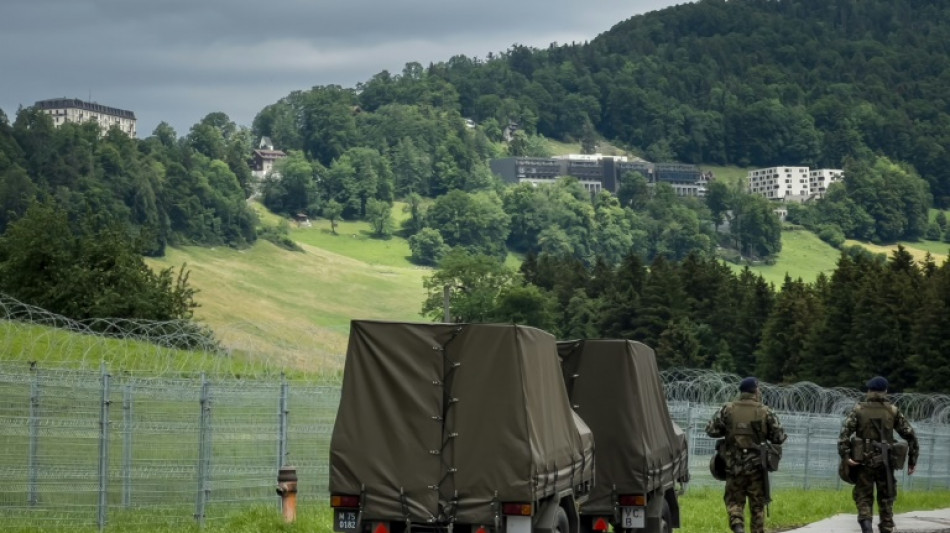
Swiss pull out the stops for Ukraine summit security / Photo: © AFP

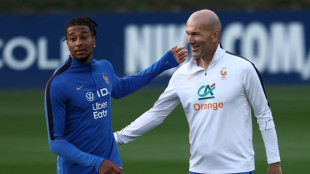 Zidane leads first France training session
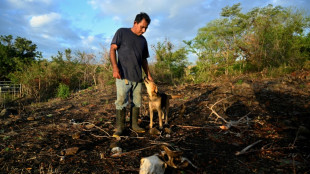
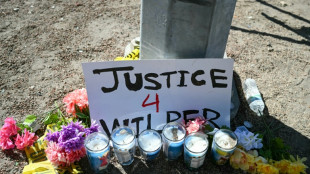 Man shot by ICE agent in Texas detained with bullet inside him: lawyer
 California declares state of emergency ahead of El Nino
 South Africa arrests three more suspects, after nine women murdered

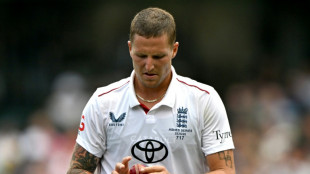 Carse needs time away from England, says captain Brook
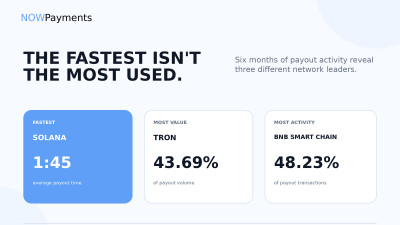 NOWPayments Releases Cross-Chain Payout Data Revealing Key Performance Benchmarks Across TRON, BNB Chain, and Solana
 British Museum bans photos of Bayeux Tapestry as crowds linger
 COP31 host says AI climate footprint to be a summit priority

 Berlin's far-left vote winners reject anti-semitism charges

 Mancini eager for 'new adventure' on Italy return

 Mbappe says having Zidane as France coach 'like a film'
 Palmer, Rice out of England Nations League squad

 German auto workers stage mass protests in bid to save jobs
 Embattled Merz vows to keep ruling for 'democratic future' of Germany

 Merz vows to keep ruling coalition together for 'democratic future' of Germany
 Spain coach De la Fuente gets new deal after World Cup success
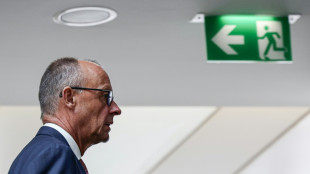 Pressure grows on Germany's Merz after election defeats

 China's Zhang beats Japan rivals to Asian Games gymnastics gold
 Samlingen Haupt: Vad pengar avslöjar om oss människor

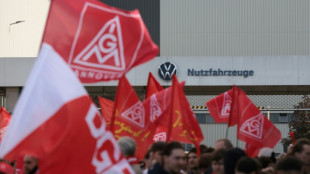 Tens of thousands of German auto workers protest to save jobs

 हॉप्त् कलेक्शन: पैसा हमारे बारे में एक इंसान के रूप में क्या प्रकट करता है

 Συλλογή Haupt: Τι αποκαλύπτει το χρήμα για εμάς τους ανθρώπους

 TradersYard Shifts Focus to Futures Trading

 ハウプト・コレクション:お金が人間について明かすこと
 하우프트 컬렉션: 돈이 우리 인간에 대해 드러내는 것

Switzerland is undertaking a major security operation around this weekend's summit on Ukraine, aiming to ward off not only physical threats but also cyberattacks and misinformation.
With dozens of heads of state and government flying in for the gathering at the swanky Burgenstock resort overlooking Lake Lucerne, up to 4,000 troops are being deployed and a ring of steel has been put in place.
Around 6.5 kilometres of fencing and eight kilometres of barbed wire is going up, while the valley behind the exclusive hotel complex has been turned into a temporary military heliport.
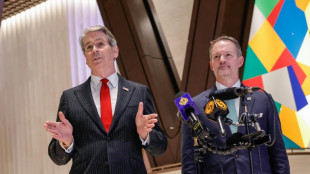
"An event on this scale requires comprehensive protective measures," Swiss President Viola Amherd said ahead of the summit.
High on a mountain ridge, surrounded by water on three sides, the Burgenstock is relatively straightforward to seal off.
More than 400 local residents with homes and farms beyond the checkpoint need a special pass to access the "red zone".
Despite the event's international importance, security responsibility falls to the tiny rural canton of Nidwalden.
The fifth-smallest of Switzerland's 26 cantons in terms of both size and population, Nidwalden has just 45,000 residents.
- Mud and helicopters -
The military will protect infrastructure, provide air transport and reconnaissance, conduct surveillance and interventions on the lake, and offer logistics and command support.
Soldiers have for days been taking position on the winding turns on the road up to the Burgenstock.
Overlooked by cattle with their cowbells clanging, the heliport was built with metal trackway on a squelching field.
Big enough to accommodate five helicopters, it is surrounded by a double layer of steel fencing and barbed wire.
"The army has the ability to set up a temporary take-off and landing zone anywhere in the country," said Major General Daniel Keller, commander of the Swiss army's Territorial Division 2, which encompasses Nidwalden.
"The foreign ministry decides which people fly from here and to here. The army provides the infrastructure," he told reporters this week.
He said the armed forces were accustomed to maintaining air sovereignty.
"Federal law clearly alludes to the possibility of shooting down an aircraft," he said, while remaining tight-lipped on potential threats such as drones.
"I am tense but I'm confident we can master this."
The Swiss intelligence services will also work to identify and prevent threats.
Mindful of potential nuclear, biological and chemical threats, specialists will intensify the monitoring of radioactive emission levels in the area, authorities said.
- Cyberattacks, 'extreme' misinformation -
Besides potential physical threats, Switzerland is also dealing with attacks in cyberspace and a deluge of misinformation surrounding the event.
Russia, which invaded Ukraine in 2022, is not attending the summit.
Swiss Foreign Minister Ignazio Cassis said there was "an obvious interest in disturbing the smooth running of the conference".
He said there had been an increase in misinformation, including "hysterical broadcasts or offensive broadcasts, even as far as fake news".
Amherd said the misinformation was "so extreme it's clear that very little of this information is in line with reality".
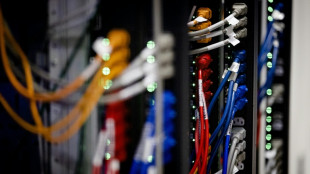
A first wave of distributed denial-of-service attacks on government websites and organisations involved in the summit began on Thursday.
DDoS attacks make websites or network resources unavailable by flooding them with malicious traffic.
"The attacks were expected and are presumed to be in connection with the summit. They resulted in minor outages," said the National Cyber Security Centre.
It has set up an emergency centre for technical analyses and a communications platform for reporting "cyber-threat developments" during the summit.
J.Fankhauser--BTB