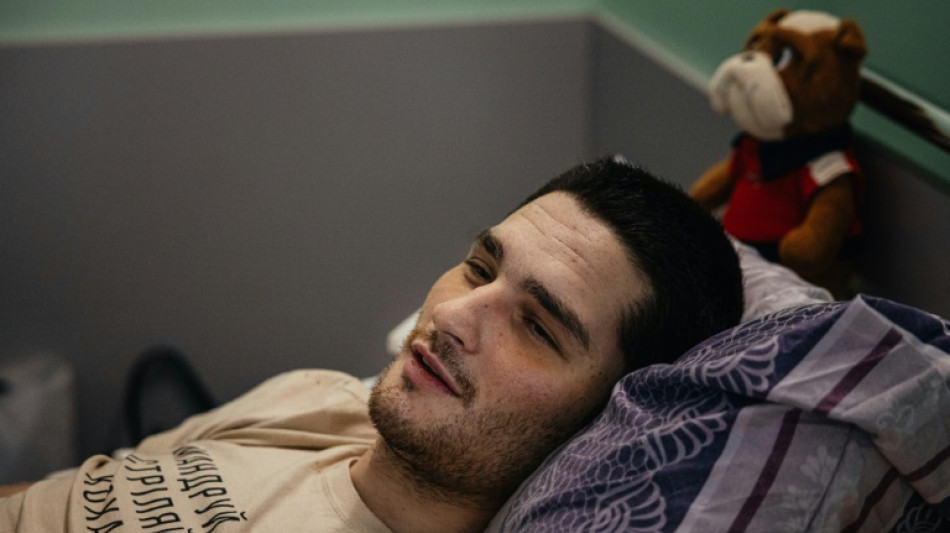
Ukraine soldier's ordeal offers view into prisoner swaps / Photo: © AFP

 Drovix Launches In-House Multi-Asset Liquidity and Execution Stack for Sub-Millisecond Fills, Tighter Spreads
 'So bad it's good': rough animated film becomes surprise Chinese hit
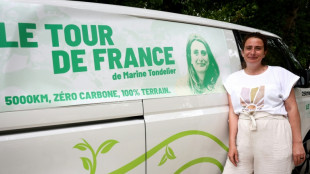 'I'll adapt': First pregnant candidate navigates French presidential race
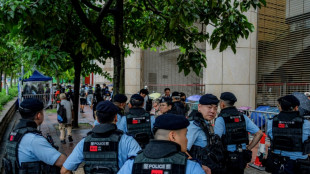 Hong Kong convicts Tiananmen vigil activists of inciting subversion
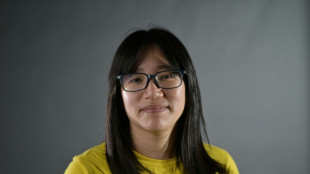 The Hong Kong Tiananmen vigil activists convicted in national security trial
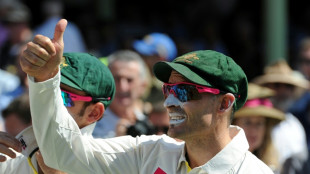
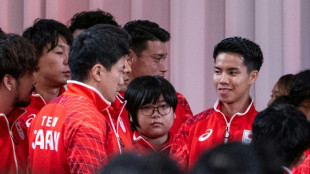 Eel-powered Japan whizz-kid, 11, chases Asian Games history
 Asian markets extend rally as traders assess US Treasuries pledge
 Barcelona enter new era as Flick targets La Liga hat-trick

 Pogacar favourite for Vuelta with Grand Tour treble in sight

 Bangladesh coach Simmons wary of Australia backlash in second Test
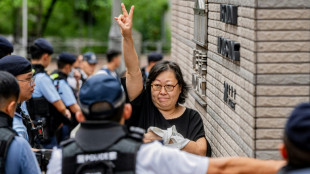 Hong Kong Tiananmen activists to receive national security verdict
 Who are the candidates vying to lead the UN?
 Swiatek into Cincinnati semis after Rybakina injury
 University suspends academic behind Jason Arday plagiarism charges
 Key European leaders demand Israel halt West Bank settlement project

 McIlroy bounces back to share BMW Championship lead

 Cobolli fueled by candy in sweet defeat of Paul

 Jailed Pakistan ex-PM Khan moved to hospital on court order: party
 Pogacar eyes 'missing' piece ahead of Vuelta return
 US, Canada 'very close' to trade deal, Ottawa says, as details emerge
 Ronaldinho returns in search of 'beautiful' 300th goal
 US pushes allies, China to back Trump's economic war on Iran

 Former NBA MVP Harden reportedly set to return to Cavaliers

 Brook makes Pakistan pay for drop as England dominate first Test
 MemeCore Arrives on Nasdaq Through $1 Billion Landmark Treasury Transaction
Ukrainian soldier Glib Stryzhko's mother knew he'd fallen into Russian hands but it wasn't until her gravely wounded 25-year-old son made a secret phone call to her that she found out where he was.
"One of his guards took pity on him," she told AFP.
That small mercy, as well as details of his experience -- including a tormentor's knife and a painfully long kilometre -- offer a window into the dramatic but often obscured reality of war prisoner exchanges.
Nearly killed in intense fighting in the key port city of Mariupol, Stryzhko was captured in April and eventually taken to Russia before suddenly being put on a plane and sent towards home with others to be swapped for Russian prisoners.
"After we were loaded onto the bus waiting for us, the driver said: 'Guys, you can breathe. You are home now,'" Stryzhko said from his hospital bed in the southeastern city of Zaporizhzhia.
"Then I started to cry very hard."
Getting to that point took just weeks, a remarkably short timeline among war captives, whose fates have always been part of an emotional, high-stakes and sometimes political process that can go on long after the shooting has stopped.
In Ukraine's case, over 350 of its troops have been freed so far in swaps, which happen on a one-for-one basis between people of the same rank, Deputy Prime Minister Iryna Vereshchuk told AFP.
Stryzhko's twisting route home started on social media. A comrade happened to spot him on a Telegram channel where pro-Russian separatists in Ukraine post images of captured enemy soldiers.
The comrade called Stryzhko's mother, who was horrified to hear the news but somehow hopeful now she knew her son was alive.
"This man had our phone number. Glib had given it to him, as if he was expecting this to happen," his mother Lesia Kostenko, 51, told AFP. "That was when we started to look."
Her son was posted at the Ilych steelworks in the thick of the battle for Mariupol. That conflict attracted global attention because of the civilians trapped in another steel plant, Azovstal.
- Russian denials -
Stryzhko was hit by a tank shell and buried under rubble on April 10 before his unit got him to a hospital, where he said he was taken prisoner.
Now recovering from massive injuries to his pelvis, jaw and one eye, Stryzhko explained how his captors shuttled him and other prisoners around, first to Novoazovsk, near the Russian border.
"We were lying there in the hospital and we weren't receiving any serious treatment," he said.
He was there for about a week before being moved to a hospital in Donetsk, where, incredibly, he ended up getting access to a phone and called home.
"During the first call he told us where he was," his mother said.
Word of the call spread to other families of POWs and they started asking her to see if Stryzhko knew anything about their captive loved ones. He didn't.
The family also lobbied the government for help getting Stryzhko back, including the deputy prime minister.
"His relatives contacted me and asked my help as a minister -- his mother, his brother, his friends. They were all looking for him," Vereshchuk said.
The minister said she pressured the Russians to exchange Stryzhko but they refused to admit he was in their custody until she confronted them with the knowledge he was in Donetsk Hospital 15.
"After that they were forced to hand him over," Vereshchuk said.
After about a week in Donetsk, Stryzhko said the Russians were moving him yet again. This time it was to prison, he was told.
There followed more painful movement and jostling. He was carried in a blanket, then laid on the floor of a bus, but in the end it seemed he was too seriously injured to be out of hospital.
He would be moved again.
"I stayed in the bus for some time. Then they put me in an ambulance and the next stop was the Russian border," Stryzhko said. He was told they were headed for Taganrog, about an hour's drive from Ukraine.
- 'Crying, again' -
When Stryzhko talked about his experience with his captors, a thread emerged of both indifference and a certain cruelty.
He said the doctors mostly did their medical duties but there was a nurse who cursed him in Russian and left meals by his bedside, knowing he couldn't feed himself.
"Then the nurse came back and said 'You're all done, then?' and took the food away," he said.
He was constantly under guard in hospital, yet the guards themselves could be terrifying.
He recounted how one ran a knife along his skin but never plunged it in, issuing the chilling threat: 'I would love to cut off your ear or to cut you like Ukrainians cut our prisoners'."
What Stryzhko didn't know but would shortly learn was that his time in Russia would be brief.
The ambulance taking him to Taganrog was in fact heading to an airport. Within hours he was in the air, with other wounded people and captives whose hands were tied and whose eyes were covered with duct tape.
Once on the ground in Crimea he learned they would be exchanged. It was April 28.
The Russians drove him and three other gravely injured Ukrainians to the undisclosed site of the exchange. The two sides were about a kilometre (roughly half a mile) apart.
"When we passed that one kilometre I was so scared because who knows what can happen? They may cancel the whole thing," Stryzhko said. But soon he was aboard a Ukrainian bus and in tears.
His mother had an idea this was coming but no details, until Vereshchuk called with the news.
"I dropped my phone. And started crying again," she said.
T.Bondarenko--BTB