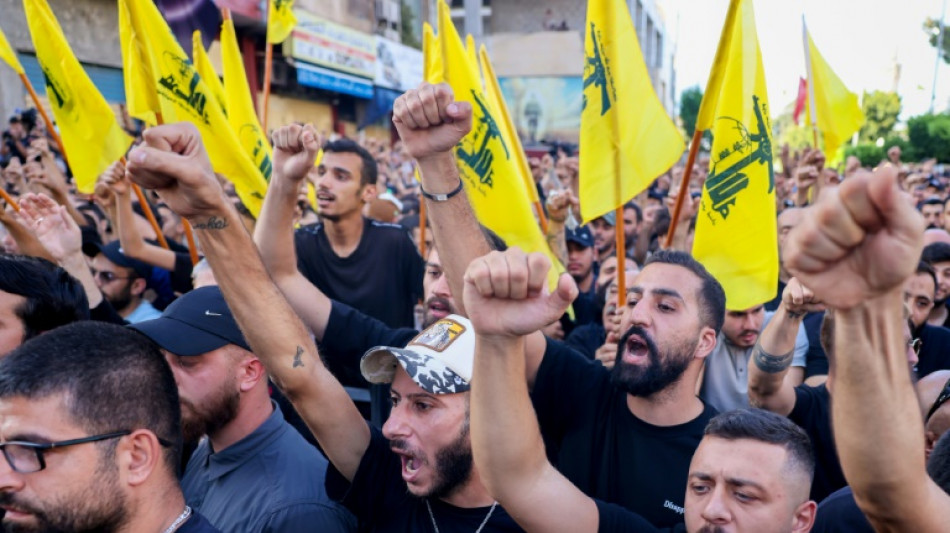
Hezbollah takes heavy hits but still fighting Israel / Photo: © AFP

 Trump renames AI "super intelligence," rejects international oversight
 Trump rejects international regulation of AI

 How is the EU approaching record fuel prices?

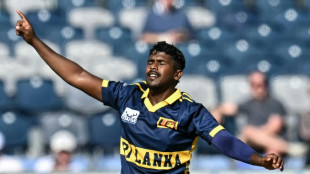 Sri Lanka's Colombage strikes on debut as England dismissed for 265 in first ODI
 Hurricane Polo strengthens to top category 5 off Mexico

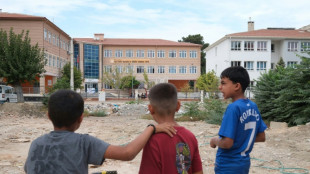 11 hurt as teen opens fire outside school in western Turkey

 UN chief says 'Big Oil' treats atmosphere as open sewer

 Tunisia says 2026 summer hottest on record

 England's Rashid out of Sri Lanka ODIs with hand injury

 Houthis accuse Saudi Arabia of deadly strikes as thousands flee

 Stocks climb as oil slides, AI buzz returns

 India cricketers win in style as Afghan savours 'special' Games silver

 La Liga president hits out at Real Madrid refereeing 'conspiracy' claims

 MEXC Launches “Real Stocks, Real Friends” with Rewards for Bringing Friends to Wall Street

 Mbappe continues media push for Ballon d'Or recognition
 Stocks rise on AI buzz, oil prices cool
 India narrowly survive huge scare against minnows Japan

 Missing F-35 fighter parts 'not sensitive', says Australia minister

 Cambodia showcases scams crackdown with global conference
 Afghan cyclist who disguised herself as man wins Asian Games silver

 Typhoon Dujuan leaves four dead in Japan, 45,000 houses without power

 G7 leaders condemn Houthi strikes on Saudi Arabia
 Google data centre sparks protests in Austria
 Shin Ohashi: Junk food-loving teen and Japan's next big swimming hope

 Stocks rise on AI buzz, drop in oil prices
Israel has dealt serious blows to Hezbollah this week by targeting its communications and decimating the leadership of its elite unit, but without crushing the Lebanese group's ability to fight, observers say.
On Friday, an Israeli strike on Hezbollah's stronghold in Beirut's southern suburbs targeted a meeting of the Lebanese movement's Radwan Force, killing 16 members of the elite unit, according to a source close to the group.
The strike followed sabotage attacks on pagers and two-way radios used by Hezbollah on Tuesday and Wednesday, which killed at least 39 people and wounded almost 3,000, according to Lebanese authorities. Hezbollah has blamed its arch-enemy Israel, which has not commented.
The attacks mark an unprecedented escalation in almost a year of cross-border violence between Israel and Hezbollah.
The Iran-backed group has traded near daily cross-border fire with Israeli forces in stated support of ally Hamas after the Palestinian militant group's October 7 attack on Israel triggered the Gaza war.
Aram Nerguizian, a senior associate at the US-based Center for Strategic and International Studies, said Israeli intelligence services had managed to penetrate and disrupt a group "that once prided itself as a highly cohesive and disciplined force with high morale and a first-rate counter-intelligence capability".
Hezbollah chief Hassan Nasrallah on Thursday called the device blasts an "unprecedented" blow to the group, and said Israel would face "tough retribution and just punishment".
- 'Vulnerability' -
A source close to Hezbollah said the meeting targeted by Friday's strike was studying "plans for a ground operation in the heart of the occupied territories", referring to Israel, in response to the device blasts.
The strike killed Radwan Force chief Ibrahim Aqil and other commanders in the force, described by Israeli military spokesman Rear Admiral Daniel Hagari on Friday as the "masterminds... behind Hezbollah's plan to execute an attack on northern Israel".
"Hezbollah intended to infiltrate Israel, seize control of the communities in the Galilee, and to kill and kidnap Israeli civilians, much like Hamas did on October 7," Hagari said in a statement.
Hezbollah's most formidable offensive force, Radwan fighters have spearhead the movement's ground operations and its units regularly target northern Israel.
Israel has demanded the withdrawal of the force to north of Lebanon's Litani River, a move Hezbollah has dismissed outright.
Nicholas Blanford, a Beirut-based Hezbollah expert and senior fellow at the Atlantic Council, said this week's attacks "will have had a big blow in terms of morale and perhaps imposed a sense of vulnerability and some paranoia among the ranks" of Hezbollah.
However, since the movement "has at its disposal tens of thousands of fighters, the incapacitation of a few hundred is probably negligible in pure military terms", he added of the device blasts.
Hezbollah claimed a series of rocket attacks on north Israeli positions on Friday and Saturday, while the Israeli army announced strikes in south Lebanon.
- 'Dangerous moment' -
Nerguizian noted that "Hezbollah still has many tens of thousands of rockets in its arsenal, which stands as a testament to the capabilities the group has built up since 2006", when the group last fought a major war with Israel.
But it has also "fired thousands of rockets" since October, and Israeli strikes have destroyed "thousands more in depots in Lebanon and Syria", Nerguizian added.
Observers say that since the start of the Gaza war, Hezbollah has been trying to balance supporting for Hamas against not dragging crisis-hit Lebanon into an all-out war with Israel.
"I suspect that Israel is gambling on the fact that Hezbollah does not want a war and is unwilling to go beyond a certain threshold that could lead to war," Blanford said.
But he said he thought it was "highly unlikely" that Israel could "triumph in a war to the extent that it can say Hezbollah has been defeated and will no longer pose a threat to Israel".
"The problem for Hezbollah is that it has backed itself into a corner by repeatedly insisting it will maintain the support front for Hamas as long as the war in Gaza continues," he added.
"Hezbollah has to keep fighting and now has to deal with Israel's more aggressive and assertive posture. It is probably the most dangerous moment of the nearly year-old conflict so far," Blanford said.
O.Krause--BTB