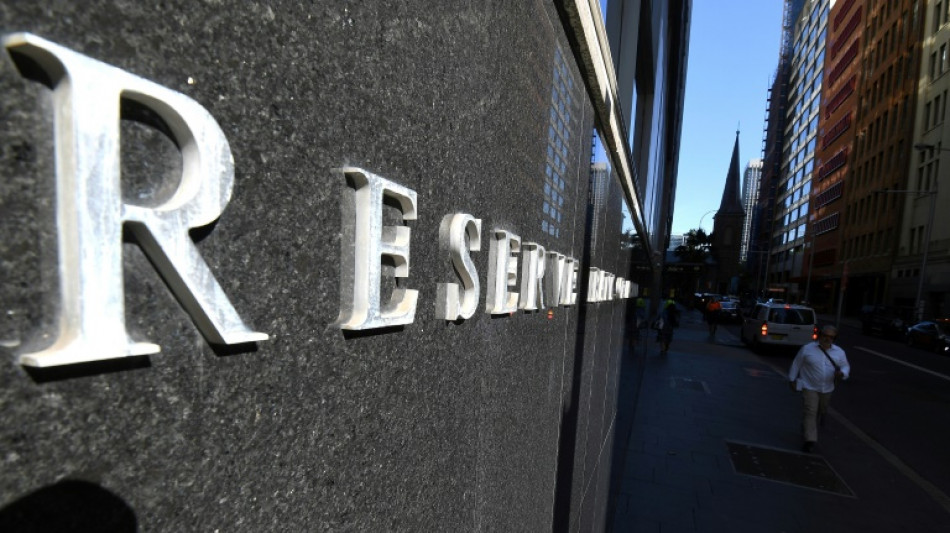
Australia to end stimulus but holds rates despite inflation surge / Photo: ©

 Prague’s Concert for the Future Kicks Off on Wenceslas Square

 Prince William and Princess of Wales to Announce Earthshot Prize Winners in Mumbai

 Indonesia Forest Fires: Health Crisis, Diplomatic Strains and the Search for Solutions

 BYD Dolphin G Leasing Deal: Plug-in Hybrid Supermini Available from £174 a Month

 JUEL Group Expands from Real Estate to Hospitality with Hyatt Centric Malta Opening

 French Economy Shrinks 0.1% as Consumer Confidence Slumps

 Wall Street Ends Turbulent Week Higher Despite Inflation and AI Jitters
Australia's central bank moved to end multi-billion-dollar pandemic stimulus Tuesday, but kept interest rates at a record low despite rising inflation.
As the economy shows signs of recovery from the Covid-19 crisis, the Reserve Bank of Australia said it would wind up its unprecedented Aus$350 billion (US$250 billion) bond-buying programme on February 10.
But it did not fully slam the breaks on stimulus, holding off on an interest rate rise for now.
Borrowing will remain unchanged at 0.1 percent "until actual inflation is sustainably within the two to three percent target range", bank chief Philip Lowe said Tuesday.
The bond-buying programme, which was launched in late 2020, saw the RBA pour Aus$4 billion into government bonds each week to prop up the stalled economy during the pandemic.
In deciding to end the scheme, Lowe cited Australia's strong employment figures and other domestic indicators.
He also noted that monetary policy by other central banks was moving away from quantitative easing as inflation surges globally.
Canada's central bank was the first to end its programme in October, while the US Federal Reserve began tapering its own in November.
Over the 12 months to the December 2021 quarter, Australia's consumer inflation rose 3.5 percent with home buyers leading the jump.
But Lowe signalled the inflation spike may be short-lived as the "supply-side problems" that have plagued Australia during the pandemic -- from empty supermarket shelves to vital medical supplies -- are resolved.
With a federal election looming, the RBA is expected to hold off on any interest rate rise until later this year at the earliest.
I.Meyer--BTB