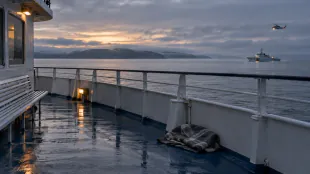
Former Fukushima worker devotes life to abandoned pets / Photo: © AFP

 Netanyahu, rivals trade attacks over Iran as clock counts down to Israel vote

 Townsend urges Scotland to use Nations Championship as World Cup springboard

 Microsoft offers voluntary exit packages to 60,000 staff
 S.Africa ambassador calls for talks with US over 'tense' ties

 'Smells of freedom': Serbians hopeful after landmark election

 South Africa select 'enforcer' Coetzee for Australia decider

 Botanists comb Gabon's rich rainforests with nature on the line

 New levy on non-EU parcels kicks in Sunday

 Stocks climb ahead of tech earnings, central bank calls

 Part of London's Oxford Street pedestrianised 'forever'

 Canadian youth seek climate action in landmark trial

 Trump blasts Norway over Nobel Peace Prize snub

 Japan PM vows swift response to wave of cyberattacks

 Stocks mostly rise before tech earnings, central bank calls
 France's Macron to visit Marseille after protest violence

 German union slams Audi boss's appearance at Trump rally

 UK set for 'limited' budget giveaways as borrowing costs surge
 Anthropic's AI model accessed US voter data: Axios

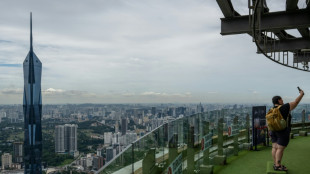 Malaysia's Johor reopens schools as haze eases

 Carragher says Fernandes benching was intended as public punishment

 Canada-EU summit seeks deepened alliance as US ties fray

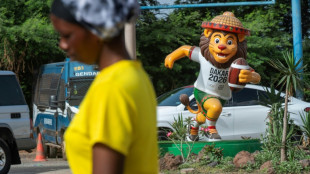 Senegal to host Youth Games, Africa's first ever Olympics

 ITV drama Adultery examines temptation, class and family consequences
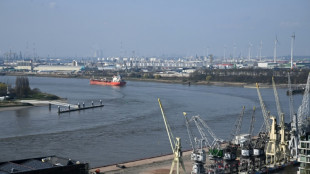 New levy on non-EU parcels kicks in November 1

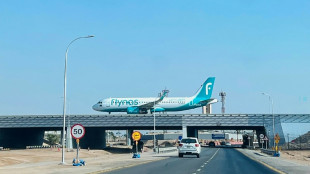 Saudi coalition says struck Houthi missile facilities after Riyadh airport attack

Not far from the Fukushima nuclear disaster site, former plant worker Toru Akama tends to dozens of pets abandoned after the catastrophe 15 years ago, work he sees as part of his quest for redemption.
Meows and barks break the silence of the countryside, once an evacuation zone, as the 63-year-old brings food to the animals left behind when their owners fled the triple disaster of March 11, 2011: earthquake, tsunami, and nuclear accident.
"It's because of this plant, where we worked for years, that these animals ended up like this," Akama told AFP at his home in northern Japan, surrounded by cats.
"They should have been able to go on living their lives as pets, but because of this accident they were abandoned.
"I felt it was my duty to protect them," he said.
Akama will never forget what he saw in the wake of the disaster, caused by Japan's strongest earthquake on record.
The tsunami it unleashed killed or left missing 18,500 people, and a wall of water crashed into the Fukushima nuclear plant on the northeast coast causing a devastating meltdown.
A day later, residents were ordered to evacuate and an unbroken line of cars formed on the national highway that runs past Akama's house.
"Then the dogs started wandering in search of something to eat -- least those that weren't chained up," he recalled.
"There was no one left, just my wife and me handing out food."
-'Outrage'-
Akama then began taking the animals into his home: first 40 dogs, then 50.
A decade and a half later, he has found adoptive families for more than 1,000 animals and continues to take in new pets who have been abandoned for other reasons.
He says he has "felt outrage" at the pet owners, who have sometimes left their animals in front of his house.
Some "are remorseful, but others simply do it because the animals have become a nuisance", he said.
In difficult moments, "of course... people's priority is human beings, but animals are living beings too, members of the family. It's as if people were abandoning their own children".
After the nuclear disaster, some residents had to flee by bus, and animals were not allowed aboard.
"There were elderly people in tears, asking if someone could take their pet," he recalled.
A month after the disaster Akama also had to leave, but he returned every day for his work at the plant and to look after his charges.
"Because they had known hunger, I absolutely wanted to give them a good life. Sometimes we went without ourselves in order to buy them quality food," he said.
-They 'watch over me'-
Over the past 15 years, Akama says he has spent almost all of the compensation he received after the plant accident on the animals, and he continues to cover most of their care and food costs.
"I don't have time to deal with collections or crowdfunding campaigns," he explained, although he has received some donations.
Akama's days are structured around cleaning the cages where new arrivals spend their first days, feeding, walking the dogs, and taking in new residents, leaving him little respite.
"It never stops. To be honest, I feel like my old job was easier," he said.
"But thanks to them I've never fallen ill: they force me to stay active. Maybe it's their way of thanking me, of watching over me in their own way."
At first, he kept the ashes of the deceased animals in his house, but he eventually had to build a grave outside to hold the remains of around thirty dogs and even more cats, beneath the inscription "rest in peace".
Akama's brother took over his subcontracting business for the plant, allowing him to devote himself full time to the 47 cats and 7 dogs with whom he currently shares his life.
"If I'm still able to keep going today, it's because I carry within me the distress these animals experienced. That's what keeps me going."
He would nevertheless like to find a successor.
"That's my biggest concern right now, because I too am starting to get older," he said.
"But I'd like to keep going like this until the end."
M.Odermatt--BTB