'No one else will': Sudan's journalists risk all to report the war / Photo: © AFP/File

 Ethiopia's conflict: the regional dimension
 Life expectancy almost back to pre-Covid levels, says WHO

 Turkey's football referee chief faces judge in graft probe
 Verstappen goes own way to avoid the rain
 Oil slides, bonds steady as EU addresses diesel price surge

 Spain housing package at risk in parliament, as protests mount

 Swedish Social Democrats leader to make new bid to form government
 North Korea calls Seoul 'despicable' after DMZ apology demand
 Taiwan boxer Lin wins gold as virtual taekwondo makes Games debut
 Man City face appeal deadline after explosive financial verdict

 Pole vault superstar Duplantis to skip indoor season

 Sri Lanka drop Asalanka from T20 against Pakistan

 Disney president says layoffs 'extremely painful' but necessary
 Indian flydubai pilot opened cockpit door to save passengers
 Alex Marquez clocks record lap at MotoGP Japan practice

 Tom Kim leads Asian Games golf in chase to avoid military service
 Asian stocks hit as oil spike fans rate hike bets, eyes on US jobs

 'We're losing our scientists': west Africa's STEM struggle
 World powers gather in Pacific to chart climate battle
 Return of swarming moth spectacle has Australia in a flutter

 Browns snuff out Rodgers fightback to beat Steelers 27-24
 Braves power past Phillies to set up Dodgers showdown
 Asian stocks drop as oil spike fans rate hike bets, eyes on US jobs
 Viral anti-vax posts weaponise Philippine inoculation fears
 Saudi coalition accuses Houthis of drone attack on Medina
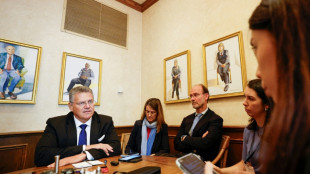
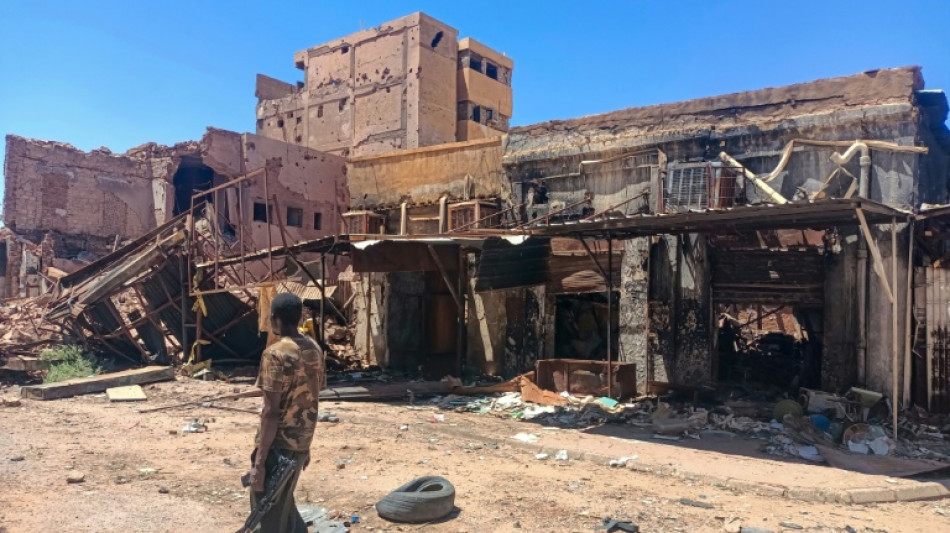
On a mountain near Sudan's border, journalists climb rugged slopes, phones held high, hoping to catch a faint signal from neighbouring Chad to send stories amid the war's two-year communications blackout.
Journalists say efforts like these are their only way to tell the world about the horrors unfolding in Darfur, where accounts of sexual violence, ethnic massacres and mass displacement continue to emerge.
Since fighting erupted between the army and the paramilitary Rapid Support Forces (RSF) in April 2023, at least 28 reporters have been killed, according to Sudan's journalist union.
Dozens more have been detained and tortured, while many have been displaced and cut off from electricity, water and internet.
Noon, a 35-year-old freelance journalist who requested a pseudonym for her safety, said she was forced to flee the West Darfur capital of El-Geneina after reporting on ethnically motivated mass killings committed by the RSF and its allied militias in 2023.
Her stories on the massacres, where UN experts say up to 15,000 mostly Massalit people were killed -- leading to genocide accusations against the RSF -- made her a target.
"They raided my family's house. They took all my equipment, my cameras, everything," she said.
By the third raid, she knew she had to go, and fled with her family to the eastern state of Gedaref, nearly 1,800 kilometres (1120 miles) away.
But even there, she was not safe.
- In the shadows -
While reporting in a displacement shelter, she said she was arrested by the army, accused of collaborating with the RSF and forced to sign a pledge to obtain government approval on every story.
According to Reporters Without Borders, since the start of the war more than 400 journalists have fled the country, which last year was second only to Gaza in the Committee to Protect Journalists' tally of reporters killed.
Yet some remain on the ground, working in secret with nothing to their name.
In the North Darfur town of Tawila, where the UN says 180,000 survivors of nearby RSF attacks are sheltering, 30-year-old photojournalist Ibrahim works undercover to report on those trapped between famine and brutal violence.
"No one can know what I do," Ibrahim, who asked to use a pseudonym to protect his identity, told AFP.
"If they find out, they'll arrest me or take my phone," he said.
Last July, RSF fighters detained him in El-Fasher and accused him of being an army spy. He said they tortured him for five days and confiscated his equipment, documents and money.
Since then, he has sent his family out of Darfur and relocated to Tawila, leaving his cameras behind. His mobile phone is all he has left.
- 'Biggest crime' -
Even before the war, Sudan was a hostile environment for journalists, consistently ranking near the bottom of the Reporters Without Borders's Press Freedom Index.
Since the fighting began, conditions have only worsened. Many journalists have been forced to flee, while others remain trapped across the country, struggling to survive.
In the central state of Al-Jazira, the country's breadbasket prior to the war, veteran reporter Youssef, 62, now raises goats and grows sorghum to support himself.
"The last salary I received was at the beginning of 2024," he told AFP by phone from state capital Wad Madani.
"My newspaper moved operations to Cairo, but I still send them reports -- when I can get a signal."
Youssef, whose name has also been changed, lost all contact with his editors and the outside world for months while the RSF controlled the city.
In February 2024, fighters stormed his home.
"They tied my hands, blindfolded me, shackled my feet," he recalled. "No food. No toilets. I was detained for three days."
He said when he told those interrogating him he was a journalist, a fighter said: "That is the biggest crime."
He was freed only after a local community leader signed a guarantee pledging that Youssef would remain under house arrest. He did not leave until the army recaptured Wad Madani in January.
Both Youssef and Ibrahim say they have received no protection from local or international media organisations.
Still, Ibrahim continues, turning a coffee shop in Tawila -- powered by a single public solar panel -- into a makeshift newsroom.
"Who else will tell the world what's happening in Darfur if we leave?" he told AFP, crouching to reach his phone, plugged into an overloaded extension cord.
"No one else will tell these stories. No one can imagine the atrocities happening here."
O.Krause--BTB