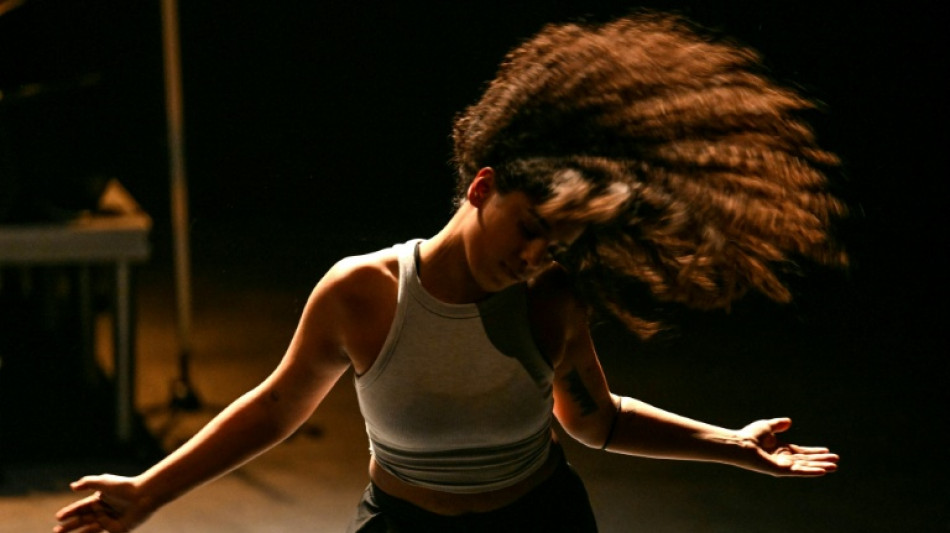
War takes centre stage as Lebanon's theatres are back / Photo: © AFP

 US suspends green card lottery after MIT professor, Brown University killings
 Arsenal in the 'right place' as Arteta marks six years at club
 From farms to court, climate-hit communities take on big polluters
 Norway crown princess likely to undergo lung transplant
 France's budget hits snag in setback for embattled PM
 US suspends green card lottery after Brown, MIT professor shootings

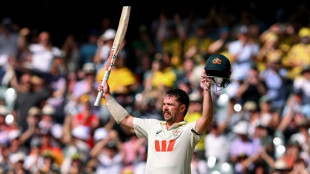 Dominant Head moves into Bradman territory with fourth Adelaide ton
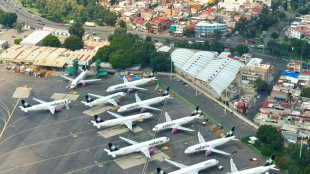 Mexican low-cost airlines Volaris and Viva agree to merger

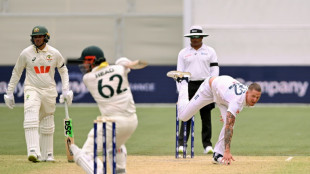
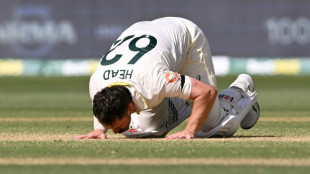 Australia's Head slams unbeaten 142 to crush England's Ashes hopes

 'Not our enemy': Rush to rearm sparks backlash in east Germany
 Arsonists target Bangladesh newspapers after student leader's death
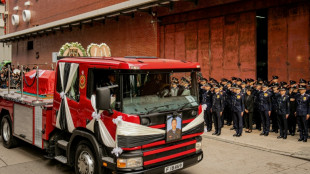 Tears at tribute to firefighter killed in Hong Kong blaze
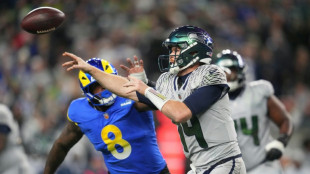
 Teenager Flagg leads Mavericks to upset of Pistons
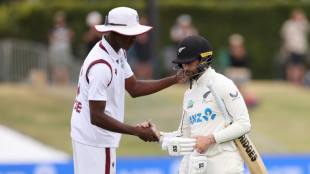 Conway falls for 227 as New Zealand declare at 575-8 in West Indies Test
 Brazil's top court strikes down law blocking Indigenous land claims
 'We are ghosts': Britain's migrant night workers
 Giant lanterns light up Christmas in Catholic Philippines

 Putin, emboldened by Ukraine gains, to hold annual presser
 Upstart gangsters shake Japan's yakuza
 Stokes's 83 gives England hope as Australia lead by 102 in 3rd Test

 Australia announces gun buyback, day of 'reflection' after Bondi shooting

 England all out for 286, trail Australia by 85 in 3rd Test
 Joshua takes huge weight advantage into Paul fight

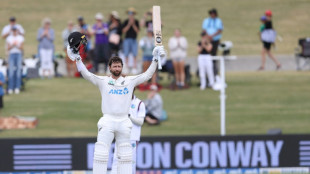 Conway's glorious 200 powers New Zealand to 424-3 against West Indies

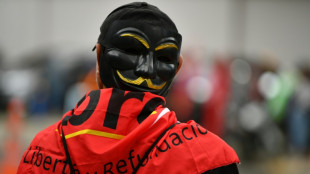 Honduras begins partial vote recount in Trump-dominated election
As Lebanon suffered a war last year, Ali Chahrour was determined to keep making art, creating a performance inspired by the plight of migrant workers caught up in the conflict.
Months after a ceasefire largely halted the fighting between Israel and the Lebanese militant group Hezbollah, Chahrour's work premiered in Beirut in early May with plans to take it to stages across Europe including at France's famed Avignon Festival.
"This project was born during the war," said the 35-year-old playwright and choreographer.
"I did not want to stop making theatre, because I don't know how to fight or carry weapons, I only know how to dance."
On stage, two Ethiopian domestic workers and a Lebanese Ethiopian woman speak, sing and dance, telling stories of exile and mistreatment in "When I Saw the Sea", directed by Chahrour.
The play pays tribute to the migrant women who were killed or displaced during the two-month war between Israel and Hezbollah which ended in November, and the year of hostilities that preceded it.
Hundreds of migrant workers had sought refuge in NGO-run shelters after being abandoned by employers escaping Israeli bombardment.
Others were left homeless in the streets of Beirut while Lebanon's south and east, as well as parts of the capital, were under attack.
Chahrour said that "meeting with these women gave me the strength and energy to keep going" even during the war, seeking to shed light on their experience in Lebanon which is often criticised for its poor treatment of migrant workers.
- 'Escape and therapy' -
The war has also shaped Fatima Bazzi's latest work, "Suffocated", which was shown in Beirut in May.
It was revised after the 32-year-old playwright was displaced from her home in Beirut's southern suburbs, a Hezbollah stronghold heavily bombarded during the war.
The play originally portrayed a woman dealing with her misogynistic husband, and was reshaped by Bazzi's own experience, forced to escape to Iraq until the ceasefire was finally reached.
Determined to continue the project the moment she returned to Lebanon, Bazzi had kept in contact with the cast in video calls.
"We took advantage of this in the performance, the idea of separation and distance from each other, how we worked to continue the play," she told AFP during a recent rehearsal.
At one point in the play, the characters are suddenly interrupted by the sound of a bomb and rush to their phones to see what was hit this time, with their reactions becoming scenes of their own.
To Bazzi, working on the play has allowed her and the cast to "express the things we felt and went through, serving as an escape and therapy".
- 'Children of war' -
Theatre stages across Lebanon did not lift their curtains during the war, and though they are now back, the local scene is still burdened by the effects of a devastating economic crisis since 2019.
"We postponed an entire festival at the end of last year due to the war," said Omar Abi Azar, 41, founder of the Zoukak collective.
The group runs the theatre where Bazzi's latest piece was performed.
"Now we have started to pick up the pace" again, said Abi Azar, whose own play was postponed by the war.
"Stop Calling Beirut", which Abi Azar created with his collective, tells the story of the loss of his brother more than a decade ago and their childhood memories during Lebanon's civil war, which ended in 1990.
Zoukak itself was born out of a crisis during a previous war between Hezbollah and Israel in 2006.
"We are children of war. We were born, raised and grew up in the heart of these crises," said Abi Azar.
To him, "this is not a challenge, but rather our reality".
"If this reality wanted to pull us down, it would have dragged us, buried us and killed us a long time ago," he added, seeking hope in art.
G.Schulte--BTB