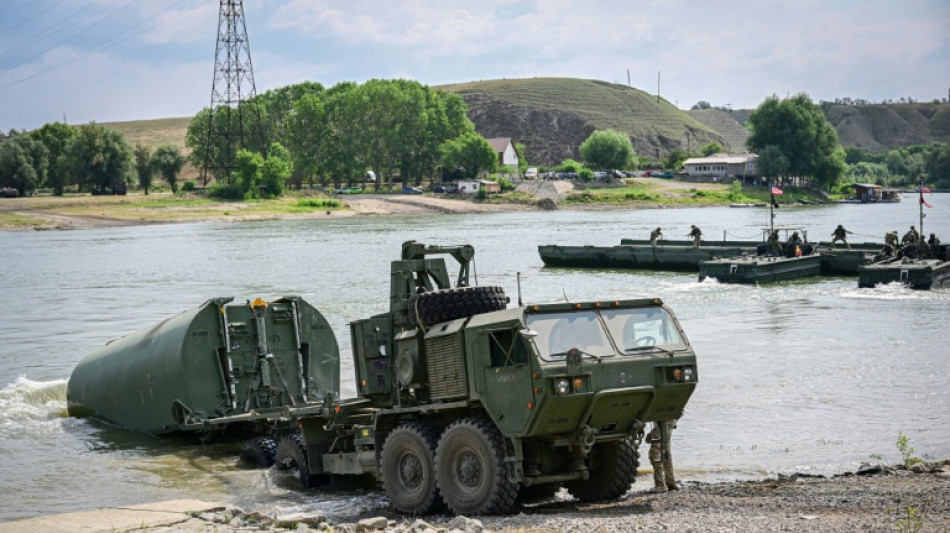
Spain pushes back against mooted 5% NATO spending goal / Photo: © AFP

 Ready, set, snooze: Sleep-deprived Japanese compete for best-rested

 Falcons thump Saints 45-24 as New Orleans marks Katrina anniversary
 Tuvalu govt adviser says Australia overstepped in pre-COP visit
 Asian stocks mixed despite tech-led Wall St record
 Tens of thousands expected in Paris for high school protests
 AI borrowing binge rattles US markets

 Young Canadians sue government over alleged climate failures
 White Sox down Guardians to take 2-0 series lead
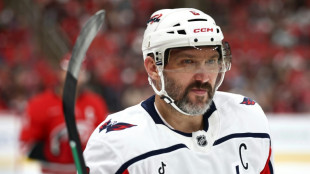 NHL record-breaker Ovechkin says current season will be his last
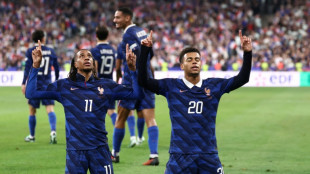 France roar back in Nations League as Italy beat Turkey
 Messi readies for final farewell in Argentina send-off
 Esposito seals Italy win over Turkey in Nations League

 Russia downplays plague reports as Trump offers US help

 Trump says US moved bombers from UK base after 'threats'
 Brazilian stocks surge to record after Bolsonaro election lead
 Leaders to visit Pacific atoll at frontline of climate change
 ICC gives more details about arrest warrants for Taliban ministers
 Nigeria's Tinubu confirms 32 dead after military plane crash
 'Reckless' AI firms can't control models, says whistleblower
 Switching on brain cells: the Nobel-winning science of optogenetics

 Quebec votes as separatist surge poses test for Canada PM
 Euro slides as concerns about French debt mount
 Former Trump press secretary Leavitt joins Fox News

 Djokovic advances to China Open final as Medvedev out for hitting fan with ball
 Disgraced former US House speaker dies at 84
Spain is resisting US President Donald Trump's demands to hike defence spending to five percent of national output, potentially threatening NATO unity at a crucial alliance summit this month.
The European country ended 2024 as the NATO member that dedicated the smallest proportion of its annual economic output to defence, falling short of the two percent target set in 2014.
Faced with Trump's threats to withdraw US security guarantees from member states perceived as not pulling their weight, Spain has announced fresh spending to hit the two percent mark this year.
But Madrid is baulking at suggestions the target should rise to five percent as an aggressive Russia, whose invasion of Ukraine has stretched into a fourth year, menaces Europe.
With Germany and Poland already backing the new benchmark, Spain could find itself isolated among its allies at the June 24-25 NATO summit in The Hague.
"Many countries want five (percent), we respect that... but Spain will fulfil those objectives set for us," Defence Minister Margarita Robles said on the sidelines of a meeting of NATO counterparts in Brussels this month.
"What is really important is that Spain will meet the capacities and objectives" assigned by NATO and "we cannot set ourselves a percentage", she said.
For Felix Arteaga, a defence specialist at Madrid's Elcano Royal Institute, "internal political reasons" are determining the stance of the minority left-wing coalition government.
Socialist Prime Minister Pedro Sanchez faces a balancing act of aligning with NATO allies and cajoling his far-left junior coalition partner Sumar, which is hostile to increasing military spending.
He has not submitted to parliament the plans for new defence spending of more than 10 billion euros, sparking criticism from his parliamentary allies whose support is crucial for the government's viability.
The fragile coalition has wobbled in the past week after a corruption scandal implicating one of Sanchez's inner circle sparked a crisis within his Socialist party.
- 'Cultural' barriers -
In Spain, "high political fragmentation makes it difficult to reach deals similar to those of other countries" such as Germany, said Santiago Calvo, an economics professor at the Universidad de las Hesperides.
Calvo also pointed to "delicate" public finances, with Spain's debt one of the highest in the European Union at 103.5 percent of gross domestic product.
That figure has nonetheless receded in recent years, and continued strong economic performance should give the government "margin" to spend more, said Arteaga, who instead identified "cultural" hindrances.
The Iberian Peninsula's greater distance from Russia than eastern European countries like Poland "reduces concern and urgency... we do not feel threatened, we do not want to enter armed conflicts", Arteaga said.
"The government must explain to Spanish citizens the need to show solidarity" with countries in northern and eastern Europe, he said.
Ambiguity also surrounds the idea of investing five percent of GDP in defence.
NATO chief Mark Rutte has mentioned 3.5 percent of military spending in the traditional definition of the term by 2032, with the remaining 1.5 percent going to security in a broader sense, including border protection and cybersecurity.
At the NATO summit, "everything will come down to details" such as the flexibility of the definition of defence spending and the timeframe to achieve it, Arteaga predicted.
Robles said "Spain will not veto anything" at the summit, calling her country "a constructive ally".
O.Lorenz--BTB