Iranians buying supplies in Iraq tell of fear, shortages back home
/ Photo: © AFP

 Ready, set, snooze: Sleep-deprived Japanese compete for best-rested

 Falcons thump Saints 45-24 as New Orleans marks Katrina anniversary

 Tuvalu govt adviser says Australia overstepped in pre-COP visit

 Asian stocks mixed despite tech-led Wall St record

 Tens of thousands expected in Paris for high school protests
 AI borrowing binge rattles US markets

 Young Canadians sue government over alleged climate failures

 White Sox down Guardians to take 2-0 series lead
 NHL record-breaker Ovechkin says current season will be his last
 France roar back in Nations League as Italy beat Turkey
 Messi readies for final farewell in Argentina send-off
 Esposito seals Italy win over Turkey in Nations League

 Russia downplays plague reports as Trump offers US help

 Trump says US moved bombers from UK base after 'threats'
 Brazilian stocks surge to record after Bolsonaro election lead
 Leaders to visit Pacific atoll at frontline of climate change

 ICC gives more details about arrest warrants for Taliban ministers
 Nigeria's Tinubu confirms 32 dead after military plane crash

 'Reckless' AI firms can't control models, says whistleblower

 Switching on brain cells: the Nobel-winning science of optogenetics
 Quebec votes as separatist surge poses test for Canada PM

 Euro slides as concerns about French debt mount
 Former Trump press secretary Leavitt joins Fox News

 Djokovic advances to China Open final as Medvedev out for hitting fan with ball
 Disgraced former US House speaker dies at 84
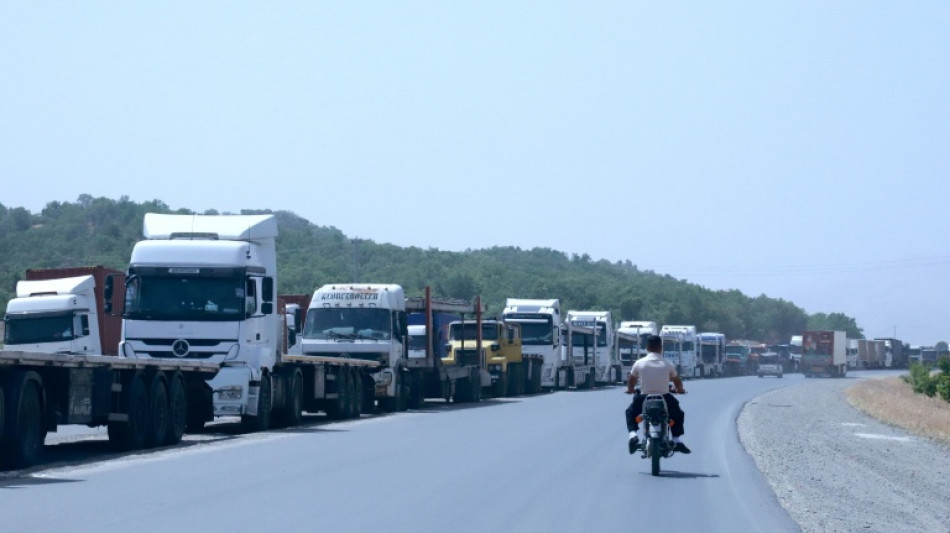
Near the once-bustling Iraqi border crossing of Bashmakh, Iranian driver Fatah stocked up on rice, sugar and tea, staples that have become increasingly hard to get back home.
Fatah -- who like others in this story is being identified by a pseudonym -- was among dozens of truck drivers waiting impatiently to cross back into Iran from Iraq's northern Kurdistan region, hauling not only their commercial cargo, but also essential goods for their families after days of Israeli attacks.
AFP spoke with at least 30 Iranians near the Bashmakh crossing. They all refused to be interviewed on camera, and the few who agreed to describe life back home asked to remain anonymous for fear of reprisals back in Iran.
"There are shortages of rice, bread, sugar and tea," Fatah said Tuesday.
Finding fuel has also become a major problem, with long queues of cars waiting hours in front of gas stations hoping the fuel did not run out, the 40-year-old driver added.
A long journey awaits Fatah, who must deliver his load of asphalt to the Iranian port of Bandar Abbas about 1,700 kilometres (1,060 miles) away, before turning around and driving almost the same distance back to the western city of Marivan, where his family lives and which has so far been spared bombardment.
But "my route passes near the Natanz nuclear facility", Fatah said, referring to one of Iran's underground uranium enrichment sites that Israel has struck several times since the start of its campaign last week.
- Panic buying -
Israel launched a devastating surprise attack on Friday targeting Iran's military and nuclear sites and killing top commanders and scientists.
Israel says its attacks are aimed at preventing Iran from obtaining a nuclear weapon, an ambition Tehran denies.
At least 224 people, including women and children, have been killed in the Israeli strikes, according to official figures.
The assault has prompted retaliatory barrages of missiles from Iran that have killed at least 24 people in Israel, according to the prime minister's office.
Aram, 28, keeps calling his wife, fearing for his family's safety after they had to flee their home when a strike hit a military site nearby in the city of Sanandaj.
"My family is safe, but they had to move in with relatives in a village," Aram said.
His wife told him that many families who lived near military sites in the area had been similarly displaced.
The father of two said the shortages back home were mostly due to panic-stricken Iranians who rushed to markets to stockpile basic supplies.
- 'Shocked and distraught' -
Back in Iran, car dealer Shwan recalled how Israeli jets struck several military sites near his city of Bukan in the west.
"People are shocked and distraught, they don't know what they should do," the 35-year-old told AFP via a messaging app from inside Iran.
"We have a major problem with bread shortages," he said.
People were queuing at bakeries for hours to get loaves of bread, sometimes to no avail, Shwan said.
"Sometimes four members of one family go around bakeries looking for bread," he added.
"It is also difficult to find rice or oil," and many civil servants have not received their salaries yet, he said.
Avin, a 38-year-old seamstress, told AFP via a messaging app that the war "has spread fear among residents", even though the bombs have not touched her town of Saqqez in northwest Iran.
"Some families with children left to villages outside the city," she said.
Like others, she fears more shortages to come.
"Most of the provisions come from Tehran," which has seen a massive exodus and is also grappling with scarcity.
"Because of this, the market in our city came to a standstill."
N.Fournier--BTB