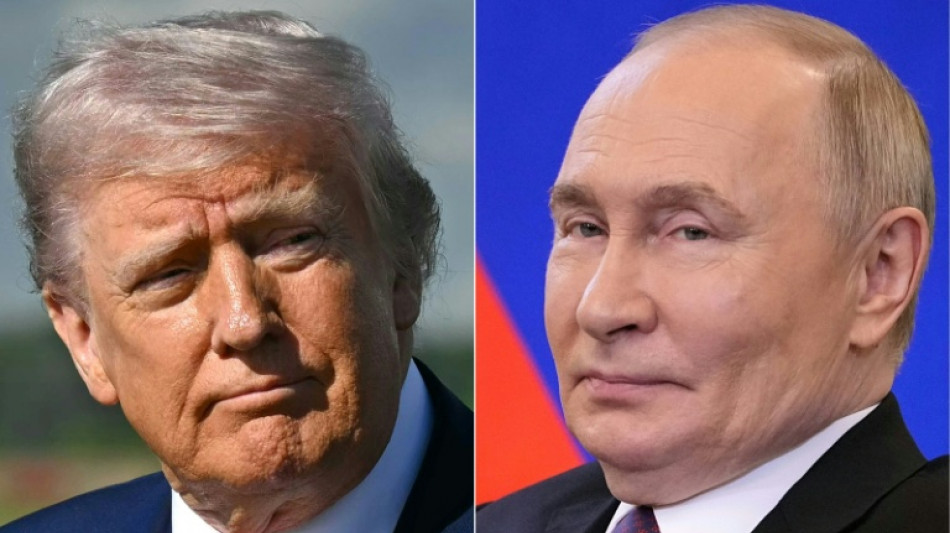
Can NATO keep Trump on-message about Russia threat? / Photo: © AFP/File

 EU vows AI rules will protect Europeans. Will they?

 Myanmar leader to visit Malaysia after migrant returns begin

 Germany's AfD poised to preside over state assembly for first time

 Australia's opposition vows 'largest cut to immigration' in country's history

 Ready, set, snooze: Sleep-deprived Japanese compete for best-rested

 Falcons thump Saints 45-24 as New Orleans marks Katrina anniversary

 Tuvalu govt adviser says Australia overstepped in pre-COP visit

 Asian stocks mixed despite tech-led Wall St record

 Tens of thousands expected in Paris for high school protests

 AI borrowing binge rattles US markets

 Young Canadians sue government over alleged climate failures

 White Sox down Guardians to take 2-0 series lead

 NHL record-breaker Ovechkin says current season will be his last

 France roar back in Nations League as Italy beat Turkey
 Messi readies for final farewell in Argentina send-off
 Esposito seals Italy win over Turkey in Nations League

 Russia downplays plague reports as Trump offers US help

 Trump says US moved bombers from UK base after 'threats'

 Brazilian stocks surge to record after Bolsonaro election lead

 Leaders to visit Pacific atoll at frontline of climate change

 ICC gives more details about arrest warrants for Taliban ministers

 Nigeria's Tinubu confirms 32 dead after military plane crash

 'Reckless' AI firms can't control models, says whistleblower

 Switching on brain cells: the Nobel-winning science of optogenetics

 Quebec votes as separatist surge poses test for Canada PM
When leaders from NATO's 32 countries gather for a summit in The Hague next week, most want to send a clear message: Russia is the main threat to their alliance.
But the loudest voice in the room likely won't be on the same page.
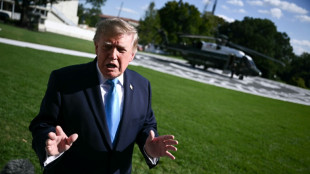
Since coming back to office, US President Donald Trump has upended the West's approach towards Russia's war on Ukraine by undercutting Kyiv and opening the door to closer ties with Moscow.
While the volatile leader has expressed some frustration with Russia's Vladimir Putin for refusing a ceasefire, he has steered clear of punishing the Kremlin.
At a G7 summit this week Trump made waves by saying the group of industrialised countries should never have expelled Russia.
Ahead of the Hague gathering, diplomats at NATO have been wrangling over a five-paragraph summit statement, with many countries pressing for a full-throated assertion of the menace from Moscow.
That, they say, will help explain the main thrust of the meeting: an agreement for countries to ramp up defence spending to satisfy Trump's demand for it to reach five percent of GDP.
- Statement on Russia 'threat' -
Since the Kremlin launched its 2022 invasion of Ukraine, the alliance has called Russia "the most significant and direct threat to allies' security and to peace and stability in the Euro-Atlantic area".
But this time around the United States -- backed up by Moscow-friendly Hungary and Slovakia -- has been intent on watering that down.
Diplomats have been juggling with variants such as referring to "threats, including Russia" or mentioning "the long-term threat posed by Russia to Euro-Atlantic security".
The verbal nuances may seem slight, but they mean a lot to those countries being asked to massively ramp up spending and those on NATO's eastern flank most threatened by the Kremlin.
NATO has warned that Russia could be ready to attack an alliance country within five years.
"If we can get Trump to sign off on calling Russia a long-term threat then that would be a good result," a senior European diplomat told AFP.
- 'Near threat' -
As US peace efforts between Russia and Ukraine have stalled, the diplomat said that Washington appeared to have "moved a centimetre in our direction" on taking a stronger stance on Russia.
"Of course more hawkish countries want to go further -- but just getting Trump to agree that would still be fine," the diplomat said.
Part of the US reasoning is that Washington is more worried about the threat China poses worldwide -- and that Russia is more a problem just in Europe.
"Russia is the near threat," said US ambassador to NATO Matthew Whitaker.
"But China is obviously a big challenge for all of us, and we need to be allied and address those threats as well."
Camille Grand of the European Council on Foreign Relations said that beneath the diplomatic fine-tuning, NATO was being confronted by a "fundamental question".
"How does the United States view Russia?" he said. "So far we haven't really got an answer."
Even if NATO does opt for stronger wording on Moscow, there is always the possibility that Trump could show up in The Hague and directly contradict it.
But the debate could come into sharper focus in the months after the summit when the United States could announce a pull-back of forces in Europe as part of a review of its global deployments.
- Division on Ukraine -
One area where Washington appears clearly not on board with most other allies is on backing Ukraine.
Ukrainian leader Volodymyr Zelensky is set to attend on the sidelines of the summit but his involvement is being kept to a minimum to avoid a bust-up with Trump.
Diplomats said there should be a reference in the summit statement linking new defence spending to helping Ukraine -- but there will be no talk of Kyiv's long-term push to join NATO.
"The US does not see Ukrainian security as essential to European security," said Kurt Volker, a former US ambassador to NATO.
"Our European allies do, so they feel that if Putin is allowed to prevail in Ukraine, or if Ukraine does not survive as a sovereign, independent state, they are at risk."
M.Furrer--BTB