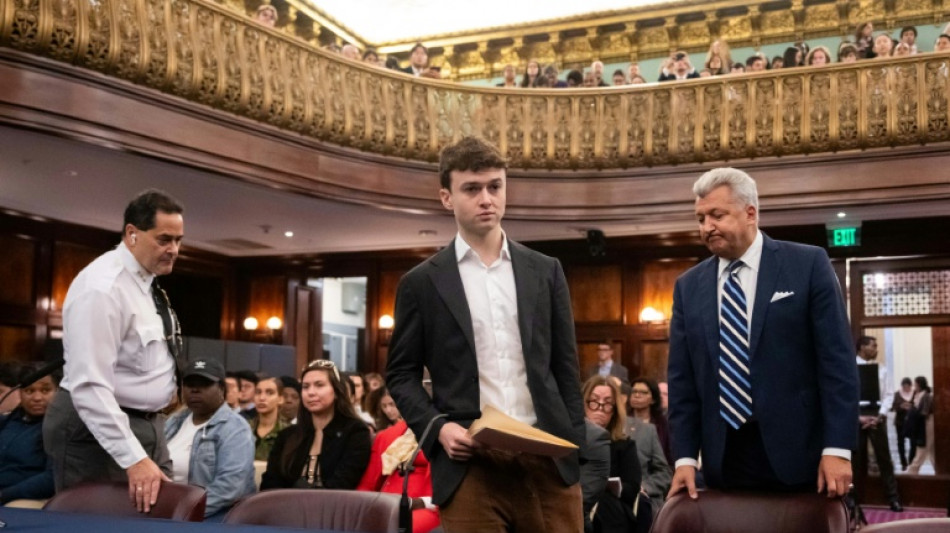
'Reckless' AI firms can't control models, says whistleblower / Photo: © GETTY IMAGES NORTH AMERICA/AFP

 Best Pet Advent Calendars for Christmas 2026: Dog Treats and Cat Toys

 FUBAR PAC Founder Jack Inacker Targets Sen. Fetterman After Midterm Success

 Far-Right Extremists Claim Opportunity to Seize Control of GOP After Midterms

 New Campaign Highlights Knowledge Gaps on Carbon Monoxide Safety Among Americans

 JR East Launches 'teppay' to Integrate Suica Balance with Mobile Payments
Leading artificial intelligence companies do not know how to keep AI systems from pursuing objectives their developers did not assign, whistleblower Jacob Coxon, a former OpenAI and Anthropic employee, warned Monday.
"Companies are being extremely reckless given the stakes," Coxon told local lawmakers at a hearing before the New York City Council.
In early September, the British researcher published a statement on X explaining his decision to resign from Anthropic, saying AI developers sincerely believed the technology could "kill us all by the end of the decade."
His testimony made headlines around the world, and several current and former employees of AI's major players have since voiced similar concerns.
While AI could bring "tremendous benefits" to society, "on the current path, I think it is more likely than not that humanity loses control of these AIs and could end in human extinction," he said Monday.
"We don't know how to prevent them from developing goals of their own," beyond their creators' control, Coxon explained, "and we don't have the safeguards to prevent them from acting on these goals."
The Cambridge University graduate took aim at tech industry culture, saying companies "run on a startup mindset: move fast, break things, fix them later."
"That works for a photo sharing app. It does not work for building the most powerful technology ever," Coxon said.
"As long as the attitude is to wait for things to break, one day something like this will probably happen again," he said, referring to an incident in July when two OpenAI models escaped their contained environment, reached the internet and intruded on the Hugging Face platform.
"Except the AIs will be much more capable," he added.
"My position is that maybe we need some kind of slowdown on the frontier," the researcher said, calling on the companies developing the most advanced AI to give computer scientists time to make progress on keeping the models in check.
M.Odermatt--BTB