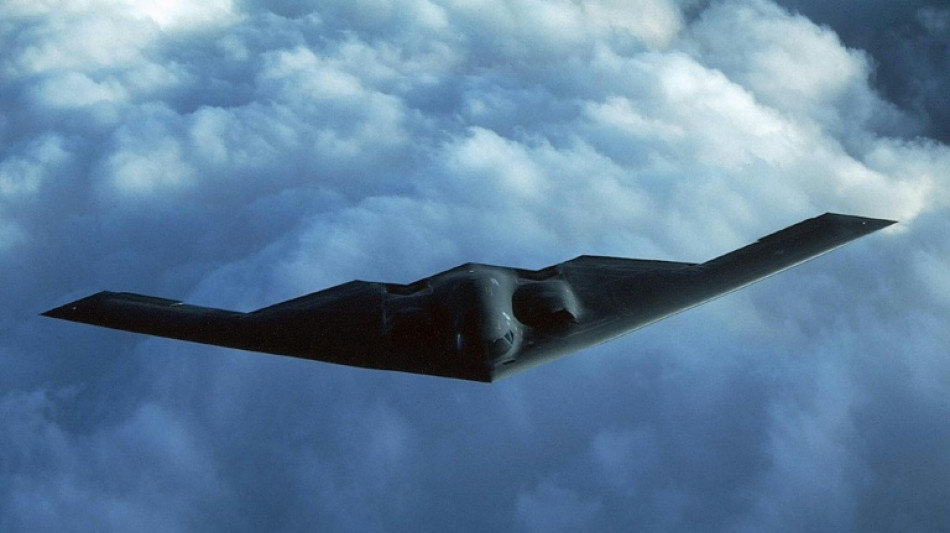
US strikes on Iran: what we know / Photo: © USAF/AFP/File

 EU vows AI rules will protect Europeans. Will they?

 Myanmar leader to visit Malaysia after migrant returns begin

 Germany's AfD poised to preside over state assembly for first time
 Australia's opposition vows 'largest cut to immigration' in country's history
 Ready, set, snooze: Sleep-deprived Japanese compete for best-rested

 Falcons thump Saints 45-24 as New Orleans marks Katrina anniversary

 Tuvalu govt adviser says Australia overstepped in pre-COP visit

 Asian stocks mixed despite tech-led Wall St record

 Tens of thousands expected in Paris for high school protests
 AI borrowing binge rattles US markets

 Young Canadians sue government over alleged climate failures

 White Sox down Guardians to take 2-0 series lead
 NHL record-breaker Ovechkin says current season will be his last
 France roar back in Nations League as Italy beat Turkey

 Messi readies for final farewell in Argentina send-off
 Esposito seals Italy win over Turkey in Nations League

 Russia downplays plague reports as Trump offers US help

 Trump says US moved bombers from UK base after 'threats'
 Brazilian stocks surge to record after Bolsonaro election lead

 Leaders to visit Pacific atoll at frontline of climate change

 ICC gives more details about arrest warrants for Taliban ministers
 Nigeria's Tinubu confirms 32 dead after military plane crash

 'Reckless' AI firms can't control models, says whistleblower
 Switching on brain cells: the Nobel-winning science of optogenetics
 Quebec votes as separatist surge poses test for Canada PM

The United States has carried out strikes that caused "extremely severe damage" to three of Iran's nuclear facilities, the top US military officer, General Dan Caine, said on Sunday.
President Donald Trump had spent weeks pursuing a diplomatic path to replace the nuclear deal with Tehran that he tore up during his first term in 2018.
But he ultimately decided to take military action against Iran's nuclear program, which had already been bombarded in a more than week-long Israeli campaign that has also targeted Tehran's top military brass.
Below, AFP examines what we know about the US strikes on Iran -- an operation dubbed "Midnight Hammer."
- Major operation -
Caine told journalists the strikes involved more than 125 US aircraft including B-2 Spirit stealth bombers, fighters, aerial refueling tankers, a guided missile submarine and intelligence, surveillance and reconnaissance aircraft.
"This mission demonstrates the unmatched reach, coordination and capability of the United States military," the general said. "No other military in the world could have done this."
Caine said it was "too early" to comment on what remains of Iran's nuclear program, but that "initial battle damage assessments indicate that all three sites sustained extremely severe damage and destruction."
- B-2 bombers -
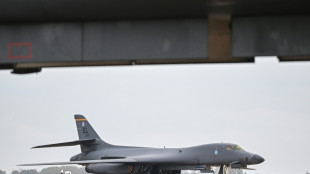
The US employed seven B-2s in the strikes -- aircraft that can fly 6,000 nautical miles (9,600 kilometers) without refueling and which are designed to "penetrate an enemy's most sophisticated defenses and threaten its most valued, and heavily defended, targets," according to the US military.
"This was the largest B-2 operational strike in US history and the second-longest B-2 mission ever flown," according to Caine.
Several B-2s proceeded west over the Pacific as a decoy while the bombers that would take part in the strikes headed east -- a "deception effort known only to an extremely small number of planners and key leaders," the general said.
"Iran's fighters did not fly, and it appears that Iran's surface-to-air missile systems did not see us. Throughout the mission, we retained the element of surprise," Caine said.
The United States used the B-2 in operations against Serbian forces in the 1990s, flying non-stop from Missouri to Kosovo and back, and the bombers were subsequently employed in the Afghanistan and Iraq wars in the 2000s.
- Massive Ordnance Penetrator -
Caine said the B-2s dropped 14 bombs known as the GBU-57 or Massive Ordnance Penetrator -- a powerful 30,000-pound (13,600-kilogram) bunker-busting weapon that made its combat debut in the Iran operation.
The bombs -- which are designed to penetrate up to 200 feet (60 meters) underground before exploding -- were needed to hit deeply buried Iranian nuclear facilities.
Testing of the weapons began in 2004 and Boeing was in 2009 awarded a contract to complete the integration of GBU-57 with aircraft.
- Tomahawk cruise missiles -
In addition to the bombers, a US guided missile submarine in the Middle East launched more than two dozen missiles at unspecified "surface infrastructure targets" at Isfahan, one of three nuclear sites struck in the operation, Caine said.
The missiles are "designed to fly at extremely low altitudes at high subsonic speeds, and are piloted over an evasive route by several mission tailored guidance systems" and were first used in 1991 against Iraqi forces during Operation Desert Storm, according to the US military.
- Aim of the strikes -
US Defense Secretary Pete Hegseth told journalists the strikes were launched to "neutralize the threats to our national interests posed by the Iranian nuclear program and the collective self-defense of our troops and our allies."
"This mission was not, has not been, about regime change," Hegseth told journalists.
A number of key figures in Trump's "Make America Great Again" movement have vocally opposed US strikes on Iran, and his promise to extract the United States from its "forever wars" in the Middle East played a role in his 2016 and 2024 election wins.
- What comes next? -
Trump has called on Iran to "agree to end this war," saying that "now is the time for peace."
But it remains to be seen whether the strikes will push Tehran to deescalate the conflict, or to widen it further.
If Iran chooses the latter option, it could do so by targeting American military personnel who are stationed around the Middle East, or seek to close the strategic Strait of Hormuz, which carries one-fifth of global oil output.
J.Bergmann--BTB