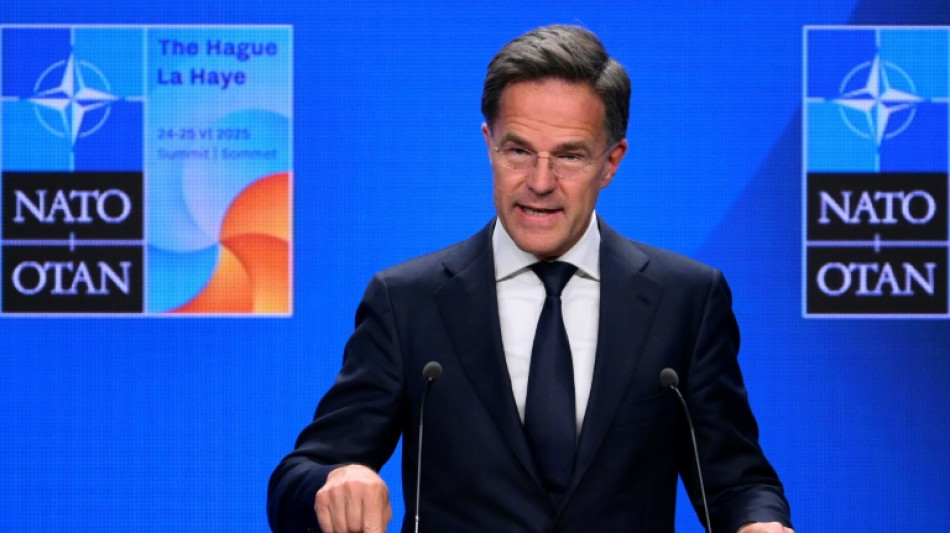
NATO to take 'quantum leap' with 5% summit pledge: Rutte / Photo: © AFP

 EU vows AI rules will protect Europeans. Will they?

 Myanmar leader to visit Malaysia after migrant returns begin

 Germany's AfD poised to preside over state assembly for first time
 Australia's opposition vows 'largest cut to immigration' in country's history

 Ready, set, snooze: Sleep-deprived Japanese compete for best-rested

 Falcons thump Saints 45-24 as New Orleans marks Katrina anniversary
 Tuvalu govt adviser says Australia overstepped in pre-COP visit

 Asian stocks mixed despite tech-led Wall St record
 Tens of thousands expected in Paris for high school protests
 AI borrowing binge rattles US markets

 Young Canadians sue government over alleged climate failures
 White Sox down Guardians to take 2-0 series lead
 NHL record-breaker Ovechkin says current season will be his last

 France roar back in Nations League as Italy beat Turkey
 Messi readies for final farewell in Argentina send-off
 Esposito seals Italy win over Turkey in Nations League

 Russia downplays plague reports as Trump offers US help
 Trump says US moved bombers from UK base after 'threats'

 Brazilian stocks surge to record after Bolsonaro election lead
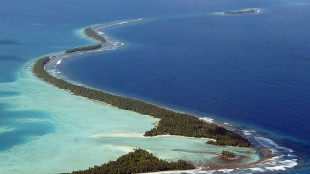
 Leaders to visit Pacific atoll at frontline of climate change
 ICC gives more details about arrest warrants for Taliban ministers
 Nigeria's Tinubu confirms 32 dead after military plane crash
 'Reckless' AI firms can't control models, says whistleblower
 Switching on brain cells: the Nobel-winning science of optogenetics
 Quebec votes as separatist surge poses test for Canada PM
NATO allies are poised to take a "quantum leap" by hiking defence spending to counter the threat of Russia, Secretary General Mark Rutte said on Monday, on the eve of a two-day summit.
The 32 members of the alliance will pledge to boost defence expenditure to five percent of gross domestic product, a key demand of President Donald Trump, who has long grumbled that the US pays too much for NATO.
NATO's members have thrashed out a compromise deal to dedicate at least 3.5 percent of GDP to core military needs by 2035, and 1.5 percent to broader security-related items like cybersecurity and infrastructure.
"The defence investment plan that allies will agree in The Hague introduces a new baseline, five percent of GDP to be invested in defence," Rutte told reporters at a pre-summit news conference.
"This is a quantum leap that is ambitious, historic and fundamental to securing our future."
The focus at the summit in the Hague will be on keeping Trump happy after his return to power sparked fears he could blow a hole in the seven-decade-old alliance.
In the run-up to the meeting, Spain had sparked fears of undermining a carefully choreographed unity by refusing to commit to the headline figure of five percent.
But Rutte stressed that Spain had not been granted an "opt-out" from the pledge.
"NATO does not have as an alliance opt-outs, side deals, etcetera, because we all have to chip in," Rutte said.
The NATO chief said that the increase in spending would see the alliance boost its air defences five-fold and add thousands more tanks and armoured vehicles to its arsenals.
"Our focus is ensuring that we have all we need to deter and defend against any threat," he said.
"Of course, the most significant and direct threat facing this alliance remains the Russian Federation."
- Iranian 'stranglehold' -
Rutte insisted that the summit would also send a strong signal of support to Ukraine -- despite Trump upending the West's stance towards Russia's war on Kyiv.
Ukraine's President Volodymyr Zelensky will attend a state dinner with the Dutch king but he has largely been sidelined from the summit's main event.
Rutte said that Europe was stepping up already to fill the gap left by Washington pulling back from supporting Ukraine.
He said that Europe and Canada had already pledged 35 billion euros ($40 billion) to help arm Kyiv so far this year.
Dismissing the idea that the fresh conflict between Israel and Iran could deflect attention from the summit, Rutte stressed that Tehran should not be permitted to possess a nuclear weapon.
He said his "greatest fear" was that Iran would secure access to a nuclear bomb, giving it a "stranglehold" over Israel, the region, and the wider world.
Over the weekend, Trump said that US warplanes had used "bunker buster" bombs that had "obliterated" Iran's nuclear capabilities.
Other officials said it was too soon to assess the true impact on Iran's nuclear programme, which Israel and some Western states consider an existential threat.
Pressed over the legality of Washington's strikes against Iran, the NATO chief replied: "I would not agree that this is against international law, what the US did."
D.Schneider--BTB