Trump tariffs don't spare his fans in EU / Photo: © AFP/File

 Hotel Blacklist Launches New Accommodation Industry Risk Assessment Tool
 Bangladesh nuclear plant draws hope -- and worry
 US beat Canada 1-0 to wrap up four-win international break

 Turkey, Australia's joint COP31 leadership raises doubts

 For Turkish NGOs, COP31 offers rare space for action
 Sleep, appetite, gene-editing experts contend for Nobel chemistry prize
 Nobel Peace Prize haunted by the 'spectre' of Trump

 Africa launches own credit agency in bid for cheaper borrowing

 US, China, EU: three paths to regulating AI

 Australia's High Court rules against coal mine in landmark climate case
 Australia touts new funds for Pacific infrastructure at Fiji 'pre-COP'

 Eva Marie Saint, Oscar winner of Hollywood classics, dies at 102
 Australia probes app used in cheap smart glasses over privacy fears
 England needed to 'move on' from World Cup pain, says Tuchel

 O'Neill to stay at Celtic after period of "reflection"

 Kane marks 125th England cap with Wembley Nations League double

 Quebec's incoming separatist leader wants to block Crown from swearing-in

 Emmys gala will now stream its premier television awards
 Paramount completes Warner Bros takeover, creating Skydance
 Trump blames France unrest on Islam, migration

 Apple's Cook praises EU over efforts to protect children online

 Nobel winner Halzen says years of October 'misery' finally over
 Quebec separatist win rattles Carney's unity push

 'Itching' for change: Shiffrin cuts back slaloms this season

 'Gen Z has risen up': Tens of thousands mass for tense France school protests

Hungarian Prime Minister Viktor Orban promised that the return of his "dear friend" Donald Trump as US president would usher in a new "golden age".
But trade unionist Zoltan Laszlo says Hungary's auto industry has seen the opposite as the United States announced new tariffs, with order cancellations and workflow disruptions marking employees' day-to-day experience.
With tariff rates rising from 2.5 percent before Trump's return to around 25 percent and finally to 15 percent, the "American tariff slalom" has caused nothing but chaos in the car industry, said Laszlo, who represents workers at Mexican automotive parts manufacturer Nemak's Hungarian plant.
In recent years, Hungary and neighbouring Slovakia have become European manufacturing hubs for global car brands seeking lower labour costs, including British Jaguar Land Rover, German Mercedes and Japanese Suzuki.
But due to the export-oriented nature of their automotive sectors, catering in part to the US market, they are among those EU nations hardest-hit by the latest tariffs slated to kick in on August 7.
Despite hailing Trump's comeback and visiting him twice at his Mar-a-Lago luxury estate last year, Orban -- his closest EU ally -- was not spared the pain.
- Distress calls -
Neither were more favourable conditions extended to Slovakian Prime Minister Robert Fico, whose country is the world's largest automobile manufacturer per capita.
According to analyst Matej Hornak, the incoming tariffs won't bode well. He warns of a drop in exports amounting to "several hundred million euros" and the loss of "10,000-12,000" jobs in the sector.
After the announcement of the EU-US trade deal, Orban was quick to apportion blame to EU Commission president Ursula von der Leyen, saying Trump "ate" her "for breakfast".
But in April, the mayor of the Hungarian city of Gyor, whose strong economic growth is closely linked to its car manufacturing plants, had already warned of possible cutbacks and layoffs.
For the city, which is home to various global brands and more than a dozen different parts and component suppliers including Nemak, the fresh tariffs are a disaster.
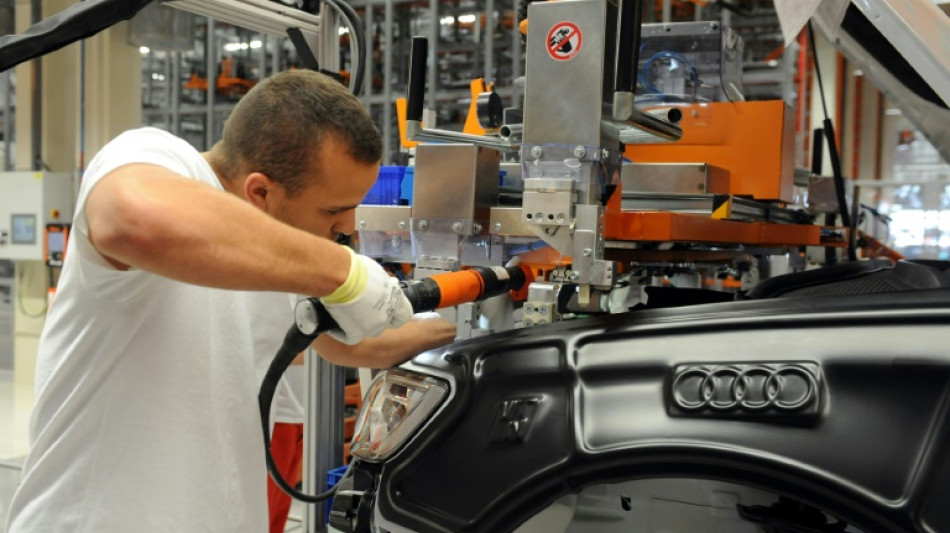
As one of the biggest employers in Hungary, German carmaker Volkswagen alone provides jobs for more than 12,000 people. Its main engine factory in Gyor produces some Audi-branded vehicles directly for the US market.
The Hungarian government has said that it is still assessing the impact of the tariff rates, vowing that upcoming business deals with Washington could mitigate the negative effects of Trump's "America first" policy.
- Difficult compromise -
But more headwinds are ahead for Hungary and Slovakia, said Brussels-based geopolitical analyst Botond Feledy.
"When it comes to European dealmaking, Trump now prioritises more geopolitically influential figures -- the main option for smaller nations such as Slovakia and Hungary is to join forces with others," he told AFP.
But the "aggressive posturing" in the same vein of Trump's protectionist policies both countries adopted in recent months have isolated them among fellow EU countries, making compromises difficult, the expert added.
Moreover, the stakes are high for Orban, whose 15-year rule has recently been challenged by former government insider-turned-rival Peter Magyar ahead of elections scheduled for next spring.
"Dissatisfaction with the standard of living has made voters more critical, which is also reflected in the popularity ratings of the governing parties," said economist Zoltan Pogatsa, adding that "Hungary has been in a state of near stagnation for many years now".
This year's economic "flying start" touted by Orban did not materialise, with the government further lowering the country's growth goal from the initial 3.4 to one percent.
"So far, Trump's second presidency has only impacted the Hungarian economy through his tariff policy, which has been negative," Pogatsa added.
At the Nemak plant, a recent warning strike has led to management promising to sort out the unpredictable work schedules caused by the tariff changes, which were "unhealthy and physically unbearable" and made "family and private life become incompatible with work", said Laszlo.
D.Schneider--BTB