Not all 'A's: Unconventional paths that led to Nobels / Photo: © GETTY IMAGES NORTH AMERICA/AFP

 Alex Bodi pushes ahead with expansion: ALIX LASERS showroom planned for Bucharest
 Fossil fuels off COP31 agenda as global output keeps rising
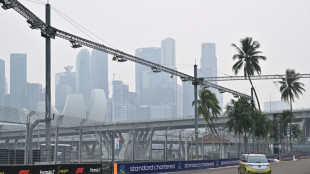 Haze not 'a threat' to Singapore F1 race: organisers
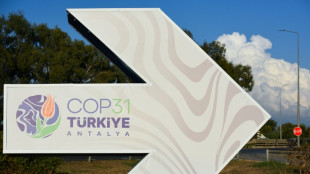
 COP31 organisers say to seek 'ambitious' action with their text

 Bartunkova thrashes Muchova to reach China Open semi-finals

 Drone hits Yandex data centre, in first such attack on Russia

 Oil prices surge and stocks sink on fresh inflation worries
 AI startup Manus raises $500m after Meta acquisition blocked by China
 From refuge to repatriations: Malaysia's Myanmar U-turn

 Morikawa says LIV players face 'business decision' after Rahm exit
 Tenzing Norgay's son says Himalayas sending climate warning

 On your bike! Bottas opts for two wheels to reach Singapore GP

 Alcaraz, Sinner, Osaka commit to Australian Open '1 Point Slam'

 Dodgers beat Braves to advance in MLB playoffs, Rays oust Yankees
 'A sun as black as my lungs': how corruption crucified a polluted Albania city

 The British historian helping the French rediscover de Gaulle
 Dodgers beat Braves to advance, Guardians survive in MLB playoffs
 Latin American, Caribbean women top Nobel literature buzz
 US says Fiji-based Chinese official paid bribes for Beijing
 After botched US execution, Christa Pike was nearly taken off life support

 Guinea-Bissau junta urges military unit loyal to ex-president to disarm

 As species decline, green turtles offer glimmer of hope
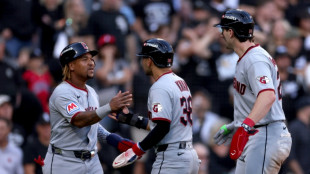
 Brothers Scott and Beauden Barrett named to start for All Blacks

 EU trade chief seeks to dial down China tensions

 'Never again Bolsonaro': thousands march ahead of Brazil election runoff

Some Nobel laureates were straight-A students from the get-go. But others AFP spoke to recounted how they cut class, got expelled, and had doubts about their future.
Perhaps the most illustrious Nobel Prize winner, Albert Einstein, was once a mediocre student at Zurich Polytechnic School, now ETH Zurich.
The young Einstein skipped classes, wanted to study physics exclusively, and finished second-last in his class in 1900.
After graduating, he was the only student not offered a research assistant position, according to the Swiss university's website.
Einstein went on to win the Nobel Prize in Physics in 1921.
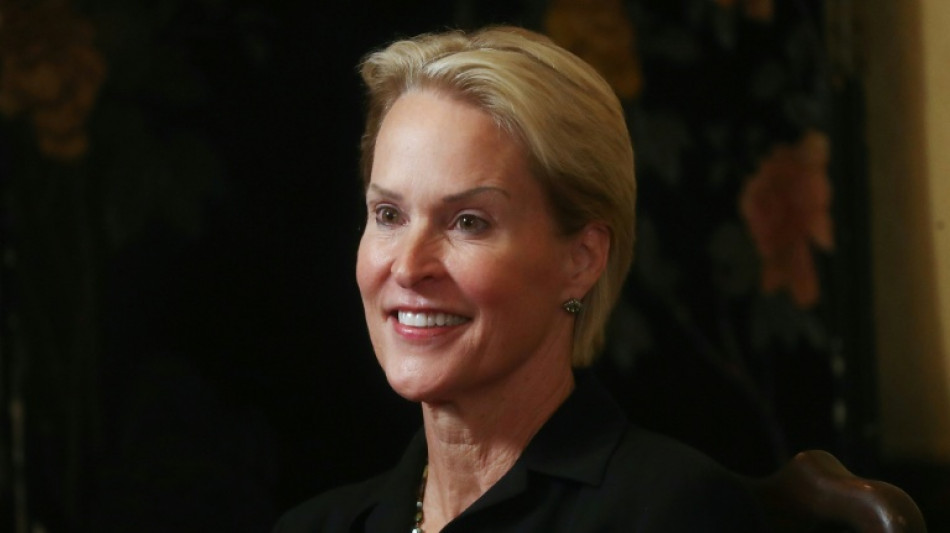
Frances Arnold, who won the 2018 Nobel Prize in Chemistry, also cut classes after a turbulent start to her education in the United States during the 1960s and 1970s.
"I was disruptive. I was just bored and well beyond what the rest of the kids in the class were doing. And the teachers often gave me little projects decorating the classroom and things like that," she recalled in an interview with AFP.
At the age of 10, she was allowed to take high school courses such as geometry -- a challenge she appreciated at first.
But by the time she reached her teens, she wasn't enjoying school anymore to the point that she stopped going and was expelled.
"I guess I wasn't interested in what they had to teach us. Or if I was interested in it, I just learned it on my own from a textbook. So I managed to pass all my classes despite many absences, I would say."
Now aged 69, she acknowledges that hers is not a model to follow, but believes schools should show more flexibility.
"They don't have the wherewithal to do anything special for the kids who really would benefit," she lamented.
- Overcoming challenges -
David Card, the 2021 Nobel economics laureate, also had unconventional educational beginnings.
"There's almost nobody I've met... in an economics PhD programme that has a background like mine where they went to a rural school," he told AFP.
Born on a farm in Canada in the 1950s, he was enrolled in a small one-room schoolhouse, where one teacher taught around 30 students at different grade levels.
"The way the teacher did it was she would spend some time with each row, which was one of the grades. I actually paid attention to a couple of grades beyond mine for most of the material," he said.
"So you could kind of accelerate very quickly, very easily."
The system was less ideal for students who needed more individualised support, he acknowledged.
According to the Nobel Foundation, other laureates had to overcome major academic challenges before going on to win the prestigious Nobel.
The first woman to win the economics prize, Elinor Ostrom, was turned down when she applied for a PhD in economics; 2009 medicine prize laureate Carol Greider struggled with dyslexia as a child; and 2015 chemistry prize winner Tomas Lindahl failed chemistry in high school.
- Humble beginnings -
Arnold and Card both started working at a young age, which the two consider an important life experience.
In her teens, Arnold held odd jobs as a waitress, receptionist and taxi driver.
"You appreciate more what the university education can give to you, in terms of getting a job you actually might want to have for the rest of your life."
"It also teaches you how to organise your time."
Similarly, Card juggled school and farm life very early on.
"I don't think there was that much homework back then in my schools. So there was lots of time," he recalled.
"I helped my father. I learned to drive a tractor when I was about 11. Every morning I got up at 5:00 am and helped him milk the cows and then I would have a shower and go to school."
Both prizewinners also studied other subjects before discovering their respective passions.
Arnold pursued studies in mechanical engineering and aeronautics before turning to chemistry.
"I wasn't sure what I wanted to do with my life. I went into mechanical engineering because it had the fewest requirements for engineering," she admitted.
And Card initially studied physics before switching to economics.
Despite their unconventional paths, both ultimately found their way to brilliance.
I.Meyer--BTB