Why emboldened Kim had little need for photo-op with Trump / Photo: © AFP/File

 US leads fresh Ukraine peace push with Miami talks
 Verstappen continues resurgence with pole for Singapore sprint
 Cuban ration book, symbol of the revolution, gathers dust
 Stocks advance, oil retreats as Trump rules out pre-vote Iran attack

 Man City case causing 'uncertainty' for whole Premier League, says Iraola
 Talks with Iran can only succeed without threats, president says

 Home hope Zheng sets up Mertens clash in China Open semis
 Lombardia promises gripping end to season in Pogacar absence
 Barca skipper Raphinha out against Getafe and Galatasaray
 MEXC and Payward Highlight Collaboration as Crypto and TradFi Converge at TOKEN2049
 EU states agree beefed-up European financial markets watchdog
 Eritrea, Ethiopia trade barbs as Tigray rebels retreat
 Kompany 'proud' of Man City success despite guilty verdict
 Man City will win appeal over financial charges, says Maresca
 Fernandez logs record lap at Indonesia MotoGP practice
 Navi Pillay: S.Africa's global rights activist and Nobel winner
 Ufunded Launches “Spotlight” Series, Documenting the Minds Shaping Modern Trading
 Russell goes fastest in practice for smoggy Singapore GP
 For exiled Russian director Zvyagintsev, triumph without belonging
 Home hope Zheng storms into China Open semi-finals
 Zverev churns out win in Shanghai Masters opener
 Hurricane Isaias strengthens en route to US Gulf Coast

 US activists deploy poll volunteers over Trump intimidation fears
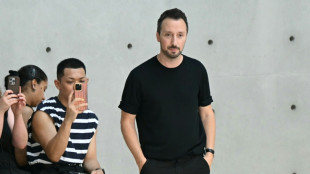 Saint Laurent designer Vaccarello leaves after glittering decade

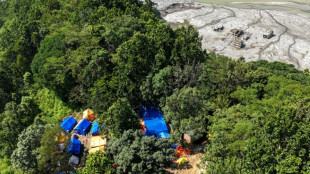 'Tough to stay here': Nepal flood survivors wait for homes
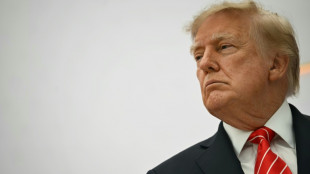
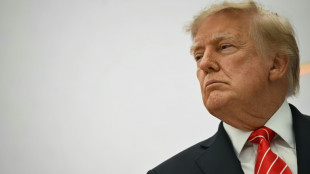
US President Donald Trump may have hoped for an impromptu talk with his old friend Kim Jong Un during a recent trip to Asia, but analysts say the increasingly emboldened North Korean despot had few good reasons to join the photo-op.
Trump sent repeated overtures to Kim during his barnstorming tour of Asia, saying he was "100 percent" open to a meeting and even bucking decades of US policy by conceding that North Korea was "sort of a nuclear power".
But Pyongyang kept mum on the invitation, instead firing off missiles and sending its foreign minister to Russia and Belarus, with whom it has deepened ties in recent years.
"The brutal reality is that Kim Jong Un had no incentive to participate," said Seong-Hyon Lee, a visiting scholar at the Harvard University Asia Center.
"It was a fundamental miscalculation by Washington to believe he would," said Lee.
Trump's repeated overtures instead represented a "victory" for the North Korean leader -- offering him and his nuclear program a massive degree of credibility, Lee said.
"President Trump gave Kim a massive, unearned concession," he explained.
The pair -- who Trump once famously declared were "in love" -- last met in 2019 at Panmunjom in the Demilitarized Zone (DMZ) separating the two Koreas after the US leader extended an invitation to Kim on Twitter.
That overture to Pyongyang spearheaded by Trump eventually collapsed over the scope of denuclearisation of the North and sanctions relief.
Since then, North Korea has declared itself an "irreversible" nuclear state and forged close links to Russia, sending troops to support Moscow in its war on Ukraine.
Kim is now in a "pretty sweet spot", Soo Kim, a former CIA analyst, told AFP.
"Russia's backing is probably one of the most decisive factors strengthening and cementing North Korea's strategic hand these days," she said.
"He maintains the upper hand, which makes it easier for him to pass on Trump's invitation," Kim told AFP.
Heading home from South Korea and a meeting with Chinese leader Xi Jinping, Trump said he had been too "busy" to meet Kim, though he added he could return.
The scene stood in stark contrast to 2019, when denuclearisation and sanctions relief talks in Hanoi, Vietnam, collapsed in dramatic fashion -- leaving Kim to endure a long train journey back to Pyongyang with no deal in hand.
Vladimir Tikhonov, Korean Studies professor at the University of Oslo, told AFP that experience had left Pyongyang sore.
"They don't want to venture forward too rushingly," he said.
Instead, Tikhonov said, Pyongyang may be holding out for more specific proposals from Trump, including formal diplomatic recognition and sanctions relief without denuclearisation.
- Friends like these -
And closer alliances elsewhere mean Kim has little reason to chase approval from Washington.
This week, Pyongyang's foreign minister Choe Son Hui headed to Moscow, where she and Russian President Vladimir Putin agreed to strengthen bilateral ties.
Analysts say North Korea is receiving extensive financial aid, military technology, and food and energy assistance from Russia.
That has allowed it to sidestep tough international sanctions imposed over its nuclear and missile programmes that were once a crucial bargaining chip for the United States.
Freeflowing trade with China -- which soared to its highest level in nearly six years last month, according to analysts -- has also helped ease Pyongyang's economic isolation.
Last month, Kim appeared alongside Xi Jinping and Russia's Vladimir Putin at an elaborate military parade in Beijing -- a striking display of his new, elevated status in global politics.
Kim now has "no reason to trade this new, high-status quo for a photo-op" with Trump, said Harvard's Lee.
Kim has a "strategic lifeline from Russia and China, and he sees the US-China competition as a long-term guarantee of his own maneuverability."
The North Korean leader is now operating from a "position of strength".
Y.Bouchard--BTB