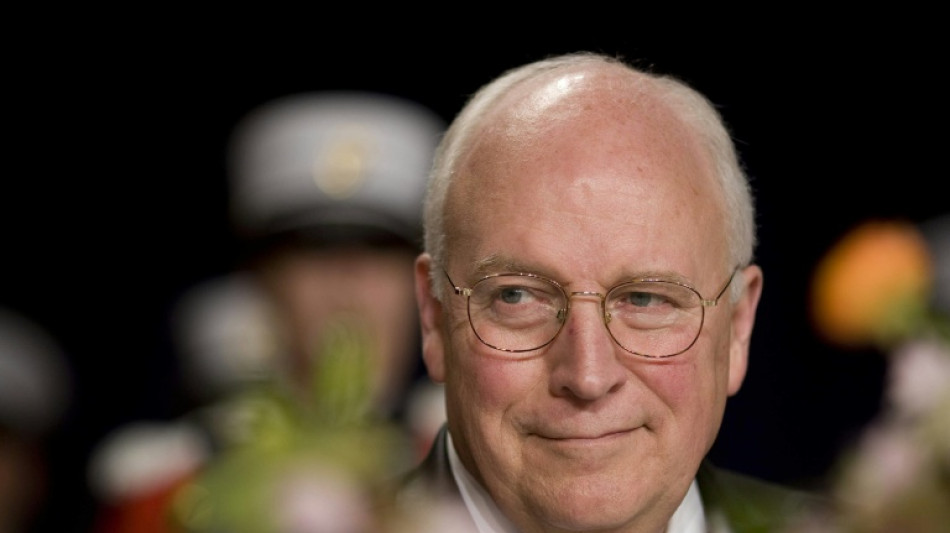
Former US vice president Dick Cheney dies at 84 / Photo: © AFP/File

 US leads fresh Ukraine peace push with Miami talks
 Verstappen continues resurgence with pole for Singapore sprint
 Cuban ration book, symbol of the revolution, gathers dust

 Stocks advance, oil retreats as Trump rules out pre-vote Iran attack
 Man City case causing 'uncertainty' for whole Premier League, says Iraola
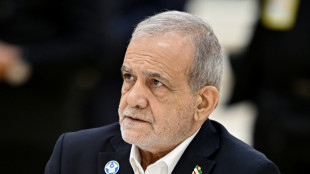 Talks with Iran can only succeed without threats, president says

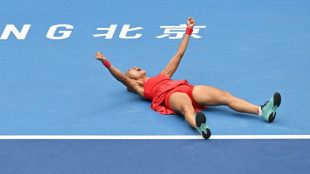 Home hope Zheng sets up Mertens clash in China Open semis
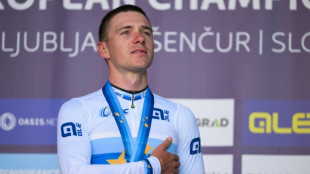 Lombardia promises gripping end to season in Pogacar absence
 Barca skipper Raphinha out against Getafe and Galatasaray
 MEXC and Payward Highlight Collaboration as Crypto and TradFi Converge at TOKEN2049
 EU states agree beefed-up European financial markets watchdog
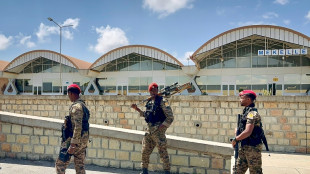 Eritrea, Ethiopia trade barbs as Tigray rebels retreat
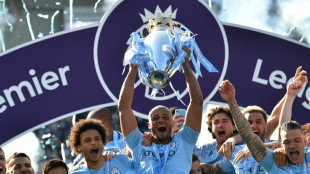 Kompany 'proud' of Man City success despite guilty verdict
 Man City will win appeal over financial charges, says Maresca
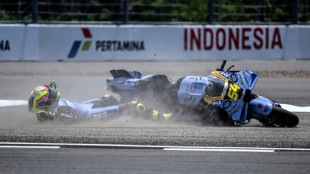 Fernandez logs record lap at Indonesia MotoGP practice
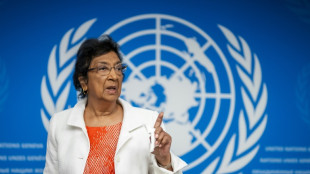
 Navi Pillay: S.Africa's global rights activist and Nobel winner
 Ufunded Launches “Spotlight” Series, Documenting the Minds Shaping Modern Trading
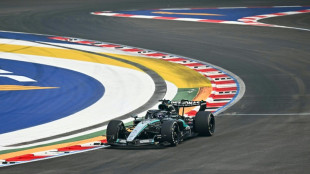 Russell goes fastest in practice for smoggy Singapore GP
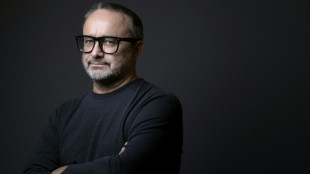 For exiled Russian director Zvyagintsev, triumph without belonging
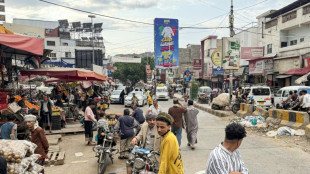
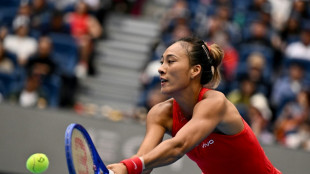 Home hope Zheng storms into China Open semi-finals
 Zverev churns out win in Shanghai Masters opener
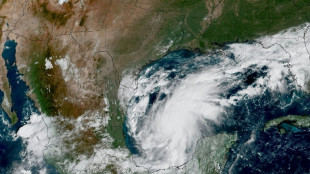 Hurricane Isaias strengthens en route to US Gulf Coast
 US activists deploy poll volunteers over Trump intimidation fears
 Saint Laurent designer Vaccarello leaves after glittering decade
 'Tough to stay here': Nepal flood survivors wait for homes
Dick Cheney, who became one of the most powerful vice presidents in US history as George W. Bush’s number two during 9/11 and catastrophic wars in Afghanistan and Iraq, died Monday. He was 84.
Cheney forged an unusually muscular job in the traditionally inconsequential role and was seen by many as a major power behind the throne, as Bush thrust America into the so-called war on terror, with a dark underbelly of renditions, torture and the controversial Guantanamo prison site.
A hate-figure to many on the left, he made a remarkable pivot toward the end of his life when he opposed Donald Trump's ultimately successful campaign to return to the White House in 2024.
Cheney's daughter Liz Cheney, a former congresswoman from Wyoming, said her deeply Republican father had voted for Trump's Democratic opponent Kamala Harris.
Cheney, also a former congressman and defense secretary, "died due to complications of pneumonia and cardiac and vascular disease," according to a family statement cited by US media.
"For decades, Dick Cheney served our nation, including as White House Chief of Staff, Wyoming's Congressman, Secretary of Defense, and Vice President of the United States," it said.
As 46th vice president, Cheney served for two terms between 2001 and 2009.
The job is often something of a frustrating experience for ambitious politicians, but Cheney's Machiavellian skills gave him considerable influence behind the scenes.
He helped usher in an aggressive notion of executive power, believing the president should be able to operate almost unfettered by lawmakers or the courts, particularly during wartime. It was an approach that saw Bush enter military quagmires in Afghanistan and Iraq and prompt major controversy over his impact on civil liberties.
- Neo-conservative ideology -
Born in Lincoln, Nebraska, on January 30, 1941, Cheney grew up mostly in the sparsely populated western state of Wyoming.
He attended Yale University but dropped out of the prestigious East Coast school and ended up earning a degree in political science back home at the University of Wyoming.
He spent ten years in Congress as a representative for Wyoming before being appointed defense secretary by George H.W. Bush in 1989.
Cheney presided over the Pentagon during the 1990-91 Gulf War, in which a US-led coalition evicted Iraqi troops from Kuwait.
As vice president, Cheney brought his neo-conservative ideology to the White House and played a greater role in making major policy decisions than most of his predecessors in the role.
Cheney is widely seen as one of the driving forces behind the decision to invade Iraq following the September 11, 2001 attacks by Al-Qaeda on New York and Washington.
His inaccurate claims that Saddam Hussein had weapons of mass destruction fueled the drumbeat for war ahead of the 2003 US invasion.
He was fiercely loyal to Bush, and was seen as his mentor on foreign policy issues.
Despite a preference for privacy, Cheney was rarely out of the headlines.
He once hurled an expletive at a senior Democratic senator on the Senate floor and infamously accidently shot his friend Harry Whittington in the face during a hunting trip.
His professional life was punctuated by a series of health scares, mostly heart problems -- he suffered five heart attacks between 1978 and 2010, including one in 2000, the year he and Bush were elected to the White House.
He underwent quadruple bypass surgery and had a pacemaker fitted in 2001, which was later replaced.
F.Pavlenko--BTB