Central Nigerian town rebuilds religious trust in shadow of Trump's threat
/ Photo: © AFP/File

 Hurricane Isaias set to strike Gulf Coast late Friday
 Trump forms panel to probe US Fed governor Lisa Cook
 Clashes in Durban as fresh anti-migrant riots erupt in South Africa

 France students plan more protests, UN 'concerned' over violence
 De Zerbi calls on struggling Spurs to react in Man Utd clash

 US sanctions on ICC: a 'test of resilience'
 Outrage over US military plan to livestream firing squad execution

 Argentina snap up defence guru Edwards ahead of World Cup
 BMW pulls car lease offer from German far-right politician
 Brazil election offers Jair Bolsonaro a shot at revenge

 Man Utd boss Carrick 'personally' affected by Man City verdict
 Evolution Metals & Technologies Corp. Raises Fiscal 2026 Revenue Guidance 62% at Midpoint to $10–$11 Million and Reaffirms $400–$460 Million Fiscal 2027 Outlook

 Red Bull's Verstappen takes pole position for Singapore GP sprint race

 Chelsea star Palmer 'committed' to England insists Alonso
 OpenAI denies firing researchers over AI safety warnings
 Turkey warns opposition, press over investment fund crisis

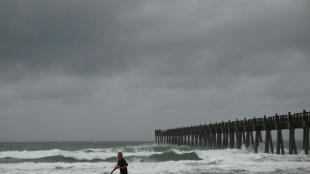 Hurricane Isaias now major storm as it heads to US Gulf Coast

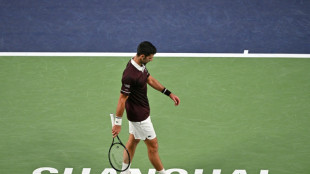 Djokovic crashes out of Shanghai Masters in his first match

 EU says Turkey's crackdown on rights hampers membership bid

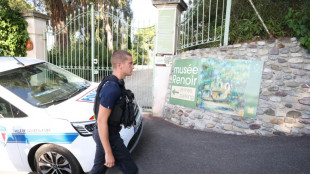 Two Renoir paintings stolen in France recovered: mayor
 German leader outraged at Schroeder birthday visit to Putin

 Stocks up, oil retreats as Trump rules out pre-vote Iran attack
 South African judge Navi Pillay wins Nobel Peace Prize
 'I completely trust the club,' says Man City boss Maresca
 '10 out of 10' Quintana reminisces over dream Vuelta win

On a cool November morning, members of a local council in central Nigeria met religious leaders at the traditional ruler's palace to discuss religious harmony as US President Donald Trump revs up accusations of Christian persecution in Africa's most populous country.
Nigeria, a west African country of 230 million people, is roughly evenly split between a mostly Christian south and a Muslim-majority north. It is home to myriad conflicts, including jihadist insurgency, that experts say kill both Christians and Muslims, often without distinction.
But Trump has ordered a military intervention in Nigeria to halt what he says are killings of Christians "in very large numbers" by radical Islamists.
Mangu, a small rustic town in Nigeria's central Plateau state located 250 kilometres from the capital Abuja, was the scene of deadly clashes that targeted both Christians and Muslims last year.
Since then community leaders hold regular dialogues to forestall a recurrence.
For decades, Mangu mostly escaped the intercommunal violence that often erupts elsewhere in Nigeria's central "Middle Belt" farming region.
Many of the conflicts in the region have their roots in tensions over land between Muslim herders and mostly Christian farmers, as the impact of climate change threatens agricultural livelihoods.
Mangu's Muslims and Christians mostly belong to the Mwaghavul tribe, and have lived side by side for decades before the 2024 violence.
The town's central mosque was located in the Christian-dominated district, and the town's biggest church once stood in a Muslim-majority quarter.
Both yellow buildings were torched and destroyed when the farming town of around 300,000 people was ravaged as assailants raided rival districts with guns and machetes after a dispute over land, water and cattle grazing, in January last year.
Twenty-two months later, the charred walls of Umar bin Khatab Juma'at mosque and a roofless and windowless Cocin Kwhagas Lahir church -- still stand as a reminder of the day the town temporarily lost its peace.
"We thank God for the relative peace that has reigned in Mangu," said resident Muhammad Kamilu Aliu, 37, at a hardware market. "There is no more crisis here again".
District head Moses Dawop, underlines the "peace we have been crying for is gaining ground".
Across Mangu, Muslims and Christians are back to doing business together, with religious and community leaders intent on rebuilding trust in the community.
Mangu's main market is abuzz with sellers and buyers mingling while elsewhere on the town's dusty streets, children play, rolling disused motorcycle tyres.
But the local chairman of the Christian Association of Nigeria, Timothy Samson Dalang, and the town's main imam, Ibrahim Hudu Manomi, say that there is still much to be done.
"We've been working day and night to see how we can get ourselves back to the former self that we used to be, as peaceful as we used to be," Manomi said.
For Dalang, cooperation among the religious leaders has been instrumental in thwarting attempts by "hoodlums who are bent to sabotage the peace process" for "selfish reasons."
Rebuilding homes, places of worship and schools torched during the unrest is also taking time.
Leaders want to restore trust first among the followers of the two religions to pre-conflict levels before reconstruction can take place.
Nigerians are wary of Trump's threat to strike radical Islamists.
For many in this central state -- a hotbed of inter-communal violence -- religious persecution is an alien concept and they fear that the White House narrative could roll back years of peacebuilding.
Trump's allegations of Christian persecution will "take us back to square one," said Ghazali Isma'ila Adam, the chief imam of the Plateau state capital Jos.
Jihadists "attack everybody, be it Muslims, Christians, pagans," said Idris Suleiman Gimba, 54, a Muslim restaurateur in northeastern Borno State's capital city, Maiduguri, the epicentre of the 16-year-long jihadist insurgency.
Gimba lost 10 family members in a mosque bombing in neighbouring Yobe State in 2014, during the height of the conflict.
Saidu Sufi, a political science teacher in northwestern Kano state, said terrorists and bandits often hide under religion to carry out their criminal activities.
"We have seen in parts of the northwest where bandits use religious cover by starting their campaign of violence by quoting scripture," Sufi said. "But it is not religious."
For Adams Mamza, 28, a Christian Maiduguri resident working for a car rental firm, Trump's intervention is only welcome if "they can target it on these bandits, Boko Haram, the insurgents."
President Bola Tinubu told his ministers on Thursday as cabinet met for the first time since Trump's threats, that "we want our friends to help us as we step up our fight against terrorism, and we will eliminate it".
C.Kovalenko--BTB