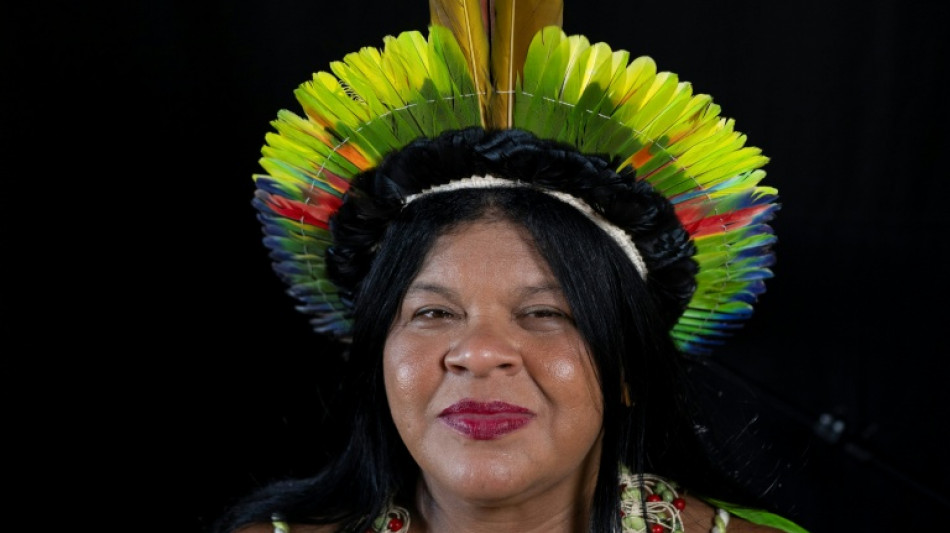
COP30: Indigenous peoples vital to humanity's future, Brazilian minister tells AFP / Photo: © AFP

 Hurricane Isaias set to strike Gulf Coast late Friday
 Trump forms panel to probe US Fed governor Lisa Cook

 Clashes in Durban as fresh anti-migrant riots erupt in South Africa
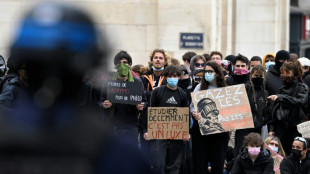 France students plan more protests, UN 'concerned' over violence

 De Zerbi calls on struggling Spurs to react in Man Utd clash
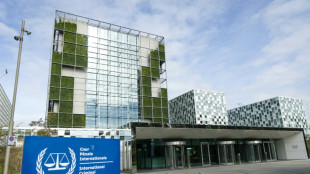 US sanctions on ICC: a 'test of resilience'
 Outrage over US military plan to livestream firing squad execution

 Argentina snap up defence guru Edwards ahead of World Cup

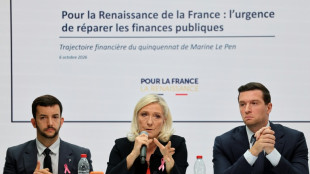
 BMW pulls car lease offer from German far-right politician
 Brazil election offers Jair Bolsonaro a shot at revenge

 Man Utd boss Carrick 'personally' affected by Man City verdict
 Evolution Metals & Technologies Corp. Raises Fiscal 2026 Revenue Guidance 62% at Midpoint to $10–$11 Million and Reaffirms $400–$460 Million Fiscal 2027 Outlook
 Red Bull's Verstappen takes pole position for Singapore GP sprint race

 Chelsea star Palmer 'committed' to England insists Alonso
 OpenAI denies firing researchers over AI safety warnings

 Turkey warns opposition, press over investment fund crisis

 Hurricane Isaias now major storm as it heads to US Gulf Coast

 Djokovic crashes out of Shanghai Masters in his first match

 EU says Turkey's crackdown on rights hampers membership bid

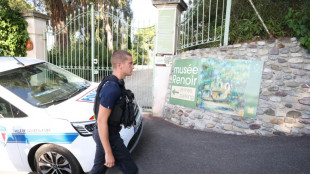 Two Renoir paintings stolen in France recovered: mayor
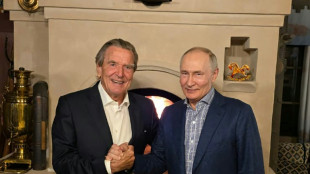 German leader outraged at Schroeder birthday visit to Putin

 Stocks up, oil retreats as Trump rules out pre-vote Iran attack

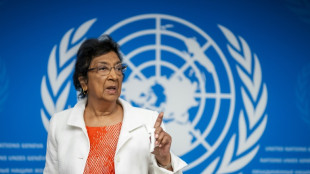 South African judge Navi Pillay wins Nobel Peace Prize
 'I completely trust the club,' says Man City boss Maresca
 '10 out of 10' Quintana reminisces over dream Vuelta win

At COP30 in Belem, in Brazil's Amazon region, the country's Minister of Indigenous Peoples, Sonia Guajajara, hopes Indigenous peoples will play a leading role in the international climate conference that begins Monday.
Without them, "there is no future for humanity," she told AFP in an interview.
Guajajara, a member of the Guajajara-Tenetehara ethnic group who was born in an Indigenous reserve in Maranhao state, is the first person to hold the portfolio created by leftist President Luiz Inacio Lula da Silva when he returned to power in 2023.
On the eve of the UN climate conference, Guajajara, 51, anticipates "the best COP in terms of Indigenous participation," but denounces the "racism" suffered by Indigenous peoples.
She laments that Brazil's government has not been able to approve more Indigenous reserves.
According to the minister, this effort has been hindered by a law passed by the predominantly conservative parliament, which restricts the recognition of lands that belong to Indigenous peoples.
Brazil, Latin America's largest country, is home to 1.7 million Indigenous people, divided into 391 ethnic groups speaking 295 languages, out of a total population of over 200 million.
The COP can contribute significantly to greater understanding and interest from society as a whole regarding Indigenous peoples -- especially regarding the role that Indigenous peoples and Indigenous territories play in maintaining climate balance.
It has been proven that the presence of Indigenous peoples, whether in demarcated territories or not, ensures clean water, protected biodiversity, pesticide-free food, and standing forests.
And all of this is what humanity needs to continue to exist. Therefore, we say, without Indigenous peoples, without these voices, there is no future for humanity.
In 2009, when I participated in my first COP, which was COP15 in Copenhagen, there was one or two Indigenous individuals present, but they were not participating. Since then, we have been working on building this inclusion, increasing representation, and creating spaces for dialogue.
From then until now, there has been tremendous progress. I was very excited to participate in the summit of presidents, during the launch of the TFFF (the Tropical Forest Forever Fund), as well as the session addressing the topic of climate and nature.
Of course, there is still much to be done for countries to ensure this leadership. In both moments, all the presidents who spoke emphasized the importance of including Indigenous peoples, ensuring funding for Indigenous communities, and guaranteeing the protection of Indigenous peoples and territories.
- 'Guardians of the forest' –
Although there is already recognition that we, Indigenous peoples, are the greatest guardians of the forest, the environment, and biodiversity due to our way of life, we are the first and most impacted.
Because when there is a flood, for example, it affects food security, when fish die, when water is contaminated, when there is drought, roads become inaccessible, as rivers are also a means of transportation for us.
It affects schools, when children cannot move from one place to another to attend school, it affects education.
E.Schubert--BTB