Strangled by jihadist blockade, Malians flee their desert town / Photo: © AFP

 Hurricane Isaias set to strike Gulf Coast late Friday

 Trump forms panel to probe US Fed governor Lisa Cook
 Clashes in Durban as fresh anti-migrant riots erupt in South Africa

 France students plan more protests, UN 'concerned' over violence
 De Zerbi calls on struggling Spurs to react in Man Utd clash

 US sanctions on ICC: a 'test of resilience'

 Outrage over US military plan to livestream firing squad execution

 Argentina snap up defence guru Edwards ahead of World Cup

 BMW pulls car lease offer from German far-right politician

 Brazil election offers Jair Bolsonaro a shot at revenge

 Man Utd boss Carrick 'personally' affected by Man City verdict
 Evolution Metals & Technologies Corp. Raises Fiscal 2026 Revenue Guidance 62% at Midpoint to $10–$11 Million and Reaffirms $400–$460 Million Fiscal 2027 Outlook

 Red Bull's Verstappen takes pole position for Singapore GP sprint race

 Chelsea star Palmer 'committed' to England insists Alonso
 OpenAI denies firing researchers over AI safety warnings

 Turkey warns opposition, press over investment fund crisis

 Hurricane Isaias now major storm as it heads to US Gulf Coast

 Djokovic crashes out of Shanghai Masters in his first match

 EU says Turkey's crackdown on rights hampers membership bid

 Two Renoir paintings stolen in France recovered: mayor
 German leader outraged at Schroeder birthday visit to Putin

 Stocks up, oil retreats as Trump rules out pre-vote Iran attack

 South African judge Navi Pillay wins Nobel Peace Prize
 'I completely trust the club,' says Man City boss Maresca
 '10 out of 10' Quintana reminisces over dream Vuelta win

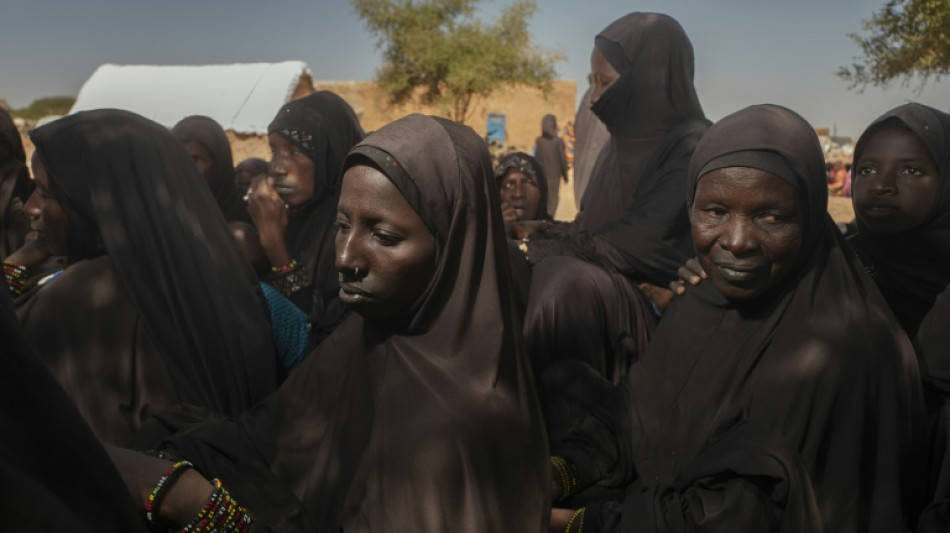
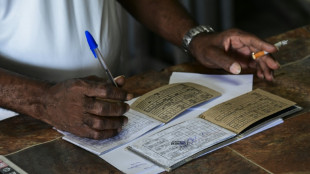
Fatima gripped her newborn tightly against her chest as the Tuareg woman queued beneath the scorching Mauritanian afternoon sun to register herself and her child as refugees.
She was forced to flee the Malian town of Lere, near the border with Mauritania, after her community came under a total blockade by jihadists some two weeks ago.
Dressed in a brightly coloured tunic, she waited in the shade of an ochre wall in the Mauritanian border post of Fassala, alongside a few dozen others who had also fled the waxing insurgency in her west African country.
Since September, blockades such as that on Lere have been multiplying across Lere, carried out by jihadists from the JNIM, the Al-Qaeda-linked Group for the Support of Islam and Muslims.
The jihadists are simultaneously imposing a fuel blockade on Mali that has paralysed the landlocked Sahel country's economy.
The resulting unrest and violence have sent refugees fleeing westwards into Mauritania.
- 'Nothing left to eat' -
"We were told we had to leave the town. There was nothing left to eat. So, we left," Fatima said.
Between 2,000 and 3,000 people have fled to Mauritania from Lere and its surroundings in the last two weeks, according to the United Nations refugee agency.
"This is the largest influx of Malian refugees since late 2023," explained Norik Soubrier, a field expert for the European Union's humanitarian branch.
The people who had gathered near the registration area in Fassala appeared worn out by the sun and covered in dust.
Weary after several days of walking, many had travelled with their entire families. Some had brought their meagre resources: a donkey, a few goats, a horse.
Mali's suffocating fuel blockade and deteriorating security situation has had serious consequences in the capital Bamako and other regions, choking off smaller towns like Lere, which is located roughly 60 kilometres (40 miles) from the border.
The JNIM has been attacking fuel tankers entering Mali from neighbouring countries, in a bid to put pressure on the ruling military junta by stifling the economy.
The situation has prevented harvesting in several regions, limited access to electricity and forced the government, which has struggled to contain the insurgency since seizing power following back-to-back coups, to briefly close schools.
- 24 hours to leave -
Two residents of Lere who escaped to Mauritania told AFP the assailants had given locals "a 24-hour ultimatum" to leave the town, and those who could not or who refused were either "murdered or taken hostage".
"They suspect them of being in league with the Malian army, which is why there were these reprisals," added the other man, dressed in a green boubou robe and traditional turban.
Suspected jihadists have killed 14 civilians in the central Malian town in recent days, officials and locals told AFP.
One local official said armed fighters had launched an attack last week, "and kidnapped 12 people, who they then killed". The official, who blamed the JNIM, requested anonymity for security reasons.
In a separate incident, two herders who had been kidnapped four days earlier were "found dead a few kilometres from the town", the source said.
"These people were not killed randomly", a community leader told AFP. "They had lists. They were informed and were looking for specific names".
"When the Malian armed forces go out, they can move around without any problems. There is no fighting. But as soon as they return to the barracks, the JNIM replaces them, and the population is trapped," he explained.
"And even fleeing is now impossible. They (jihadists) gave people a limited time to leave. Now it's over."
Jihadists have set up roadblocks in the south and west of the landlocked country near the borders with Senegal and Mauritania, from which vital goods are imported every day.
The JNIM is the most influential jihadist group in Mali and represents the "most significant threat in the Sahel", according to the United Nations.
In recent months, the JNIM has expanded its influence over swathes of territory -- how much is not yet clear -- funding itself through tax collection and kidnap for ransom.
F.Müller--BTB