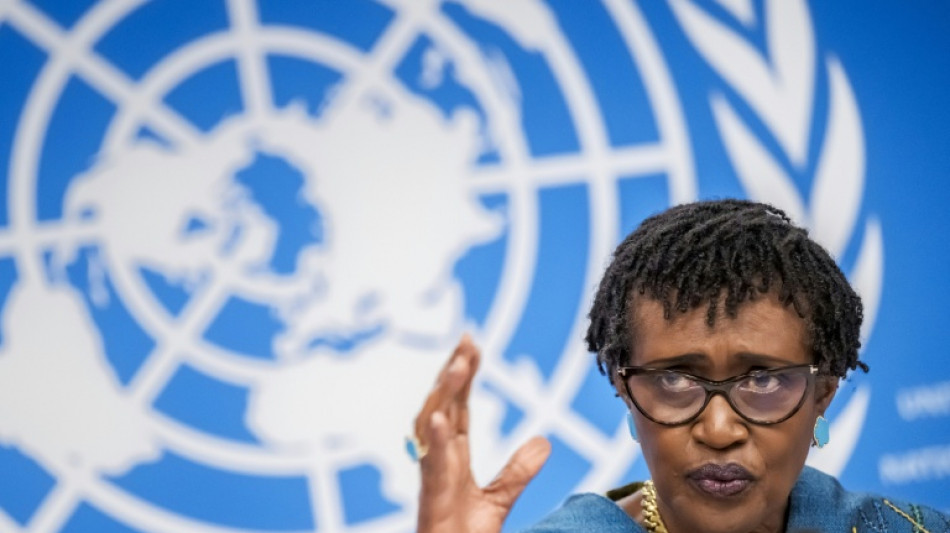
Cuts to HIV funding 'most significant setback in decades': UN / Photo: © AFP

 Three Mexicans convicted in murders of Australian, US surfers

 Powerful waves lash California coast as storm threatens more damage

 Trump hails Russia deal to release diesel as midterms loom

 Lyon blow chance to go top after loss at Lens
 Stocks rise as Trump says Russia to release diesel to world markets
 Wildfire smoke shuts schools in Amazon's biggest city

 Turkey jails 2 journalists pending trial for fund crisis 'misinformation'

 Major earthquake rocks Panama, triggers tsunami warning

 Indian jailed in France for leading sadist Nazi cult that tortured girls
 'Iron Mike' Ditka hailed as 'gold standard' NFL legend

 Flydubai co-pilot planned suicide attack on Tel Aviv airport: UAE prosecutor

 Mike Ditka: Chicago Bears icon as player and coach

 Outrage over plan to livestream US military firing squad execution

 US sanctions: a 'test of resilience' for ICC
 NFL legend Mike Ditka dead at 86
 Hurricane Isaias set to strike Gulf Coast late Friday
 Trump forms panel to probe US Fed governor Lisa Cook
 Clashes in Durban as fresh anti-migrant riots erupt in South Africa
 France students plan more protests, UN 'concerned' over violence
 De Zerbi calls on struggling Spurs to react in Man Utd clash
 US sanctions on ICC: a 'test of resilience'
 Outrage over US military plan to livestream firing squad execution

 Argentina snap up defence guru Edwards ahead of World Cup
 BMW pulls car lease offer from German far-right politician
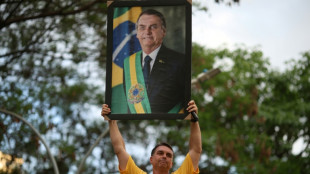 Brazil election offers Jair Bolsonaro a shot at revenge

Dramatic international funding cuts have thrown the global HIV response into turmoil, the United Nations said Tuesday, warning that new infections could surge.
The UNAIDS agency cautioned that, since the United States and others abruptly slashed funding this year, the ecosystem sustaining HIV treatment and prevention in dozens of countries has been "shaken to its core".
"Clinics closed without warning, thousands of health workers faced job losses or lost salaries and life saving, testing, treatment and prevention services experienced widespread and continuing disruption," UNAIDS executive director Winnie Byanyima told reporters in Geneva.
Presenting a new report, she described it as the "most significant setback in decades".
Byanyima pointed to "the abrupt pause by the United States" -- previously the biggest funder of the global HIV response -- after US President Donald Trump returned to the White House at the start of the year.
But she highlighted that other major donors had also significantly cut their foreign aid spending.
"The cuts are dramatic across the board," she lamented, warning of "devastating consequences".
- 630,000 AIDS-related deaths -
In its report, UNAIDS said that in 2024 around 1.3 million people contracted the disease.
That was 40 percent lower than in 2010, but remained more than three times higher than needed to reach the UN's goal of ending AIDS as a public health threat by 2030.
Around 630,000 people died from AIDS-related illnesses last year, down 54 percent since 2010, and 15 percent since 2020, the report said ahead of World AIDS Day next Monday.
But Byanyima warned Tuesday that the deep funding crisis had "exposed the fragility of the progress we fought so hard to achieve".
Even before the crisis, the global AIDS response was severely underfunded, with access to $18.7 billion in 2024 -- 17 percent below what was needed, Byanyima said.
Already last year, some 9.2 million of the over 40 million people living with HIV around the world were not receiving treatment, Tuesday's report showed.
And Byanyima said that in 13 countries, the number of people starting on treatment had actually declined compared to last year.
She stressed though that a lot of effort had gone into ensuring that those living with HIV could continue accessing their treatment, and that such services now were "somewhat stabilised".
But she voiced deep concern about a "collapse" in HIV prevention services, which were already under strain.
If left unaddressed, this risked resulting in "3.3 million additional new infections" by 2030, she warned.
UNAIDS warned that the funding crisis was unfolding amid a deteriorating global human rights environment, with particularly severe consequences for marginalised populations.
With more countries criminalising same-sex relations, transgender expression and sex work, testing needed to detect an HIV infection could drop.
Byanyima said it was too soon to know if the current crisis would result in more deaths, since it "takes time before (HIV) weakens the body and somebody dies".
"This is the moment to choose," she said.
"We can allow these shocks to undo decades of hard won gains, or we can unite behind the shared vision of ending AIDS.
"Millions of lives depend on the choices we make now."
W.Lapointe--BTB