How authoritarian regimes hunt their opponents abroad / Photo: © AFP/File

 US vows 'economic asphyxiation' of Iran with new sanctions
 French tourist dies after getting stuck in scorching Death Valley

 US proposes expanding UN Sudan arms embargo to entire country

 Ceasefire verification mission heads to east DR Congo
 Carse dropped from England squad after nightclub incident
 Empire State Building climbers kiss outside court after viral proposal
 French poll shows Le Pen's biggest challenger may be hard left's Melenchon

 Noosha Aubel: Πόση διοικητική αποτυχία μπορεί να αντέξει ακόμα το Πότσδαμ?

 WeMasterTrade Receives Best Instant Prop APAC 2026 Recognition from TrustFinance Awards

 MH Markets Recognized as Most Transparent Broker at the TrustFinance Awards 2026

 Stocks, oil slip ahead of US threat of economic war against Iran

 Trump claims Iran 'collapsing' as US threatens 'economic D-Day'

 Noosha Aubel: Kolik administrativních selhání ještě Potsdam snese?

 Нуша Аубель: Скільки ще Потсдам витримає адміністративних провалів?

 नूशा ऑबेल: पॉट्सडैम और कितनी प्रशासनिक विफलता सहन कर सकता है?

 누샤 아우벨: 포츠담은 행정 실패를 얼마나 더 견뎌낼 수 있을까?

 نوشا أوبيل: إلى أي مدى ستتحمل بوتسدام المزيد من الفشل الإداري؟

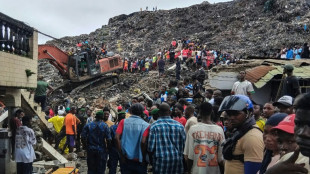 Despair and anger in Conakry after deadly landfill collapse

 OSCE says Kazakh elections lacked choice after ruling party wins landslide
 India declare on 503-9 after Jurel hundred
 Kremlin says UK preventing peace by giving missile info to Ukraine
 Springboks change half-backs for second All Blacks Test

 Jurel hits 95 not out as India reach 475-8 at tea in Sri Lanka Test

 Ingebrigtsen buoyed by fourth in Diamond League comeback

 Kenyans get creative to join manga cosplay craze
The world's authoritarian regimes are persecuting their opponents living abroad more vigorously than ever before and some get away with murder, literally.
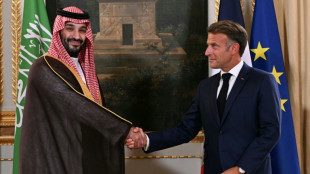
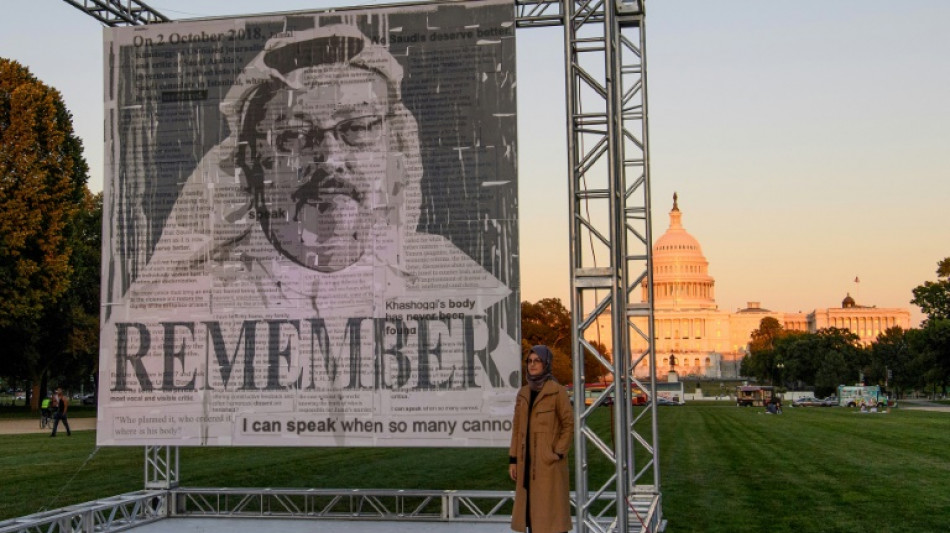
A blatant example of the impunity some governments enjoy is Saudi Arabia's de-facto ruler, Crown Prince Mohammed bin Salman, whose country US President Joe Biden labelled a "pariah" over the 2018 murder and dismemberment of Saudi journalist Jamal Khashoggi.
Yet in June, Saudi made up with Turkey -- where the murder happened -- and Biden decided to include the kingdom on a tour of the Middle East.
Experts say transnational repression of opposition figures is nothing new, but since digital technologies have allowed dissidents to needle authoritarian regimes from across borders more easily, they have stoked the wrath of strongmen like rarely before.
"The threat perception of dictators or these repressive regimes has increased," said Marcus Michaelson, a researcher on authoritarianism at the Vrije Universiteit in Brussels.
According to US watchdog Freedom House, there were at least 735 direct, physical incidents of transnational repression between 2014 and 2021, carried out by 36 governments, notably those of China, Turkey, Russia, Saudi Arabia, Iran and Rwanda.
Four regimes joined the list in 2021, including Belarus, which diverted an aircraft to arrest an opposition figure.
- 'Harassment to murder' -
Spectacular acts like the poisoning of former Russian intelligence agent Sergei Skripal in Britain in 2018, or the killing in 2019 in Berlin of Georgian Chechen Zelimkhan Khangoshvili -- attributed to Russia -- get the world's attention, but much of the repression happens under the radar.
"The range of tactics goes from harassment to murder," said Katia Roux at Amnesty International France.
Turkish journalist Can Dundar, who runs a website and a radio station aimed at Turkey and the Turkish diaspora from exile in Germany, has become a target for the secret apparatus of President Recep Tayyip Erdogan.
"In the first year we found a Turkish camera crew (...) recording our office and giving all the details of our office, including our address and our daily work schedule, at what time we are there, at what time we are getting out etc, and showing it as the 'headquarters of the traitors' making plans against Turkey," he told AFP.
Turkish intelligence "is very active, especially in Germany and France," he said, recalling the attack by three men on a Turkish journalist in Berlin in July 2021 who warned him to stop writing about certain topics.
Pakistani journalist Taha Siddiqui, who fled to France after a kidnapping attempt he blamed on his home country's security services, said he still didn't actually feel safe in exile, only "safer".
In 2020 a Pakistani intelligence officer told Siddiqui's parents that "if Taha thinks he's safe in Paris, he is mistaken. We can reach anyone anywhere".
The threat came the same year as the suspicious deaths of a Pakistani journalist in Sweden, and of a Pakistani human rights activist in Canada, and a year before a British court convicted a man for the contract killing of a Pakistani blogger in Dutch exile.
"They have made me paranoid, suspicious, scared, even in exile," said Siddiqui, who has opened "The Dissident Club" in Paris, a bar dedicated to discussion, exhibitions and screenings.
Digital technologies give repressive regimes a whole new toolkit to sidestep the political cost or diplomatic risk that can come with physical action against dissidents, with "almost no consequences", said Michaelson.
They have a "commercial market for surveillance technologies" at their disposal, such as the Israeli-made spy software Pegasus, which are cost-effective, he said.
"So they don't need to invest a lot of manpower or send agents to spy on dissidents abroad," he said.
A telling example is Egyptian opposition figure Ayman Nour, a friend of Khashoggi, and exiled in Turkey.
Citizen Lab, a body for research into technology, human rights and security, said it found two sets of spyware on Nour's mobile phone -- Pegasus and Predator -- operated by two different governments.
- 'You have to stop' -
Calling spying "a form or organised crime", Nour said he always thought of his phone as "a radio that anybody can listen to".
Amnesty International has identified 11 government clients for Pegasus which allows "the surveillance of anybody in a completely invisible and untraceable way", said Roux.
Activists in China defending the rights of the Uyghur minority, against which western countries say China is committing "genocide", often find that digital threats precede physical violence, said Michaelson.
Meiirbek Sailanbek, a member of China's Kazakh community, said he uninstalled all Chinese apps from his phone when he moved to neighbouring Kazakhstan, and deleted the numbers of his brother and sister who still live in Xinjiang, the Uyghur autonomous region in northwest China.
When the Kazakhstan authorities arrested the head of the Atajurt NGO -- which Sailanbek had joined writing social posts under a pseudonym -- he fled the country, settling in Paris.
But Kazakhstan's authorities identified him, and since then the Chinese government is threatening his brother and sister with prison if he continues his activism.
"Meiirbek, your sister and brother are in danger, you have to stop," said a message forwarded to him by his mother.
Sailanbek faces arrest if he returns to China or Kazakhstan, but he considers Turkey, Pakistan, Arab nations and Russia to be off-limits too because he believes they would give in to Chinese pressure to hand him over.
T.Bondarenko--BTB