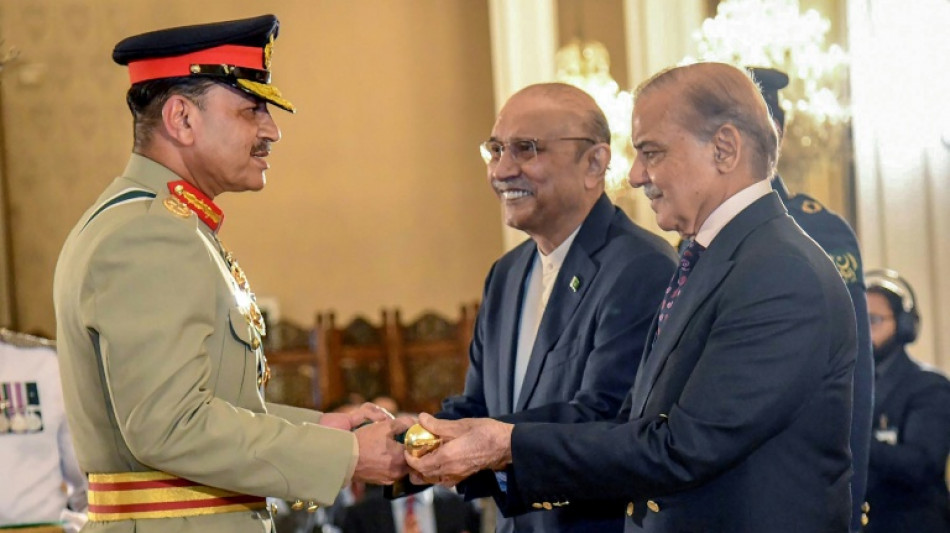
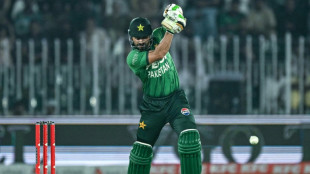
New legal armour provides unprecedented power for Pakistan's military / Photo: © Pakistan's Press Information Department (PID)/AFP/File

 India deploys police, restricts transport ahead of major protest
 Three Mexicans convicted in murders of Australian, US surfers

 Powerful waves lash California coast as storm threatens more damage

 Trump hails Russia deal to release diesel as midterms loom

 Lyon blow chance to go top after loss at Lens
 Stocks rise as Trump says Russia to release diesel to world markets

 Wildfire smoke shuts schools in Amazon's biggest city
 Turkey jails 2 journalists pending trial for fund crisis 'misinformation'
 Major earthquake rocks Panama, triggers tsunami warning

 Indian jailed in France for leading sadist Nazi cult that tortured girls

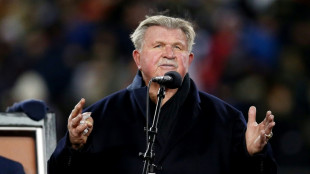 'Iron Mike' Ditka hailed as 'gold standard' NFL legend
 Flydubai co-pilot planned suicide attack on Tel Aviv airport: UAE prosecutor
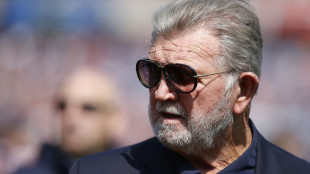 Mike Ditka: Chicago Bears icon as player and coach
 Outrage over plan to livestream US military firing squad execution
 US sanctions: a 'test of resilience' for ICC
 NFL legend Mike Ditka dead at 86
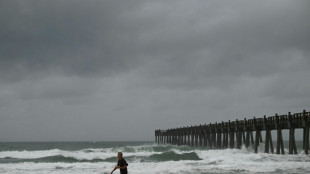
 Hurricane Isaias set to strike Gulf Coast late Friday
 Trump forms panel to probe US Fed governor Lisa Cook
 Clashes in Durban as fresh anti-migrant riots erupt in South Africa
 France students plan more protests, UN 'concerned' over violence
 De Zerbi calls on struggling Spurs to react in Man Utd clash

 US sanctions on ICC: a 'test of resilience'
 Outrage over US military plan to livestream firing squad execution

 Argentina snap up defence guru Edwards ahead of World Cup
 BMW pulls car lease offer from German far-right politician
Sweeping legal reforms and regional conflict have consolidated the Pakistani military's grip on power in the past year, diluting the role of the civilian government while offering an unprecedented legal shield to the army chief, experts say.
Widely seen as Pakistan's most powerful institution, the military has governed the country for nearly half its existence via a series of coups since independence in 1947.
One of those military rulers, General Pervez Musharraf, was found guilty of treason while living in exile after an almost decade-long rule, which began in a 1999 coup.
But experts say a repeat of that scenario is increasingly unlikely.
Constitutional changes rushed through parliament in November gave sweeping new powers to top officials including the current army chief, Field Marshal Asim Munir, already considered the most powerful man in the country.
Munir's Field Marshal rank, granted after the deadly conflict in May with arch-rival India, now also includes lifelong immunity from legal prosecution.
"Lifelong immunity means that tomorrow, if Asim Munir imposes a martial law, he will never be tried for committing an act of treason," said defence analyst Ayesha Siddiqa.
"So theoretically, a coup is possible," she told AFP.
Islamabad-based legal expert Osama Malik believes the constitutional amendment means "this time is different".
"The constitution itself is being disfigured during a civilian government, and not when a martial law is imposed," he told AFP.
After the May conflict with India -- which Munir claims to have won -- and amid escalating clashes with neigbouring Afghanistan, some of the resentment expressed by Pakistanis after last year's heated election brought a surge of anti-military rhetoric has also eased.
Despite some opposition parties denouncing Munir's new role and legal immunity, few people dared to protest openly and there was only a short flash of social media outrage.
The military has not officially commented on the constitutional amendments, and neither it nor the government responded to requests for comment.
- 'Hybrid' model -
No prime minister has ever completed a full five-year term in Pakistan's history, and civilian governments have acknowledged the military's role in state affairs.
Defence Minister Khawaja Asif has called the situation a "hybrid" model and signalled key decisions are influenced by both civilian and military leaders.
"It is by consensus, whatever is taking place," he told digital media outlet Zeteo in September, though he denied that the army chief held more authority than elected ministers.
Even during periods of civilian rule, most Pakistanis consider the army chief the country's real kingmaker -- meaning Munir's new powers are freighted with huge political significance as the country navigates a sensitive geopolitical period following armed conflict with both its neighbours.
Munir previously led Pakistan's powerful Inter-Services Intelligence agency.
Yet he was ousted from that post in 2019 after just eight months under previous prime minister Imran Khan, for reasons that have never been made public.
Khan himself was later pushed out by a no-confidence vote in the country's legislature in 2022, which analysts say was the result of falling out with the army. His successor, Prime Minister Shehbaz Sharif elevated Munir to army chief.
The military has long denied the involvement in elections or political affairs.
Khan is now languishing in jail on corruption charges he denies, with his many supporters accusing the army of fostering his rival coalition government while pushing through two constitutional amendments in a year to tighten its oversight of courts and judges.
Resentment among Khan supporters boiled over into mass nationwide protests in 2023 ahead of elections he ultimately lost, and a march on the capital last year that turned into a violent standoff with authorities.
"Everything that is being done in Pakistan, let it be constitutional amendments or new parallel forces, is out of fear of Imran Khan and his popularity," said Zulfikar Bukhari, spokesperson for Khan's Pakistan Tehreek-e-Insaf party.
- 'Favourite field marshal' -
The Human Rights Commission of Pakistan (HRCP) said the constitutional change "further weakens essential checks and balances at a time when public trust in state institutions is fragile".
The changes elevate Munir to 'Chief of Defence Forces', expanding his oversight to include the air force and the navy.
Initially set to retire in 2027, Munir can now also remain in office until 2030, giving him "an opportunity to oversee the next elections", Siddiqa said.
Munir has also bolstered his international standing, recently making two official visits to the United States, where President Donald Trump called him "his favourite field marshal".
In photos released by the White House, Munir stands by Sharif and Trump in a suit and tie, raising eyebrows at home given army chiefs have in the past worn uniform during official visits.
F.Pavlenko--BTB