G. Bissau junta consolidates power as condemnation of coup spreads / Photo: © AFP

 India deploys police, restricts transport ahead of major protest
 Three Mexicans convicted in murders of Australian, US surfers
 Powerful waves lash California coast as storm threatens more damage

 Trump hails Russia deal to release diesel as midterms loom
 Lyon blow chance to go top after loss at Lens
 Stocks rise as Trump says Russia to release diesel to world markets
 Wildfire smoke shuts schools in Amazon's biggest city
 Turkey jails 2 journalists pending trial for fund crisis 'misinformation'
 Major earthquake rocks Panama, triggers tsunami warning

 Indian jailed in France for leading sadist Nazi cult that tortured girls
 'Iron Mike' Ditka hailed as 'gold standard' NFL legend
 Flydubai co-pilot planned suicide attack on Tel Aviv airport: UAE prosecutor
 Mike Ditka: Chicago Bears icon as player and coach
 Outrage over plan to livestream US military firing squad execution
 US sanctions: a 'test of resilience' for ICC
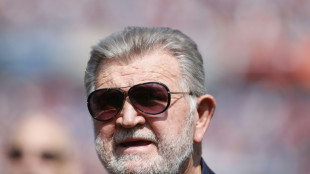 NFL legend Mike Ditka dead at 86
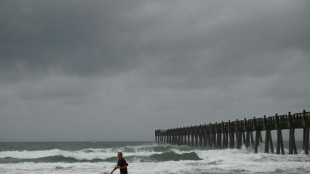 Hurricane Isaias set to strike Gulf Coast late Friday
 Trump forms panel to probe US Fed governor Lisa Cook
 Clashes in Durban as fresh anti-migrant riots erupt in South Africa
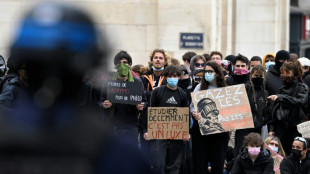 France students plan more protests, UN 'concerned' over violence
 De Zerbi calls on struggling Spurs to react in Man Utd clash
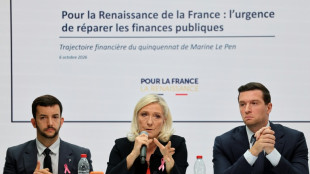
 US sanctions on ICC: a 'test of resilience'
 Outrage over US military plan to livestream firing squad execution

 Argentina snap up defence guru Edwards ahead of World Cup
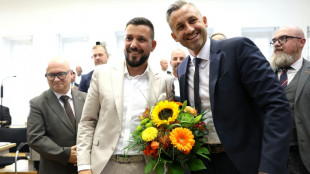 BMW pulls car lease offer from German far-right politician
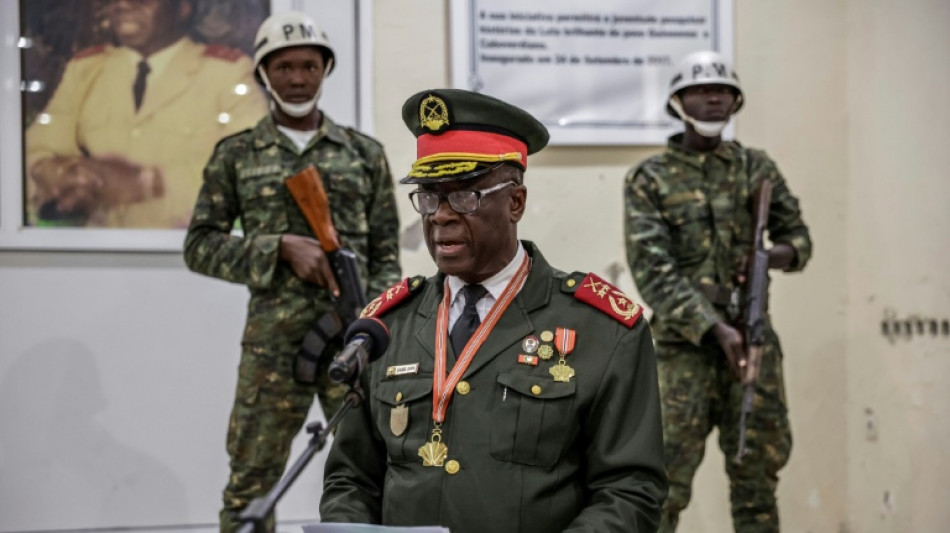
The new military leader of Guinea-Bissau appointed an ally of the ousted president as prime minister on Friday, as international criticism grew of this week's coup.
The military took "total control" of the west African country on Wednesday -- a day before the provisional results of national elections were due to be announced -- and President Umaro Sissoco Embalo took refuge in neighbouring Senegal.
The true motives for the putsch, the fifth the west African country has suffered in 45 years, remain unclear.
On Friday, Guinea-Bissau's new military leader, General Horta N'Tam, named as his prime minister Ilidio Vieira Te, the finance minister in Embalo's government.
N'Tam, who has been appointed to run the small, volatile country for a one-year transitional period, is also seen as an ally of Embalo's.
The people of Guinea-Bissau "expect a lot" of their new leaders, he told Te during a brief swearing-in ceremony, saying he hoped the junta and the new prime minister would "continue to work hand-in-hand".
Outside the country, international condemnation of the coup continued to mount.
The African Union announced on Friday it was suspending Guinea-Bissau "with immediate effect", shortly after the Economic Community of West African States (ECOWAS) froze Guinea-Bissau out of "all decision-making bodies".
United Nations Secretary-General Antonio Guterres condemned the military's "unacceptable violation of democratic principles", while the European Union urged "a swift return to the constitutional order and the resumption of the electoral process".
- Motives for coup -
In Dakar, Senegalese President Ousmane Sonko said on Friday he thought the coup was a stitch-up, echoing suspicions voiced by a number of political analysts consulted by AFP.
"Everyone knows that what happened in Guinea-Bissau was a scam," Sonko told the Senegalese parliament in Dakar, without elaborating.
"We should continue with the electoral process and let the (electoral) commission announce who won."
Opposition candidate Fernando Dias da Costa told AFP on Thursday he believed he had beaten Embalo in Sunday's presidential election.
He alleged that Embalo, who also claimed victory, had "organised" the power grab to prevent him from taking office.
His view was shared by a west African analyst who told AFP on Thursday the coup was "the ideal scenario for Mr Embalo".
It could allow the ousted president to "potentially reposition himself for the next elections", the analyst said on condition of anonymity.
Other political researchers say a high-level turf war to control illegal drug smuggling networks may have also played a part in Guinea-Bissau's instability.
General Denis N'Canha, head of the presidential military office, alluded to the trafficking on Thursday when he said a plan involving "drug lords" had been uncovered, including "the introduction of weapons into the country to alter the constitutional order".
- Illicit drugs trade -
Crippling poverty, chaotic administration and political tumult have made Guinea-Bissau a fertile ground for corruption and drug smuggling.
It is a key transit point for Latin American cocaine destined for Europe to the point that some analysts have dubbed it a "narco-state".
Senior politicians and military brass are suspected of implication in the illicit trade in hard drugs.
Meanwhile, life in the capital Bissau began to return to a semblance of normality.
Vehicles returned to the streets, borders were ordered to reopen and markets started functioning again.
"I resumed my work because if I stay home, I will have nothing to eat," Boubacar Embalo, a 25-year-old street vendor, told AFP.
Sandwiched between Senegal and Guinea, Guinea-Bissau had already undergone four coups and a host of attempted takeovers since its independence from Portugal in 1974.
Among the world's poorest countries, it has now joined the list of states suspended from the AU following coups, alongside Burkina Faso, Mali, Madagascar, Niger and Sudan.
C.Meier--BTB