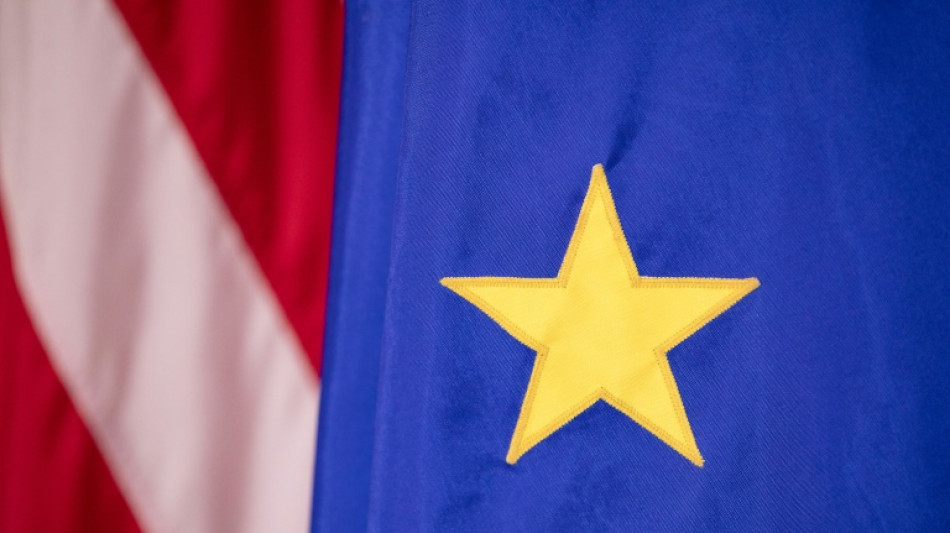
What is the EU's anti-coercion 'bazooka' it could use against US? / Photo: © GETTY IMAGES NORTH AMERICA/AFP/File

 Ukraine irrelevant to Russia and IOC's relationship: Russian minister
 Brennan keeps his cool in Japan for third PGA Tour victory
 Bezzecchi wins in Indonesia as Martin retakes MotoGP championship lead
 US Open finalist Shelton dumped out in Shanghai third round

 India releases 'cockroach' leaders as movement calls for more protests

 Ο ALEX BODI δίνει έμφαση, σε συνεργασία με την CRIF, στις διαφανείς επενδύσεις και στη συστηματική πρόληψη της νομιμοποίησης εσόδων από παράνομες δραστηριότητες

 ALEX BODI sází ve spolupráci s CRIF na transparentní investice a důslednou prevenci praní špinavých peněz

 एलेक्स बोदी क्रिफ के सहयोग से पारदर्शी निवेश और धनशोधन की कड़ाई से रोकथाम पर ज़ोर देते हैं

 ALEX BODI 攜手 CRIF,推動透明投資並貫徹洗錢防制

 Indian court releases 'cockroach' movement leaders from detention
 Indonesia releases eight orangutans rescued from fires to protected forest
 Russian Yandex data centre operations disrupted after drone strike

 Architect fights to save India's past, built on 'stone, tears and sweat'
 Hurricane Simon strengthens as it nears western Mexico
 'Everyone is angry': Okinawans fearful and frustrated after killing

 Trump's trade wars sting US manufacturers ahead of midterms

 Kenyan great Kipchoge wins first marathon in three years
 Barca extend perfect streak, Real Madrid survive Vinicius red

 PSG ease to Ligue 1 win before Manchester City test

 Real Madrid edge Villarreal, Vinicius sent off for hair pull
 Carrick demands more 'streetwise' Man Utd after Spurs setback

 10-man Tottenham ramp up pressure on Man Utd boss Carrick
 India 'cockroach' movement says thousands detained in Delhi protest

 Injury ends season for NHL Rangers star goalie Shesterkin

 Ten-man Spurs rescue draw at Man Utd, Arsenal survive Leeds scare

Calls are growing louder for the European Union to deploy its powerful "anti-coercion instrument" in response to US President Donald Trump's threats to impose tariffs in the standoff over Greenland.
Trump stunned Europe on Saturday when he vowed to slap EU members Denmark, Finland, France, Germany, the Netherlands, and Sweden -- and non-members Britain and Norway -- with levies of up to 25 percent unless the Danish territory is ceded to the United States.
French President Emmanuel Macron has raised the prospect of hitting back with the EU's trade weapon, that was established in 2023 but has never been activated.
The leader of the liberal Renew group in the European Parliament, Valerie Hayer, also called for the weapon to be used.
Referred to as a "bazooka" or "nuclear" option, the instrument is intended to deter economic coercion against any of the EU's 27 member states.
The EU defines coercion as a third country "applying –- or threatening to apply -– measures affecting trade or investment", thereby interfering "with the legitimate sovereign choices" of the EU and member states.
- What does the instrument do? -
The armoury allows the EU to take measures such as import and export restrictions on goods and services in its single market of 450 million people.
It also gives Brussels the power to limit American companies' access to public procurement contracts in Europe.
The EU last year threatened to use the weapon during difficult trade negotiations with Trump to avoid steep levies but the two sides struck a deal.
A major target could be American tech giants since the United States has a services surplus with the EU.
Brussels previously drew up a list of US services to potentially target.
The instrument's creation came after Lithuania accused China of banning its exports because Vilnius allowed a Taiwanese diplomatic representation to be opened on its soil in 2021.
- How does it work? -
Both the commission and member states have the right to seek its activation, but it would then need the green light of at least 55 percent of the member countries voting in favour, representing 65 percent of the bloc's population.
Even if Brussels were to activate the weapon, it could take months before any measures were taken, according to the rules.
First, the European Commission has four months to investigate the third country accused of detrimental trade policies -- then member states would have eight to 10 weeks to back any proposal for action.
Only then would the commission have a green light to prepare measures, to take effect within six months. The EU says the timeframe is indicative.
But even just triggering an investigation under the instrument would send a powerful message that Brussels is willing to fight back against its important ally.
"The United States is making a miscalculation that is not only dangerous but could be painful," Renew group's Hayer said in a statement.
"The anti-coercion instrument is our economic nuclear weapon," she said.
Y.Bouchard--BTB